
Article Contents
Industry Insight: Infrared Led Strip

In the evolving landscape of commercial and industrial lighting, infrared LED strips have emerged as a critical component in a wide range of non-visual applications, from surveillance and machine vision to process automation and thermal imaging support. Unlike traditional visible-light solutions, infrared LED strips operate in the 700nm to 1000nm wavelength spectrum, enabling discreet illumination for security cameras, enhancing optical sensing accuracy in manufacturing environments, and supporting 24/7 operational efficiency without light pollution. As demand grows for reliable, energy-efficient, and code-compliant infrared lighting, certifications such as ETL and CE have become essential markers of quality, ensuring that products meet rigorous North American and European safety and performance standards.
At the forefront of this technological shift is Beauty (STC) Manufacturing Co., Ltd., a trusted name in LED lighting innovation since its founding in 1998. With over two decades of engineering expertise, Beauty STC has established itself as a leading manufacturer of high-performance LED solutions tailored for demanding commercial and industrial environments. The company’s infrared LED strips are designed with precision optics, robust thermal management, and strict adherence to ETL and CE regulations, making them ideal for integration into security systems, industrial automation, and specialized OEM applications. Backed by a commitment to reliability and technical excellence, Beauty STC continues to drive advancements in invisible spectrum lighting, empowering smarter, safer, and more efficient operations across industries worldwide.
Technical Specs & Certifications
Infrared LED strips fundamentally operate outside the visible light spectrum, which necessitates clarification regarding the requested specifications. Lumens measure human-perceived visible light brightness, while CRI (Color Rendering Index) evaluates how accurately a light source reveals colors compared to natural light—all within the visible spectrum (approximately 380nm to 740nm). Infrared radiation, typically defined from 700nm to 1000nm and beyond for LED applications, is invisible to the human eye. Consequently, lumens per watt and CRI are physically meaningless metrics for infrared LED strips. Assigning a CRI value above 90 is impossible as CRI requires visible light emission to be measured.
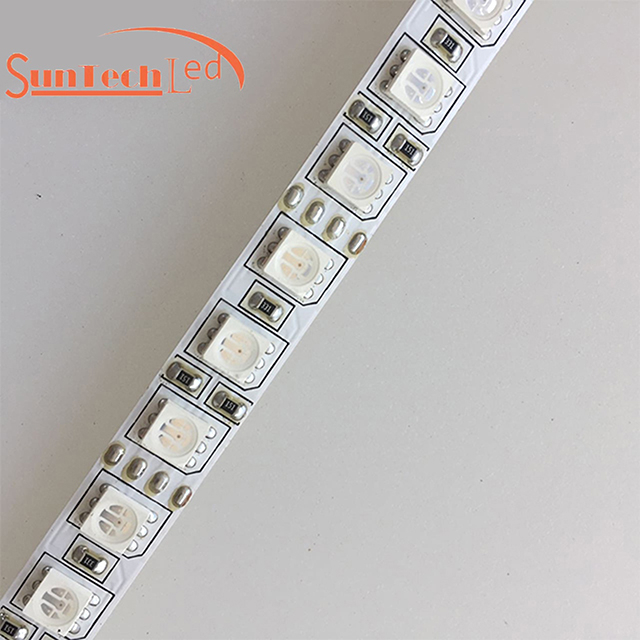
For infrared LED strips, relevant efficiency metrics focus on radiant flux and wall-plug efficiency. Beauty STC’s industrial-grade infrared LED strips, such as our IR65 series operating at 850nm or 940nm wavelengths, achieve radiant efficiencies of 40-50%. This translates to 40-50% of electrical input power being converted into useful infrared radiant energy, with the remainder dissipated as heat. Wavelength tolerance is critical for application performance; our strips maintain tight tolerances of ±5nm at peak wavelength through rigorous binning processes, ensuring consistent performance in security, machine vision, or thermal applications. Radiant intensity and beam angle are specified per application requirements, with options ranging from narrow 30-degree beams to wide 120-degree distributions.
Regarding environmental protection, Beauty STC prioritizes robustness for demanding installations. Our standard infrared LED strips feature IP65 rating as a baseline, providing complete dust protection and resistance to low-pressure water jets from any direction, suitable for most indoor industrial settings. For outdoor or harsh environments like agricultural monitoring or perimeter security, we offer IP67-rated variants, which withstand temporary immersion in water up to 1 meter depth for 30 minutes. This is achieved through precision silicone encapsulation of PCBs and LEDs, coupled with sealed end caps and waterproof connectors. All strips undergo 100% IP validation testing per IEC 60529 standards before shipment.
Beauty STC’s quality differentiation lies in our military-grade manufacturing controls and thermal management. We utilize FR-4 aluminum-core PCBs with optimized copper thickness to dissipate heat efficiently, preventing wavelength shift and extending lifespan beyond 50,000 hours at 25°C ambient. Each batch undergoes spectral analysis using calibrated spectroradiometers to verify wavelength accuracy and radiant power consistency. Our facility adheres to ISO 9001:2015 and IATF 16949 standards, with 100% in-line aging tests at 60°C for 48 hours to screen infant mortality failures. This commitment ensures our infrared strips deliver stable radiant output under continuous operation, critical for applications requiring precise illumination consistency. Customers receive full traceability reports including spectral graphs and thermal performance data with every production lot.
Factory Tour: Manufacturing Excellence
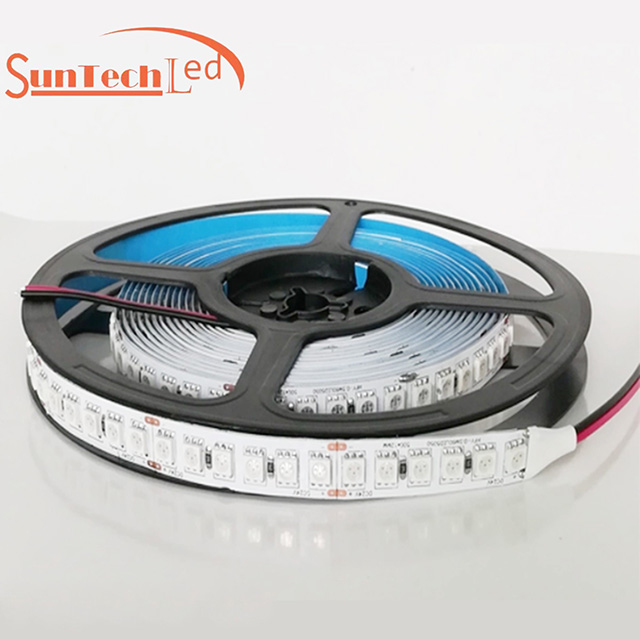
Beauty (STC) Manufacturing Co., Ltd.’s factory in Jiangmen, China, is a modern LED lighting production facility strategically located in the Guangdong province, a key manufacturing hub known for its advanced electronics and lighting industries. The Jiangmen factory is equipped with state-of-the-art infrastructure and automated production lines designed to ensure high efficiency, precision, and consistent product quality.
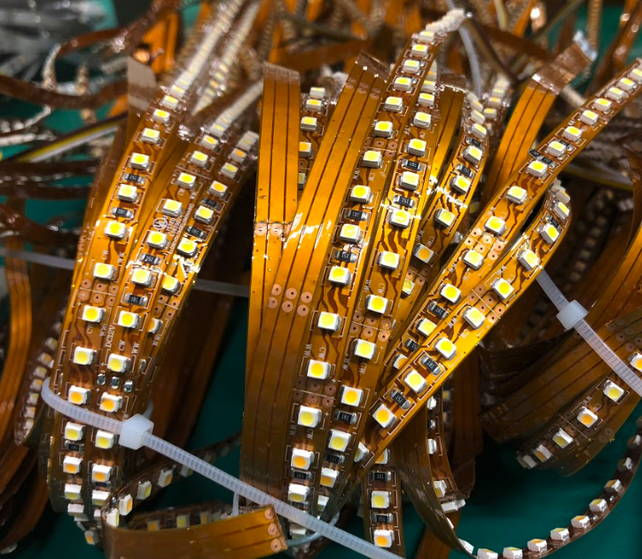
The facility features multiple fully automated SMT (Surface Mount Technology) production lines, which are critical for the accurate placement of LED components onto flexible and rigid PCBs. These SMT machines are high-speed, high-precision systems capable of handling a wide range of component sizes and types, ensuring reliable soldering and mounting for both standard and custom LED strips. The use of automated optical inspection (AOI) systems integrated within the SMT lines allows for real-time quality control, minimizing defects and enhancing yield rates.
To ensure long-term reliability and performance, the factory conducts comprehensive aging tests on all LED strip products, including infrared LED strips. These tests involve operating the products under elevated temperature and humidity conditions for extended periods—typically 24 to 72 hours—while continuously monitoring electrical parameters and light output. This rigorous process helps identify early failures and ensures that only stable, high-quality products are shipped to customers.
Beauty STC has strong OEM (Original Equipment Manufacturer) and ODM (Original Design Manufacturer) capabilities, particularly for specialized products such as infrared LED strips. The company supports custom wavelengths, including 850nm and 940nm infrared LEDs, on various substrates such as FPC (flexible printed circuits) with different IP ratings and power densities. Clients can customize dimensions, connectors, packaging, and even private labeling. The engineering team works closely with clients from design and prototyping through to mass production, offering technical support, compliance testing (including CE, RoHS, and REACH), and supply chain scalability.
Overall, the Jiangmen factory combines advanced automation, strict quality control, and flexible customization options, making it well-suited for producing high-performance infrared LED strips and other specialized lighting solutions for global markets.
Application Scenarios
Infrared LED strips serve specialized functions primarily related to surveillance, automation, and sensing, as their emitted light is invisible to the human eye but detectable by cameras and sensors. They are not intended for general illumination in hospitality or commercial spaces. Below is a clear breakdown of appropriate applications in hotels, malls, and offices, followed by critical installation guidance based on industry best practices.
In hotels, infrared LED strips are exclusively used for security and operational efficiency. Install them covertly along perimeter corridors of premium suites to enable 24/7 camera monitoring without disturbing guest sleep with visible light. They are also effective in staff-only zones like linen storage rooms or back-of-house hallways, providing consistent illumination for security cameras during nighttime when ambient light is absent. Avoid placing them in guest-facing areas where visible lighting is required for ambiance or safety, as infrared serves no aesthetic purpose and could cause confusion if mistakenly activated.
For malls, the primary application is in intelligent crowd management and loss prevention systems. Integrate infrared LED strips beneath escalator handrails or along high-theft retail displays to feed thermal imaging cameras that anonymously track foot traffic density without privacy concerns. They support accurate occupancy counting during emergency drills by ensuring cameras function in total darkness within stairwells or storage areas. Never install them in main concourses as supplementary lighting, as this misapplication wastes resources and provides no visible benefit to shoppers.
Within offices, infrared LED strips optimize smart building systems. Embed them near doorways of server rooms or archives to trigger occupancy sensors that activate visible lighting only when personnel enter, reducing energy use. They also enable seamless operation of touchless fixtures in restrooms by ensuring motion detectors work reliably in unlit conditions. Crucially, they have no role in workspaces, meeting rooms, or lobbies where human-centric visible lighting is essential for productivity and well-being.
Installation requires precise technical execution to avoid system failure. Always verify compatibility with your surveillance or sensor equipment by testing the infrared strip’s wavelength—typically 850nm or 940nm—against the camera’s spectral sensitivity range before full deployment. Use 24V systems exclusively for runs exceeding 5 meters to prevent voltage drop that causes uneven illumination, and confirm power supply capacity matches the strip’s wattage per meter plus a 20% safety margin. Mount strips at a 30-45 degree downward angle relative to cameras to minimize glare on reflective surfaces like polished floors or glass partitions, and maintain a minimum 30cm separation from HVAC vents to avoid thermal interference with sensors. For outdoor-adjacent areas like hotel balconies, select IP67-rated strips and seal all connectors with silicone gel to withstand humidity. Crucially, adhere to local privacy regulations—never deploy infrared in areas requiring visible lighting for safety compliance, and ensure all surveillance uses are disclosed per GDPR, CCPA, or regional equivalents. At Beauty (STC), we rigorously test our infrared strips for spectral accuracy and thermal stability to prevent false triggers in critical installations.
Why Choose Beauty STC Lighting
Discover the full potential of infrared LED technology with Beauty STC, a trusted leader in advanced LED solutions. Our high-performance infrared LED strips are engineered for reliability, efficiency, and superior output, making them ideal for security, surveillance, industrial, and specialized lighting applications. As a global manufacturing partner, Beauty STC offers custom configurations, OEM support, and consistent quality backed by years of innovation.
Partner with us to access cutting-edge infrared lighting solutions tailored to your project needs. For inquiries, product specifications, or collaboration opportunities, contact our sales manager at [email protected]. Let Beauty STC power your next generation of infrared lighting applications.
⚡ LED Power Supply Calculator
Estimate the power supply needed for your LED strip project.