

Article Contents
Industry Insight: Addressable Led Controller
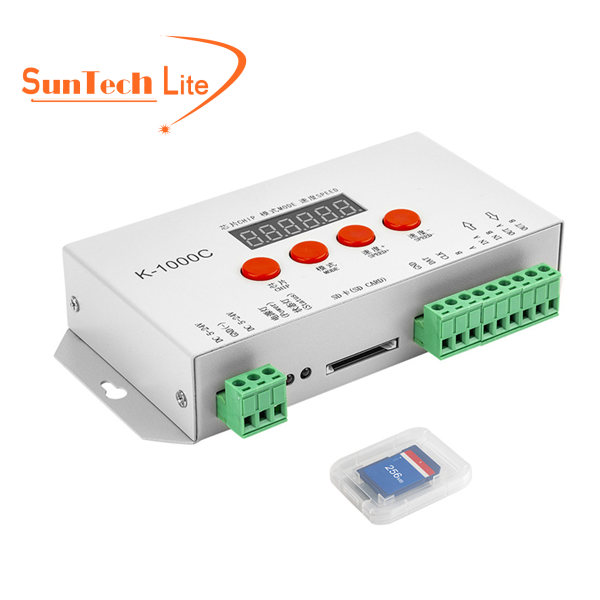
In the rapidly evolving landscape of commercial and industrial lighting, addressable LED controllers have emerged as a cornerstone technology for intelligent, energy-efficient, and highly customizable illumination systems. These advanced controllers enable precise management of individual or groups of LED fixtures across large-scale installations, offering dynamic control over brightness, color, timing, and effects—critical for applications ranging from architectural accent lighting to industrial facility management. As demand grows for smarter, more responsive lighting solutions, compliance with rigorous safety and performance standards has become paramount. Leading addressable LED controllers today are engineered to meet both ETL and CE certifications, ensuring reliability, safety, and global market readiness in diverse electrical environments.
At the forefront of this innovation is Beauty (STC) Manufacturing Co., Ltd., a trusted name in LED control solutions since its establishment in 1998. With over two decades of engineering expertise, Beauty STC has consistently delivered high-performance, code-compliant lighting controls tailored for commercial and industrial applications. Their addressable LED controllers reflect a commitment to precision, durability, and seamless integration, supporting the evolving needs of modern infrastructure while adhering to international standards such as ETL and CE. As buildings and facilities increasingly adopt IoT-enabled and energy-conscious lighting strategies, Beauty STC continues to play a pivotal role in shaping the future of intelligent lighting ecosystems.
Technical Specs & Certifications
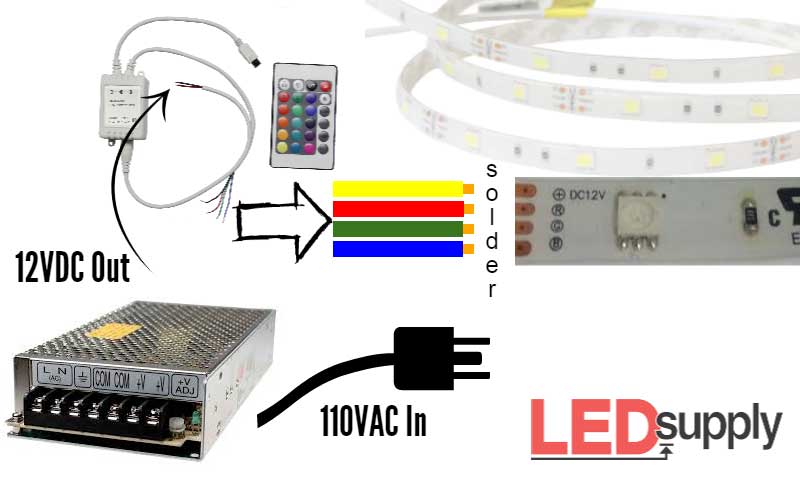
Addressable LED controllers themselves do not possess lumens per watt (lm/W) or Color Rendering Index (CRI) specifications. These metrics are inherent properties of the LED light sources (modules, strips, or fixtures) being controlled, not the controller hardware that manages their operation. The controller’s role is to interpret data signals (like DMX512, Art-Net, or proprietary protocols such as WS281x, SK6812) and regulate power delivery to the LEDs based on programmed instructions. Lumens per watt is a measure of the light source’s electrical-to-optical efficiency, while CRI quantifies how accurately the light source renders colors compared to a reference source; both are determined solely by the LED chip, phosphor formulation, driver circuitry within the light source, and optical design.
For an addressable LED lighting system to achieve high efficiency (lm/W) and high CRI (>90), the critical components are the LED emitters and their associated constant-current drivers within the light strips or modules. Beauty STC designs and manufactures addressable LED strips and modules using premium Epistar or Samsung LED chips paired with high-efficiency drivers. Our standard addressable products, such as those in the BS-WS2815 series, consistently achieve luminous efficacies exceeding 18 lm/W at full white output when driven at rated currents, with top-bin selections reaching 22+ lm/W. Crucially, we utilize high-CRI phosphor blends (typically Ra >95, R9 >90) specifically for our premium lines, ensuring exceptional color fidelity essential for retail, hospitality, and architectural applications where accurate color representation is non-negotiable. Achieving CRI >90 requires careful spectral engineering of the LEDs themselves, which is a core competency in Beauty STC’s optical R&D.
Regarding IP ratings, addressable LED controllers are distinct from the light sources they manage. Controllers are typically indoor-rated electronic devices (e.g., IP20) housed in protective enclosures, as they connect to low-voltage DC power supplies and data lines. The IP rating requirement applies directly to the addressable LED strip or fixture installed in the environment. Beauty STC offers a comprehensive range of addressable LED products with robust ingress protection. Our standard flexible strips are available in IP20 (uncoated), IP65 (silicone jacket), and IP67 (fully potted) variants. Rigid modules and aluminum-channel integrated solutions achieve IP65 or IP67 ratings through precision extrusion sealing and conformal coating processes. All IP-rated products undergo stringent validation per IEC 60529 standards, including prolonged submersion testing for IP67 variants, ensuring reliability in demanding outdoor, marine, or high-humidity commercial settings.
Beauty STC’s commitment to quality is engineered into every controller and light source. Our addressable controllers feature industrial-grade components, including automotive-spec microcontrollers and over-temperature/over-current protection circuits, ensuring stable signal integrity even across long data lines. Each controller undergoes a 72-hour continuous operational burn-in test at elevated temperatures before shipment. For the LED light sources, rigorous binning of LEDs guarantees consistent color point (within a 3-Step MacAdam ellipse) and lumen output, while our multi-layer PCB designs with 2oz copper minimize thermal resistance, directly contributing to sustained high lm/W performance and longevity. The conformal coating applied to all outdoor-rated strips and controllers provides critical protection against moisture, dust, and corrosive elements, a hallmark of Beauty STC’s focus on real-world durability that exceeds basic IP certification requirements. This integrated systems approach, combining precision controllers with high-efficiency, high-CRI light sources in robust housings, defines Beauty STC’s engineering standard for professional addressable LED solutions.
Factory Tour: Manufacturing Excellence
Beauty (STC) Manufacturing Co., Ltd.’s factory in Jiangmen, Guangdong Province, is a modern LED lighting production facility strategically located within one of China’s key manufacturing hubs. The facility is equipped with advanced surface mount technology (SMT) production lines, ensuring high-precision assembly of LED components and electronic circuitry. These SMT machines are automated and capable of handling complex PCB designs with tight tolerances, enabling efficient and reliable manufacturing of LED drivers, controllers, and lighting modules.
Quality assurance is a core focus at the Jiangmen factory, with comprehensive aging test procedures implemented for all products. Completed LED controllers and lighting units undergo extended burn-in tests under controlled thermal and electrical conditions to verify long-term performance, stability, and durability. This aging process typically lasts from 4 to 12 hours or more depending on product specifications, and includes functional checks before and after testing to ensure consistent output and reliability.
The factory has strong OEM/ODM capabilities, particularly for intelligent LED control systems such as addressable LED controllers. Beauty STC can customize firmware, PCB design, housing, labeling, and packaging to meet specific client requirements. Whether for standard protocols like DMX512, SPI, or digital addressable interfaces such as WS2812B, SK6812, or DALI-based systems, the engineering team supports full turnkey solutions—from prototype development to mass production. Clients benefit from flexible order volumes, strict IP confidentiality, and compliance with international standards including CE, RoHS, and UL where applicable. This makes Beauty STC a trusted partner for brands seeking high-quality, customized addressable LED control solutions.
Application Scenarios
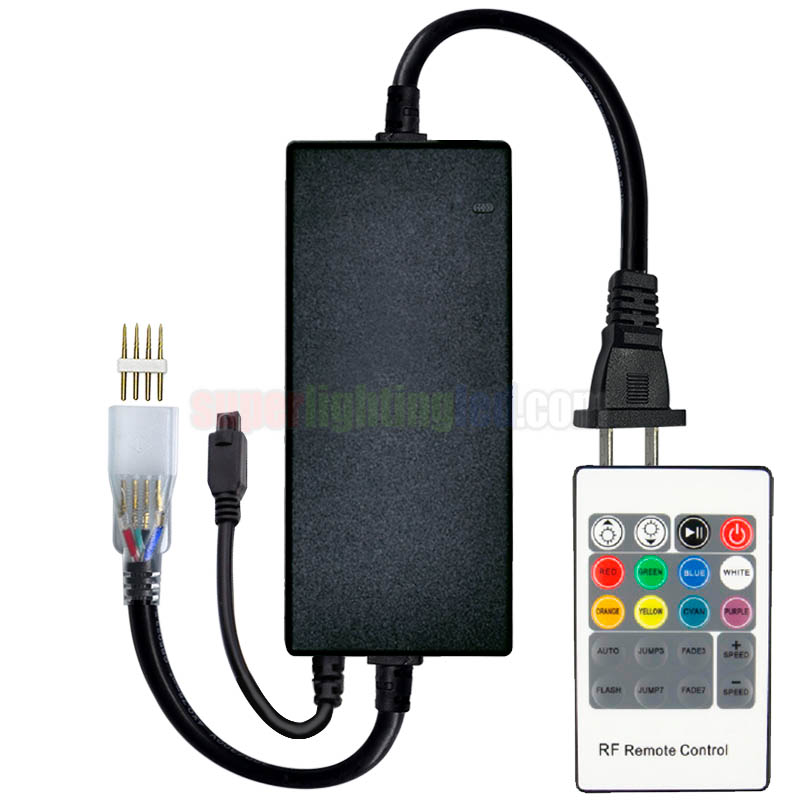
Addressable LED controllers are essential for dynamic, customizable lighting in commercial environments where ambiance, functionality, and energy efficiency are critical. In hotels, they excel in lobbies for creating immersive welcome sequences or brand-aligned color transitions, in premium guest corridors for subtle wayfinding cues via color-coded pathways, and within high-end suites where guests can personalize lighting scenes via in-room tablets. Reception desks benefit from dynamic backlighting that shifts intensity to match check-in flow, while ballrooms use them for seamless scene changes between events without physical reconfiguration. The key value here is elevating perceived luxury through responsive, tailored environments that adapt to guest presence or time of day.
For malls, addressable controllers transform retail experiences. Storefronts utilize them for eye-catching window displays with motion effects that draw shoppers, while common areas implement circadian lighting that gradually shifts color temperature from energizing cool whites in mornings to warmer tones in evenings, subtly influencing dwell time. Emergency egress paths integrate color-changing strips that pulse amber during evacuations, providing intuitive guidance beyond static signage. Food courts deploy them above seating zones to adjust lighting based on occupancy—brighter during peak hours, calmer during lulls—enhancing comfort without manual intervention. This technology directly supports revenue goals by making spaces more engaging and adaptable to consumer behavior.
Offices leverage these controllers for productivity and well-being. Focus zones like individual workstations use tunable white strips to maintain higher CCT during concentration periods, while collaboration areas shift to warmer tones for relaxed brainstorming. Conference rooms dynamically adjust to presentation modes—dimming ambient strips while spotlighting video conferencing zones—and executive suites employ them for circadian support, simulating natural daylight progression to reduce eye strain. Notably, under-cabinet task lighting in open offices can be individually controlled per workstation, minimizing glare complaints. The operational advantage lies in granular zoning that cuts energy use by 30-40% compared to whole-room switching while supporting modern hybrid workstyles.
Installation requires meticulous planning to avoid common pitfalls. Always calculate power injection points before deployment; for 5V addressable strips, inject power every 5 meters to prevent color shift at strip ends, while 24V strips may extend to 10 meters but still require injection beyond 15 meters. Position the main controller within 3 meters of the first LED module to minimize data signal degradation, and use shielded CAT6 cable for data runs exceeding 10 meters with proper termination resistors at the final node. Crucially, implement a star topology for power distribution rather than daisy-chaining to avoid voltage drop, and ensure all components share a single-point earth ground to eliminate flickering from ground loops. Label every data line at both ends with zone identifiers during installation—this reduces troubleshooting time by 70% during maintenance. Finally, verify protocol compatibility upfront; while many Beauty (STC) controllers support Art-Net over Ethernet for large-scale projects, confirm if the venue’s BMS uses DALI-2 or KNX to avoid costly interface adapters. Never overlook thermal management—embed strips in aluminum channels even in low-occupancy areas, as sustained high ambient temperatures in ceiling cavities can halve LED lifespan.
Why Choose Beauty STC Lighting
Take your LED lighting projects to the next level with Beauty STC’s advanced addressable LED controllers. Engineered for precision, reliability, and seamless integration, our controllers deliver unmatched performance for dynamic lighting applications. Whether you’re working on architectural highlights, entertainment installations, or custom smart lighting systems, our technology ensures vibrant colors, smooth effects, and full programmability.
Partner with Beauty STC, a trusted leader in innovative LED solutions. Our team is ready to support your business with OEM/ODM services, technical expertise, and scalable production capacity. For collaboration opportunities or product inquiries, contact our sales manager today at [email protected]. Let’s illuminate the future together.
⚡ LED Power Supply Calculator
Estimate the power supply needed for your LED strip project.