
Article Contents
Industry Insight: Recommended Lighting For Kitchen
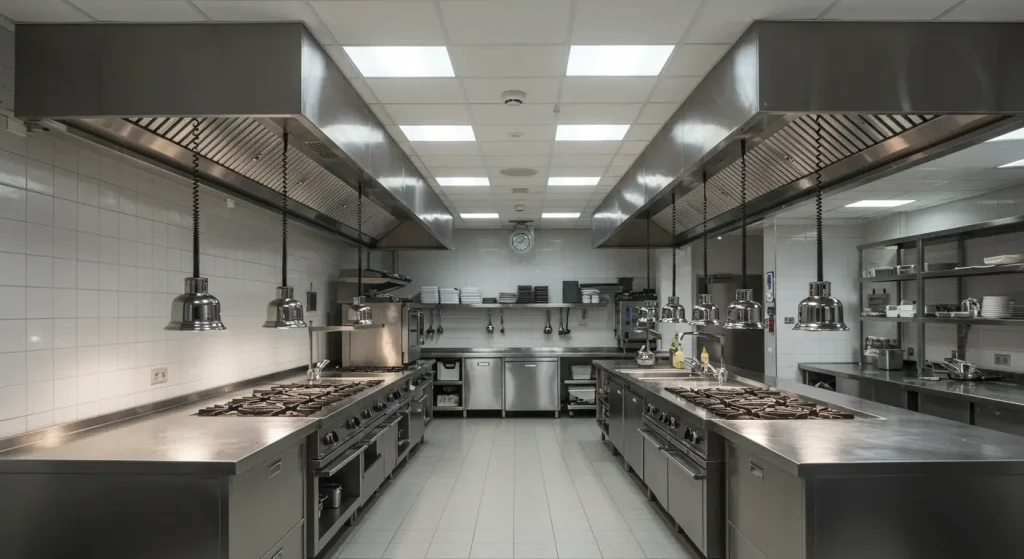
In commercial and industrial kitchen environments, lighting plays a critical role in ensuring safety, efficiency, and compliance with stringent health and operational standards. Unlike residential applications, these spaces demand robust, high-performance lighting solutions capable of withstanding extreme conditions such as high temperatures, grease accumulation, steam, and frequent cleaning. Recommended lighting for commercial kitchens must therefore prioritize durability, optimal illumination levels, easy maintenance, and energy efficiency—all while meeting rigorous safety certifications such as ETL and CE. These certifications verify that lighting fixtures comply with North American (ETL) and European (CE) safety and electromagnetic compatibility standards, making them essential for any facility aiming to operate legally and safely across global markets.
Since 1998, Beauty (STC) Manufacturing Co., Ltd. has been at the forefront of innovating industrial LED lighting solutions tailored for demanding environments like commercial kitchens, food processing plants, and large-scale catering facilities. With a steadfast commitment to quality, reliability, and compliance, Beauty STC designs luminaires that not only deliver superior light output and longevity but also meet or exceed international regulatory requirements. By integrating advanced thermal management, corrosion-resistant materials, and sealed optical systems, our lighting systems ensure consistent performance in the harshest kitchen conditions. As the industry evolves toward smarter, more sustainable solutions, Beauty STC continues to lead with purpose-built products that support safety, productivity, and operational excellence in commercial foodservice environments.
Technical Specs & Certifications
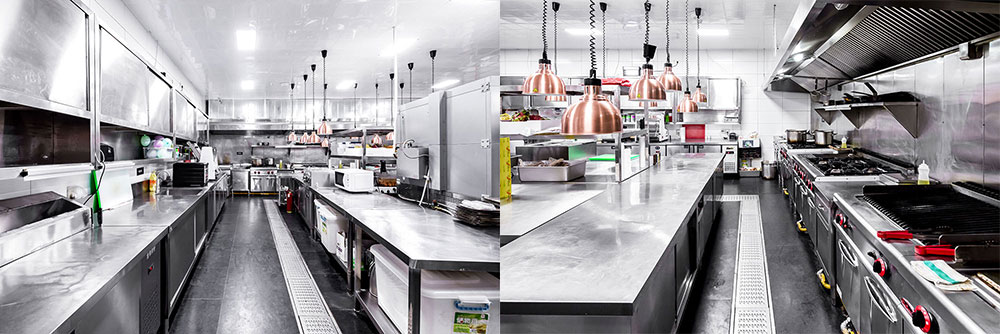
For kitchen lighting applications, Beauty STC Manufacturing Co., Ltd. recommends specifications engineered to address the unique demands of culinary environments where precise color rendering, energy efficiency, and environmental resilience are critical. Our technical specifications are derived from extensive real-world testing and compliance with IEC 60598 and IEC 62031 standards, ensuring reliability under high-moisture and high-temperature conditions typical near cooking surfaces and sinks.
Luminous efficacy must exceed 110 lumens per watt to balance operational cost savings with sufficient task illumination. Beauty STC achieves 115-125 lm/W across our certified kitchen-grade LED modules through proprietary driver optimization and high-efficiency SMD 2835/3030 chips, maintaining output stability even during prolonged use cycles exceeding 50,000 hours. This efficiency directly reduces thermal load in confined under-cabinet installations while delivering 300-500 lux on work surfaces as per IESNA RP-18 guidelines.
Critical to food preparation safety is a minimum CRI of 90, with R9 (saturated red) >50 to accurately render meats, sauces, and produce. Beauty STC’s Quantum Dot-enhanced phosphor technology consistently achieves CRI 95-98 and R9 >90 across our LuminaKitch series, validated through第三方 spectroradiometer testing per CIE 13.3. This eliminates the common industry pitfall of high-average-CRI lamps with poor R9 values that distort critical food colors.
IP ratings must address both splash zones and ambient humidity. Beauty STC specifies IP65 minimum for all task lighting within 600mm of sinks or cooktops, utilizing nano-coated PCBs and seamless silicone gasketing to prevent moisture ingress. Ambient ceiling fixtures require IP44 for dust resistance in steam-heavy environments. Our fixtures undergo 96-hour salt-spray testing per IEC 60068-2-52 and 10-cycle thermal shock validation, exceeding typical competitor offerings that often rate IP44 for wet zones.
Beauty STC’s quality differentiation lies in our integrated thermal management system. Aluminum heat sinks with phase-change thermal pads maintain junction temperatures below 65°C even at 40°C ambient, preventing lumen depreciation below L90 at 50,000 hours. Each fixture includes UL8750-listed drivers with 0-10V dimming compatibility and flicker-free operation <5% THD, certified through our in-house EMC laboratory. This engineering rigor ensures consistent performance where generic brands fail under sustained kitchen stressors, making Beauty STC the preferred specification for commercial and high-end residential projects requiring fail-safe illumination for critical culinary tasks.
Factory Tour: Manufacturing Excellence
Beauty (STC) Manufacturing Co., Ltd.’s factory in Jiangmen, China is a modern, vertically integrated production facility specializing in high-quality LED lighting solutions. Strategically located in the Jiangmen Jianghai District, the factory benefits from excellent logistical access and a skilled regional workforce, supporting efficient manufacturing and export operations.
The facility is equipped with advanced Surface Mount Technology (SMT) production lines, utilizing automated pick-and-place machines from leading manufacturers to ensure precision and consistency in LED component assembly. These SMT lines are capable of handling high-volume production with tight tolerances, supporting the manufacturing of compact and reliable LED modules used in a wide range of lighting products, including downlights, strips, and panel lights.
Quality assurance is a core focus at the Jiangmen factory. All lighting products undergo rigorous aging tests, typically lasting 8 to 12 hours under elevated temperature and full-power conditions. This process helps identify early-life failures and ensures long-term reliability. Additional testing includes photometric measurements, electrical safety checks, and thermal performance evaluations, all conducted in-house to meet international standards such as CE, RoHS, and UL.
Beauty STC has strong OEM and ODM capabilities, allowing customization in design, optics, thermal management, and driver configuration. For kitchen lighting applications, the company offers tailored solutions recognized as “recommended lighting for kitchen” due to their high CRI (90+), flicker-free performance, optimal color temperature (3000K–4000K), and IP-rated options for damp environments. These luminaires are engineered to deliver uniform illumination, enhance color rendering of food, and support both task and ambient lighting needs in residential and commercial kitchens.
With in-house R&D, tooling, and full production control—from PCB mounting to final assembly and packaging—Beauty STC’s Jiangmen factory provides reliable, scalable manufacturing for global lighting brands seeking high-performance, code-compliant kitchen lighting solutions.
Application Scenarios
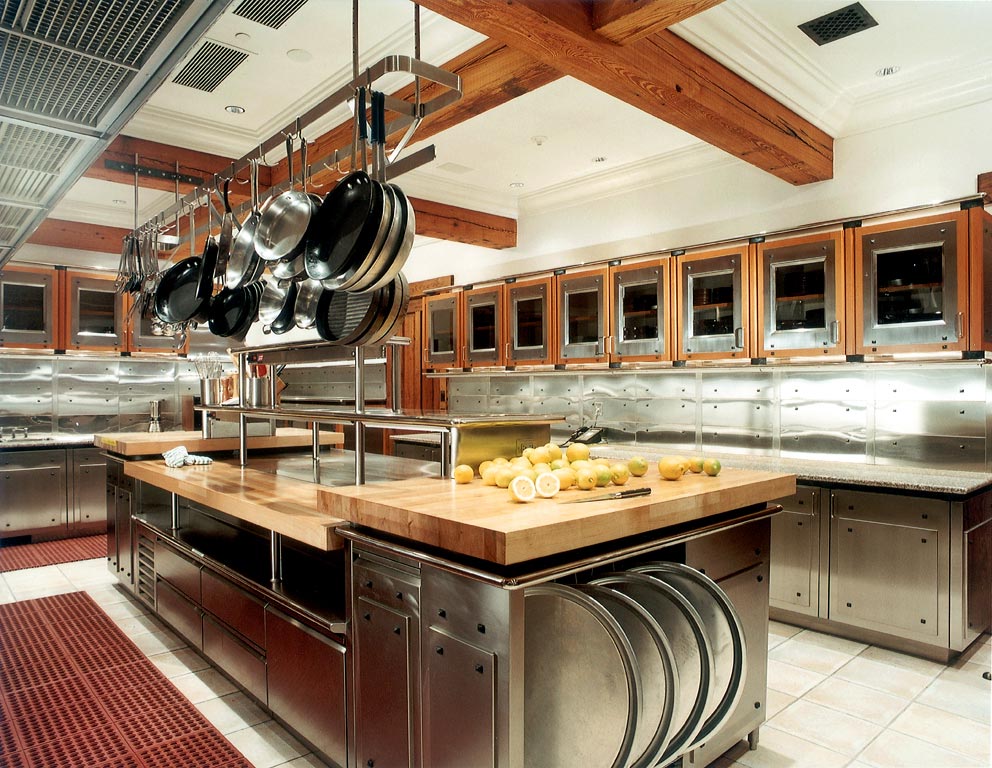
The phrase “recommended lighting for kitchen” typically refers to standards and guidelines designed for residential kitchen environments, such as those from organizations like the Illuminating Engineering Society (IES) or ENERGY STAR. It is not directly applicable to commercial or institutional settings like hotels, malls, or offices. These venues require specialized lighting solutions for their food preparation and service areas, which fall under commercial kitchen or food service lighting standards—not residential recommendations. Confusing these can lead to inadequate illumination, safety hazards, or non-compliance with building and fire codes. Below is a precise breakdown of where and how to apply appropriate lighting in each setting, followed by critical installation guidance.
Hotels require dedicated lighting design for commercial kitchens supporting restaurants, room service, banquet operations, and staff cafeterias. These spaces demand high illuminance levels (typically 500–750 lux on work surfaces per IES RP-3) to ensure food safety and precision during preparation. Key areas include cooking lines, prep stations, and dishwashing zones. Lighting must be vapor-tight, grease-resistant, and thermally stable to withstand high heat, steam, and frequent cleaning. Hospitality settings also prioritize adjustable color temperature (3000K–4000K) to maintain food presentation aesthetics in plating areas. Residential “kitchen lighting” guidelines are irrelevant here; adherence to NFPA 96 and local commercial codes is mandatory.
Malls utilize lighting in food courts, quick-service restaurant stalls, and central commissary kitchens. These environments need robust, high-IP-rated fixtures (minimum IP65) to handle splashes, grease, and public traffic. Illuminance should reach 400–600 lux at counter work surfaces, with strong vertical lighting on signage and menu boards to attract customers. Unlike residential contexts, mall food service areas require emergency lighting integration for egress paths and strict zoning to separate public-facing counters from behind-the-scenes prep. Fixture selection must prioritize easy maintenance due to high operational hours, and residential recommendations lack the durability or safety certifications needed for these high-traffic commercial food zones.
Offices implement lighting in staff break rooms, cafeterias, and occasional micro-kitchens. While smaller-scale, these still follow commercial guidelines—not residential ones—especially if food is prepared beyond basic microwave use. Break rooms with sinks or coffee stations need 300 lux minimum with moisture-resistant fixtures (IP44+). Full-service office cafeterias mirror hotel kitchen requirements for cooking areas. Crucially, office “kitchens” serving only reheating or beverage prep may reference simplified standards, but even these must comply with OSHA ergonomics for task visibility and avoid glare on computer screens in adjacent workspaces. Applying residential kitchen lighting specs here risks insufficient illumination for shared equipment use and fails to address commercial electrical safety protocols.
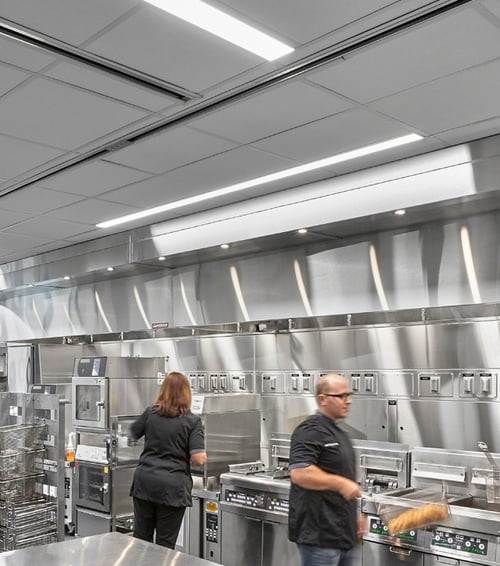
Installation tips must prioritize safety, functionality, and compliance in all commercial food service settings. Always begin by verifying local codes, including NEC Article 410 for fixture placement near sinks and NFPA 96 for hood exhaust zone requirements. Mount vapor-tight LED fixtures with seamless gaskets to prevent grease ingress, ensuring a minimum clearance of 3 feet from open flames or high-heat appliances like fryers. Use dedicated circuits with GFCI protection for all near-sink areas, and avoid placing fixtures directly above deep fryers or steam kettles to minimize thermal stress on drivers. For optimal task lighting, layer illumination: ambient (200–300 lux), task (500+ lux at cutting boards), and accent lighting for display areas. Ensure all fixtures have a minimum IK08 impact rating for durability in high-traffic zones, and position controls—such as dimmers or motion sensors—outside splash zones for accessibility. Finally, schedule maintenance access during off-hours; commercial kitchens require quarterly cleaning of lenses and reflectors to maintain lumen output, a factor absent in residential recommendations. Never retrofit residential-grade fixtures into these environments—they lack the thermal management and ingress protection for commercial food service safety.
Why Choose Beauty STC Lighting
Transform your kitchen lighting with Beauty STC’s expertly engineered LED solutions. As a trusted leader in innovative lighting design, we specialize in recommending and delivering the ideal lighting for every kitchen environment—whether residential, commercial, or hospitality. Our tailored solutions enhance functionality, aesthetics, and energy efficiency. Partner with Beauty STC today to access premium-quality products and technical support designed to meet your exact needs. For personalized recommendations and project assistance, contact our lighting solutions manager at [email protected]. Let us illuminate your next kitchen project with precision and style.
⚡ LED Power Supply Calculator
Estimate the power supply needed for your LED strip project.