
Article Contents
Industry Insight: Light Filters For Led Lights
The commercial and industrial LED lighting sector has undergone a profound transformation, shifting the conversation from basic energy savings to sophisticated performance optimization and human-centric application requirements. While the inherent efficiency of LEDs is now table stakes, the critical challenge for facility managers, architects, and lighting designers lies in harnessing this technology to deliver precise illumination that enhances safety, productivity, visual comfort, and operational outcomes. Light filters have emerged as an indispensable, yet often underappreciated, component in this advanced lighting ecosystem. Far beyond simple diffusers, modern optical filters actively manage glare – a critical safety and comfort issue in warehouses, manufacturing floors, and retail environments – refine color rendering for accurate product presentation in supermarkets and showrooms, and tailor beam distribution to specific task requirements, eliminating costly over-lighting. Crucially, in environments where safety and regulatory compliance are non-negotiable, the integration of these filters must never compromise the fundamental electrical safety and performance integrity of the luminaire. This necessitates rigorous adherence to region-specific certifications such as ETL for North American markets and CE marking for the European Union, ensuring that every filtered solution meets the highest standards for fire risk, electrical shock protection, and electromagnetic compatibility before deployment in demanding commercial or industrial settings. Beauty STC Manufacturing Co., Ltd., established in 1998, has been at the forefront of this evolution, leveraging over 25 years of specialized engineering expertise to develop high-performance, certified light filter solutions that seamlessly integrate with LED optics to solve real-world illumination challenges across diverse industrial and commercial applications.
Technical Specs & Certifications
Light filters for LED lights are optical components designed to modify the output of LED fixtures by altering color, diffusion, intensity, or beam characteristics. While filters themselves do not generate lumens or consume watts, their impact on optical efficiency directly influences the overall system performance in terms of lumens per watt (lm/W), color fidelity, and environmental durability. When integrated into high-performance LED lighting systems, the choice of filter materials and coatings plays a critical role in maintaining key photometric specifications.
Lumens per Watt (lm/W) efficiency is affected by the transmittance properties of the light filter. High-quality optical polycarbonate or acrylic filters with anti-reflective (AR) and anti-scratch coatings—such as those used by Beauty (STC) Manufacturing Co., Ltd.—typically exhibit light transmission rates above 90%, minimizing lumen loss. For example, a filter with 92% transmittance will retain most of the original LED output, allowing the fixture to maintain high system efficacy. When paired with efficient LED engines, filtered fixtures from Beauty STC consistently achieve system-level efficacies exceeding 110 lm/W, depending on thermal management, driver efficiency, and optical design.
Color Rendering Index (CRI) is crucial in applications requiring accurate color representation, such as retail, healthcare, and photography. Beauty STC ensures that its LED fixtures, when equipped with precision light filters, maintain a CRI greater than 90—often reaching Ra 95 or higher—by using phosphor-optimized LEDs and spectrally stable filter materials. Neutral white (4000K) and daylight (5000K–6500K) variants are available, with extended spectral coverage including R9 (saturated red) values well above 50, ensuring vibrant and natural color rendition. The filters are engineered to avoid spectral distortion, preserving the high CRI output of the underlying LED source.
Ingress Protection (IP) ratings define the fixture’s resistance to dust and moisture, particularly important when filters are part of the external housing. Beauty STC designs its LED fixtures with seamless integration between the light filter and housing gaskets, achieving IP65, IP66, and IP67 ratings as required. For outdoor or industrial environments, polycarbonate filters with UV-stabilized coatings prevent yellowing and maintain optical clarity over extended periods. The sealed optical assembly ensures no degradation in performance due to environmental exposure.
Beauty (STC) Manufacturing Co., Ltd. is recognized for its rigorous quality control, using only premium-grade materials and conducting in-house photometric testing to verify lm/W, CRI, and IP compliance. Each filtered LED product undergoes thermal cycling, humidity resistance, and long-term lumen maintenance testing to ensure reliability and consistent performance. With over two decades of experience in LED innovation, Beauty STC delivers light filters and integrated fixtures that meet the highest standards for efficiency, color accuracy, and durability in demanding applications worldwide.
Factory Tour: Manufacturing Excellence
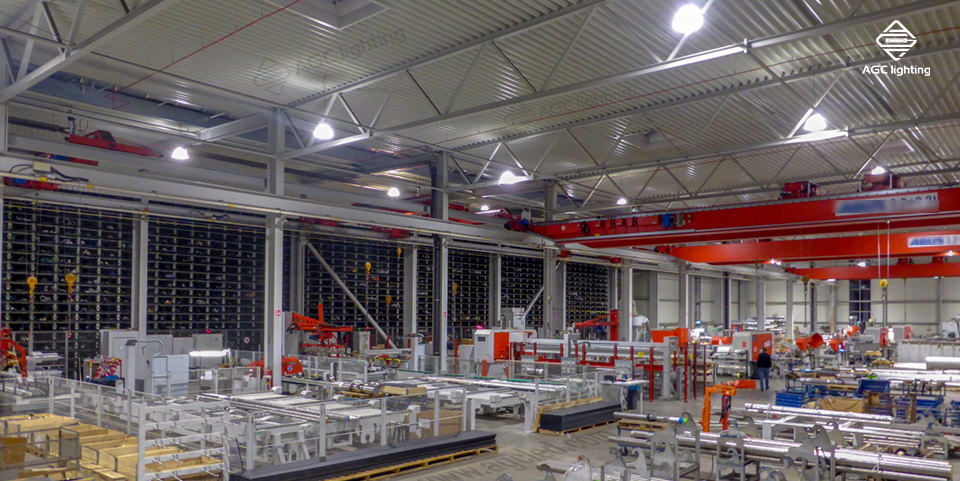
Beauty STC’s Jiangmen manufacturing facility is a strategically located, modern LED lighting production hub designed to support high-volume, precision manufacturing with a strong emphasis on quality control and OEM/ODM flexibility. The factory complex integrates advanced surface mount technology lines, rigorous testing infrastructure, and specialized capabilities for optical components, including the production of light filters—more accurately termed optical lenses or diffusers—for LED applications.
The SMT production floor is equipped with state-of-the-art automated assembly lines featuring multiple high-speed Fuji NXT III and JUKI KE-2070 placement machines. These systems handle components ranging from ultra-miniature 0201 passives to complex ICs and high-power LED packages with exceptional placement accuracy, typically within ±25 microns. The lines incorporate automated optical inspection (AOI) stations after solder paste application and post-reflow to ensure solder joint integrity and component alignment. This SMT capability forms the backbone for assembling PCBs used across our product range, including driver circuits and LED modules requiring integrated optical elements.
Comprehensive aging and reliability testing is a critical pillar of our quality assurance process at the Jiangmen site. We operate dedicated environmental test chambers capable of conducting extended burn-in tests under controlled thermal and electrical stress conditions. For LED optical components like diffusers and lenses, specific aging protocols include high-temperature operational life testing (HTOL) at elevated junction temperatures, thermal cycling between -40°C and +85°C, and prolonged exposure to high-lumen-output conditions. Standard aging procedures for finished LED light engines incorporating these optical elements involve a minimum 72-hour continuous burn-in at 1.2x rated current within temperature-controlled chambers monitored to maintain ambient conditions at 25°C ±2°C, with real-time photometric and thermal data logging to identify early failures and validate lumen maintenance.
Regarding OEM capability for optical components—specifically lenses, diffusers, and light-shaping elements for LED luminaires—Beauty STC Jiangmen offers extensive in-house expertise. We possess full vertical integration for these parts, starting from optical design using Zemax and LightTools software through precision mold fabrication in our tooling department. The facility runs multiple all-electric injection molding machines from brands like Toshiba and Fanuc, optimized for processing optical-grade polycarbonate (PC), polymethyl methacrylate (PMMA), and specialized silicone materials with tight tolerances of ±0.05mm achievable on critical optical surfaces. Our OEM service includes material formulation for specific transmission, diffusion, or UV-stability requirements, custom mold development, and secondary operations such as metallization for reflectors or anti-reflective coatings. Clients provide optical performance specifications or mechanical interfaces, and we deliver fully validated, production-ready optical components with full traceability and compliance documentation, supporting volumes from prototyping to multi-million-unit annual runs. This capability ensures seamless integration of custom light management solutions within LED assemblies manufactured at the same site.
Application Scenarios
Light filters for LED lights are widely used across various commercial and hospitality environments to enhance lighting quality, improve aesthetics, and create specific ambiances. In hotels, malls, and offices, their application serves both functional and decorative purposes.
In hotels, light filters are commonly used in guest rooms, lobbies, hallways, and banquet halls. They help soften harsh LED glare, which is particularly important in creating a warm and welcoming atmosphere. For instance, diffuser filters are ideal in hotel lobbies and corridors to distribute light evenly and eliminate hotspots. Color filters may also be used in event spaces to match themes or branding. When installing in hotels, ensure filters are compatible with the LED fixture’s beam angle and temperature to maintain the desired color rendering and mood.
In malls and retail environments, light filters play a key role in accentuating product displays and improving visual comfort. Diffusion filters are often applied in ceiling coves, recessed downlights, and track lighting to create uniform illumination without distracting shadows or glare. Color correction filters may be used under high-CRI LED lighting to ensure accurate product color representation. During installation, align the filter precisely with the light source to avoid color shifting or uneven light distribution. It’s also important to use heat-resistant materials, as prolonged exposure to LED heat can degrade low-quality filters.
In office settings, the primary goal is to reduce eye strain and create a productive work environment. Light diffusers are frequently installed in panel lights, troffers, and suspended fixtures to minimize glare from bright LEDs, especially in open-plan offices. Prismatic or micro-louver filters can also help direct light downward, reducing ceiling brightness and improving task lighting efficiency. For installation, ensure the filter fits securely within the fixture frame and does not obstruct ventilation, which could lead to overheating and reduced LED lifespan.
General installation tips include verifying compatibility with the LED fixture’s size, shape, and output; cleaning the fixture surface before applying adhesive-backed filters; and using mounting frames or clips for easy replacement. Always follow manufacturer guidelines for heat tolerance and recommended usage environments. Properly installed light filters not only enhance visual comfort but also extend the functional life of LED lighting systems by protecting components from dust and physical damage.
Why Choose Beauty STC Lighting
Elevate your LED lighting projects with precision-engineered light filters designed to solve real-world challenges in color accuracy, glare reduction, and spectral control. At Beauty STC, we don’t just manufacture filters—we engineer optical solutions that ensure your luminaires deliver consistent, high-fidelity light output across commercial, architectural, and specialty applications. Our proprietary filter technology eliminates common industry pain points like color shift under thermal stress and inconsistent diffusion, giving your end-users a flawless visual experience while extending the functional lifespan of your LED systems.
Partnering with Beauty STC means gaining access to our decade of optical engineering expertise, rigorous QC protocols, and flexible customization capabilities. Whether you require tailored diffusion patterns, UV-cut coatings, or application-specific spectral tuning, our technical team collaborates closely with your R&D department to integrate seamless, drop-in filter solutions that meet exact photometric and regulatory standards. We handle complex material science so you can focus on innovating your core lighting products without compromising on performance or compliance.
Take the next step toward superior light quality and market differentiation. Contact our dedicated partnership team at [email protected] to discuss how Beauty STC’s light filters can enhance your LED product line. Include your project specifications or application requirements in your inquiry, and we’ll respond within 24 hours with a technical consultation and sample roadmap. Let’s build lighting solutions that perform as brilliantly as your vision demands.
⚡ LED Power Supply Calculator
Estimate the power supply needed for your LED strip project.