
Article Contents
Industry Insight: Led Living Room
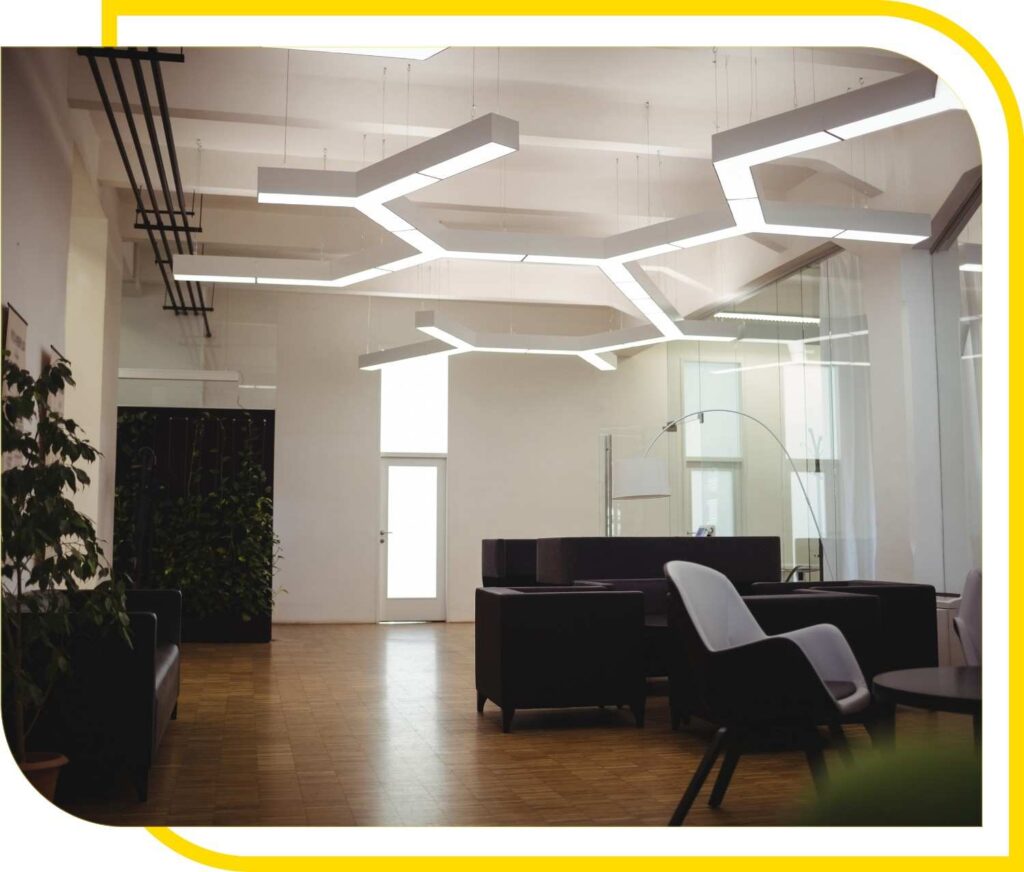
The LED living room lighting market has evolved significantly over the past two decades, transitioning from a residential-focused application to a critical segment within commercial and industrial lighting design. As businesses, hospitality venues, and multifamily developments prioritize energy efficiency, longevity, and aesthetic flexibility, LED solutions tailored for living environments are increasingly specified for lobbies, lounges, co-working spaces, and model units. These applications demand more than just illumination—they require lighting that enhances ambiance, supports human-centric design, and meets rigorous safety and performance standards. In this context, compliance with ETL and CE certifications has become a baseline requirement, ensuring that products meet North American and European safety, electromagnetic compatibility, and performance benchmarks.
At the forefront of this transformation is Beauty (STC) Manufacturing Co., Ltd., a trusted name in LED lighting since its founding in 1998. With over two decades of engineering expertise, Beauty STC has established itself as a strategic partner for commercial and industrial clients seeking reliable, code-compliant, and design-forward lighting solutions. Specializing in high-performance LED fixtures for integrated living and shared spaces, the company combines advanced thermal management, precision optics, and rigorous quality control to deliver products that exceed industry expectations. As the line between residential comfort and commercial functionality continues to blur, Beauty STC remains committed to innovation, sustainability, and the evolving needs of the built environment.
Technical Specs & Certifications
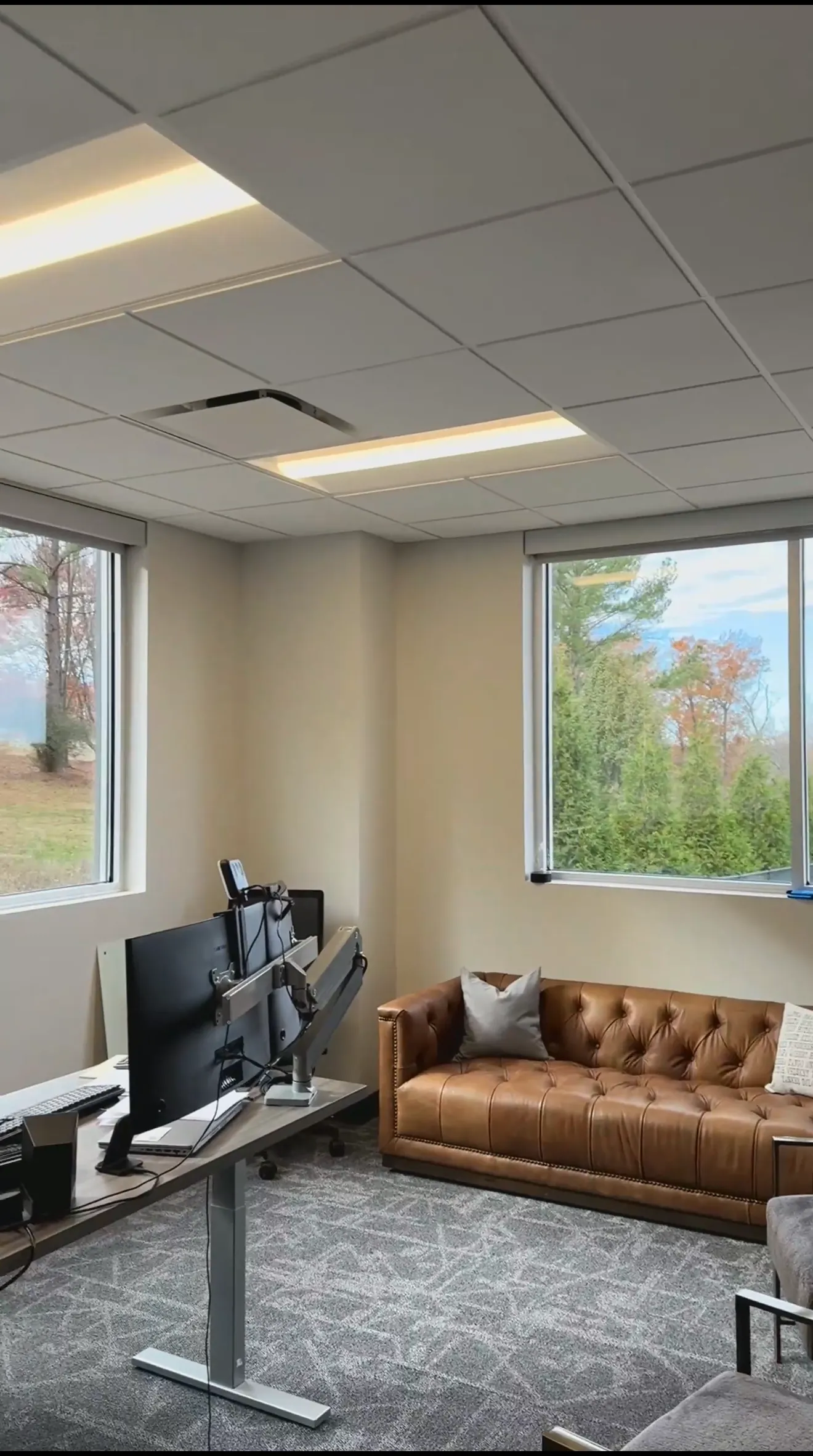
When specifying LED lighting for living room applications, achieving optimal visual comfort and energy efficiency requires careful attention to core photometric and quality metrics. At Beauty STC Manufacturing Co., Ltd., our engineered solutions prioritize these critical parameters to deliver superior residential lighting experiences. System efficacy, measured in lumens per watt (lm/W), is a fundamental indicator of energy performance. For modern living room fixtures, Beauty STC consistently achieves real-world system efficacies ranging from 110 to 130 lm/W. This performance level is attained not merely through high-efficiency LED chips but through integrated thermal management, precision optical design, and high-quality driver electronics that minimize system-level losses. We rigorously test complete luminaires under IEC 62612 conditions to ensure the published efficacy reflects actual in-situ performance, avoiding misleading component-level claims.
Critical to the living room environment is exceptional color rendering, necessitating a Color Rendering Index (CRI) exceeding 90, specifically with a strong R9 value for saturated reds. Beauty STC exclusively utilizes phosphor-converted LEDs with a minimum CRI of 92 and an R9 value above 50 in our premium living room product lines. This ensures natural and vibrant representation of skin tones, artwork, textiles, and décor. We go beyond basic CRI by incorporating TM-30-15 metrics (Rf and Rg) in our internal validation, guaranteeing balanced color fidelity and gamut. This commitment stems from our understanding that living rooms are multi-functional spaces demanding accurate color perception for relaxation, social interaction, and daily activities. Our stringent component selection process, including sourcing from tier-1 LED manufacturers and implementing rigorous binning protocols, guarantees consistent high-CRI output across all production batches.
Regarding Ingress Protection (IP) ratings, living room environments typically require minimal ingress protection as they are dry, indoor locations. Beauty STC designs our standard living room downlights, panels, and decorative fixtures to meet IP20 classification, sufficient for protection against solid objects larger than 12.5mm and no protection against liquid ingress – the appropriate standard for typical interior residential use. We emphasize that unnecessarily high IP ratings (e.g., IP65) in dry locations often compromise optical efficiency and thermal performance due to sealed housings, potentially reducing lifespan and light quality. For transitional spaces like open-plan kitchens or near large windows where moisture exposure might occur, we offer variants rated IP44, providing protection against solid objects larger than 1mm and splashing water from any direction, without sacrificing the critical lumen output and thermal management essential for longevity.
Beauty STC’s quality differentiation lies in our holistic engineering approach. We do not optimize for single metrics in isolation. Our luminaires integrate high-efficacy drivers with >92% efficiency, advanced thermal pathways using die-cast aluminum heat sinks, and diffusers engineered for optimal glare control (UGR <19) alongside high CRI. Every fixture undergoes 100% photometric and electrical safety testing per IEC 60598-1 and IEC 62031 standards, coupled with extended thermal cycling and lumen maintenance validation (L90/B10 > 50,000 hours at 25°C ambient). This rigorous systems engineering, backed by our ISO 9001-certified manufacturing processes and in-house R&D laboratory, ensures that the specified lumens/watt, CRI >90, and appropriate IP ratings are not just theoretical values but guaranteed, consistent performance delivered to the end-user throughout the product lifecycle. The result is living room lighting that is both visually superior and reliably efficient.
Factory Tour: Manufacturing Excellence
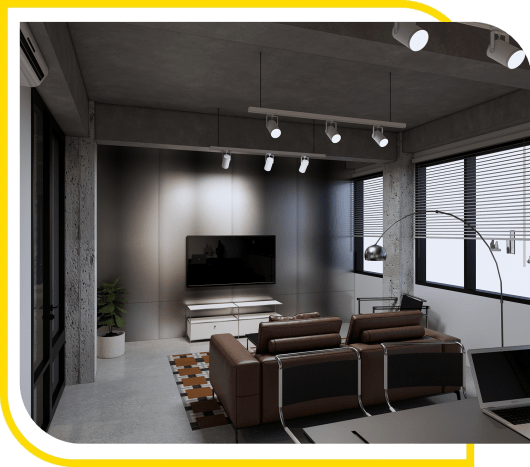
Beauty (STC) Manufacturing Co., Ltd. operates a modern and well-equipped manufacturing facility in Jiangmen, Guangdong Province, strategically located within one of China’s key industrial hubs for electronics and lighting production. The Jiangmen factory is purpose-built for the efficient and high-quality manufacturing of LED lighting products, with a strong focus on innovation, reliability, and scalability to serve both domestic and international markets.
The facility is equipped with advanced Surface Mount Technology (SMT) production lines, ensuring precision and consistency in the assembly of LED lighting components. These SMT machines are fully automated, enabling high-speed placement of surface-mount devices onto printed circuit boards with exceptional accuracy. This automation not only enhances production efficiency but also significantly reduces human error, resulting in superior product quality and uniformity across large production runs. The SMT lines are regularly maintained and upgraded to support the latest component technologies and meet evolving industry standards.
To ensure long-term reliability and performance, Beauty STC implements rigorous aging tests as part of its quality control process. Completed LED lighting units, including those designed for living room applications, undergo extended operational testing under controlled conditions that simulate real-world usage. This includes thermal stress testing, luminance stability checks, and power cycling to identify early failures and verify product durability. These aging procedures are critical in maintaining the company’s reputation for producing robust and long-lasting LED lighting solutions.
Beauty STC also offers comprehensive OEM (Original Equipment Manufacturing) and ODM (Original Design Manufacturing) services, particularly for LED living room lighting products. The company supports custom design, engineering, packaging, and branding based on client specifications. Whether it’s LED panels, downlights, decorative fixtures, or smart lighting systems tailored for residential living spaces, the Jiangmen factory has the technical expertise and production flexibility to deliver customized solutions at scale. The in-house R&D team collaborates closely with clients to refine optical performance, thermal management, and aesthetic design, ensuring the final product meets both functional and market requirements.
Overall, the Jiangmen factory represents a vertically integrated manufacturing ecosystem where design, component assembly, quality assurance, and logistics are tightly controlled, enabling Beauty STC to deliver high-performance, customized LED lighting solutions efficiently and reliably.
Application Scenarios
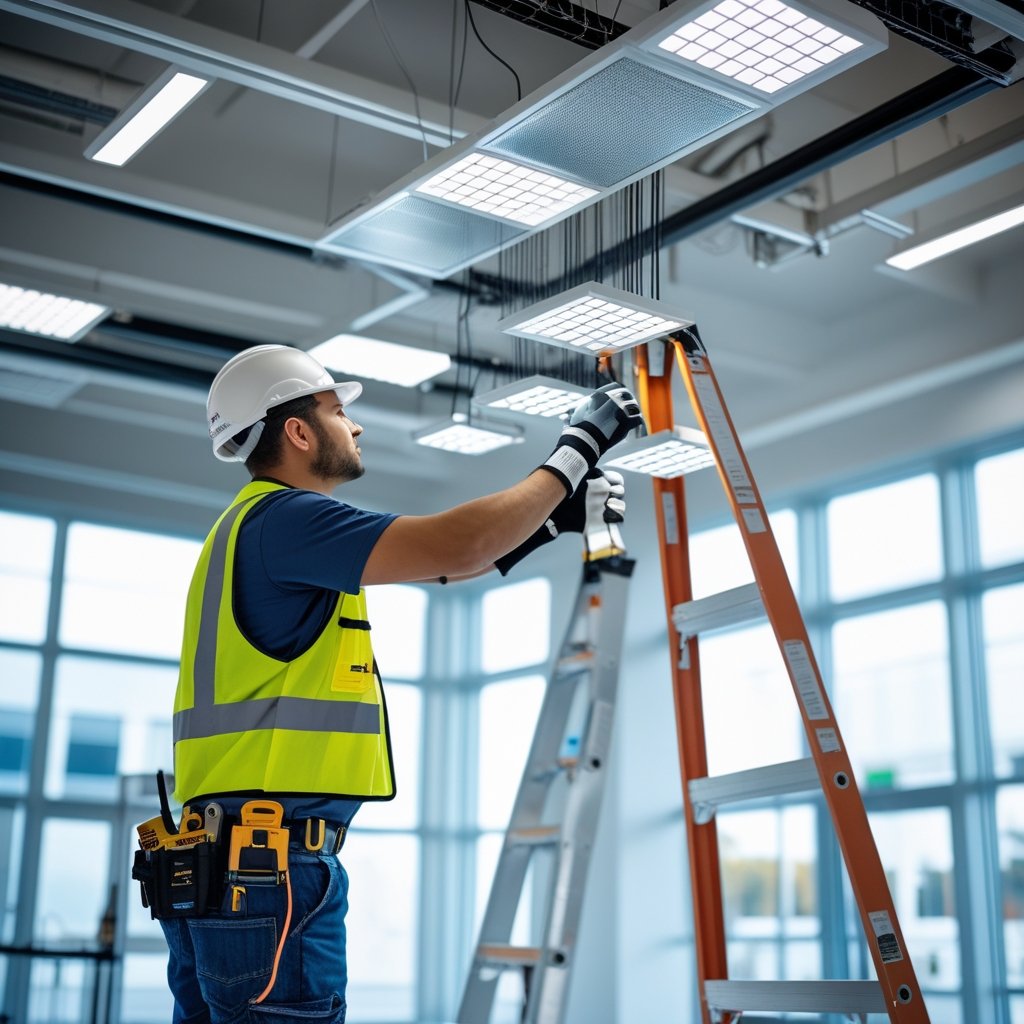
The term “LED living room” typically refers to residential lighting design concepts focused on comfort, ambiance, and layered illumination. In commercial settings like hotels, malls, and offices, these principles are adapted for specific functional and aesthetic goals, though the exact residential “living room” concept isn’t directly applied. Instead, similar lighting strategies are used in designated comfort-oriented zones within these venues. Below is a breakdown of appropriate applications and critical installation considerations based on industry standards and practical experience.
Hotels are the primary commercial environment where “living room” style LED lighting is intentionally implemented. This approach is most relevant in guest rooms, executive lounges, and upscale lobby seating areas. In guest rooms, layered LED lighting—combining ambient ceiling fixtures, adjustable wall sconces for task lighting, and dimmable cove lighting—creates a residential-like atmosphere that enhances guest comfort and perceived quality. Executive lounges benefit from warm CCTs (2700K–3000K) and high CRI (>90) LEDs to mimic the inviting feel of a home living room, encouraging relaxation and social interaction. Lobby seating zones similarly use adjustable, warm-white LED systems to establish a welcoming environment distinct from the brighter, more functional lighting of reception or circulation areas. The key is balancing hospitality aesthetics with durability requirements for high-traffic settings.
Malls rarely replicate true “living room” lighting due to safety, security, and merchandising priorities. However, the concept finds limited application in premium waiting areas adjacent to food courts, VIP lounge sections in high-end retail complexes, or family rest zones. These spaces might incorporate residential-style LED pendants or wall washers with warmer color temperatures to provide visual relief from the mall’s typically bright, neutral-white general lighting. Crucially, such zones must maintain sufficient illumination levels (typically 200–300 lux) for safety and surveillance, avoiding overly dim or cozy settings that could compromise security. Any residential-inspired elements must integrate seamlessly with the mall’s emergency egress lighting requirements.
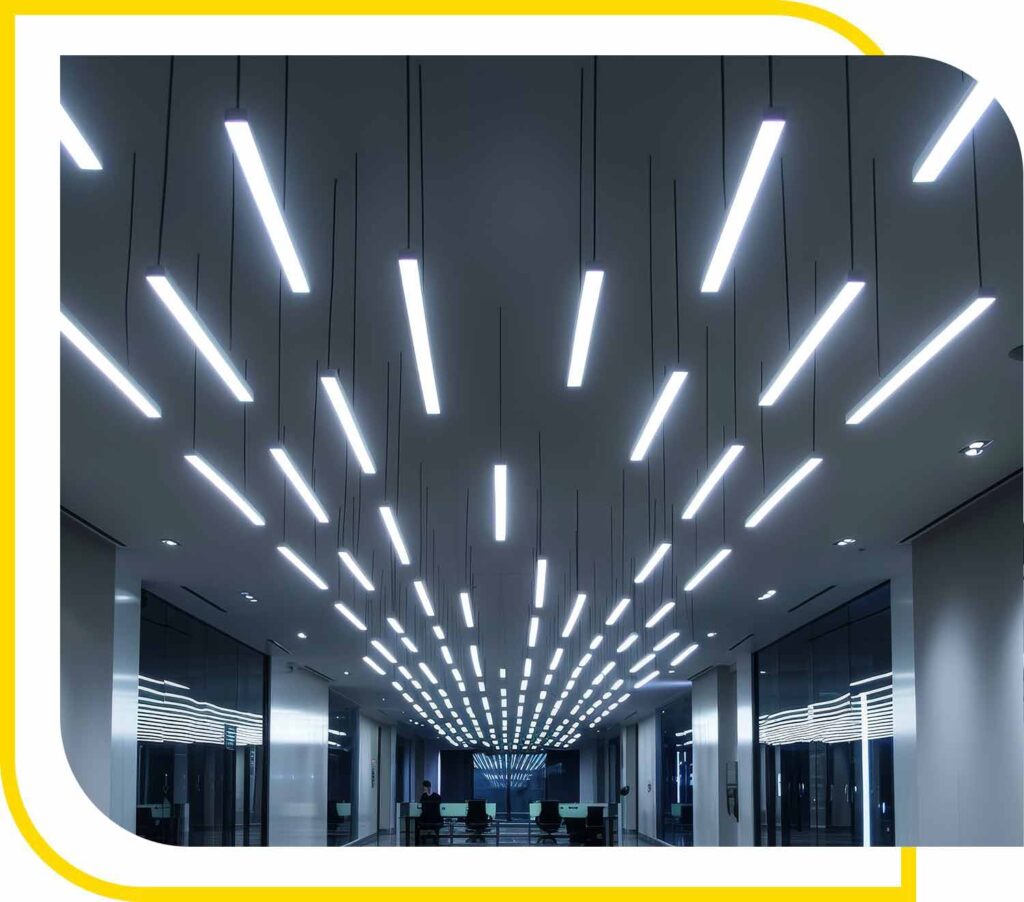
Offices seldom adopt full “living room” LED schemes, as productivity-focused workspaces demand cooler CCTs (3500K–4000K) and uniform illumination. The exception is executive lounges, reception conversation areas, or wellness rooms designed for informal meetings or decompression. Here, tunable-white LED systems allowing shifts from 3000K to 4000K support both relaxation and focused discussion. Task-appropriate dimming is essential, but installations must avoid excessive warmth or shadowing that impedes screen visibility or document reading. Open-plan offices should never use residential-style lighting, as it reduces visual acuity and increases eye strain.
Installation requires meticulous planning for commercial viability. Always conduct a detailed photometric study to balance ambient, task, and accent layers while meeting venue-specific illuminance standards—hotels typically require 100–200 lux in lounges versus 500 lux in mall corridors. Use dimmable LED drivers compatible with venue management systems, ensuring smooth 1–10V or DALI dimming down to 1% without flicker. Thermal management is critical; avoid embedding high-output LEDs in insulation-filled ceilings without adequate heat sinks, as this drastically shortens lifespan in continuously operated commercial spaces. Voltage drop must be calculated for long cable runs, especially in malls with expansive layouts, using 12AWG wire for runs exceeding 15 meters. All fixtures require IP ratings suitable for the environment—minimum IP20 for dry office areas but IP44 for hotel bathrooms near lounges. Finally, prioritize serviceability: install removable ceiling panels or access hatches above luminaires, as commercial maintenance schedules demand rapid fixture replacement without ceiling damage. Always verify compliance with local electrical codes and fire safety regulations, particularly regarding emergency lighting integration in evacuation routes adjacent to these comfort zones.
Why Choose Beauty STC Lighting
Transform your living room with high-quality LED lighting solutions. Partner with Beauty STC, a trusted manufacturer in innovative and energy-efficient LED products. For collaboration opportunities and customized lighting options, contact our sales manager at [email protected] today.
⚡ LED Power Supply Calculator
Estimate the power supply needed for your LED strip project.