
Article Contents
Industry Insight: Individual Addressable Leds
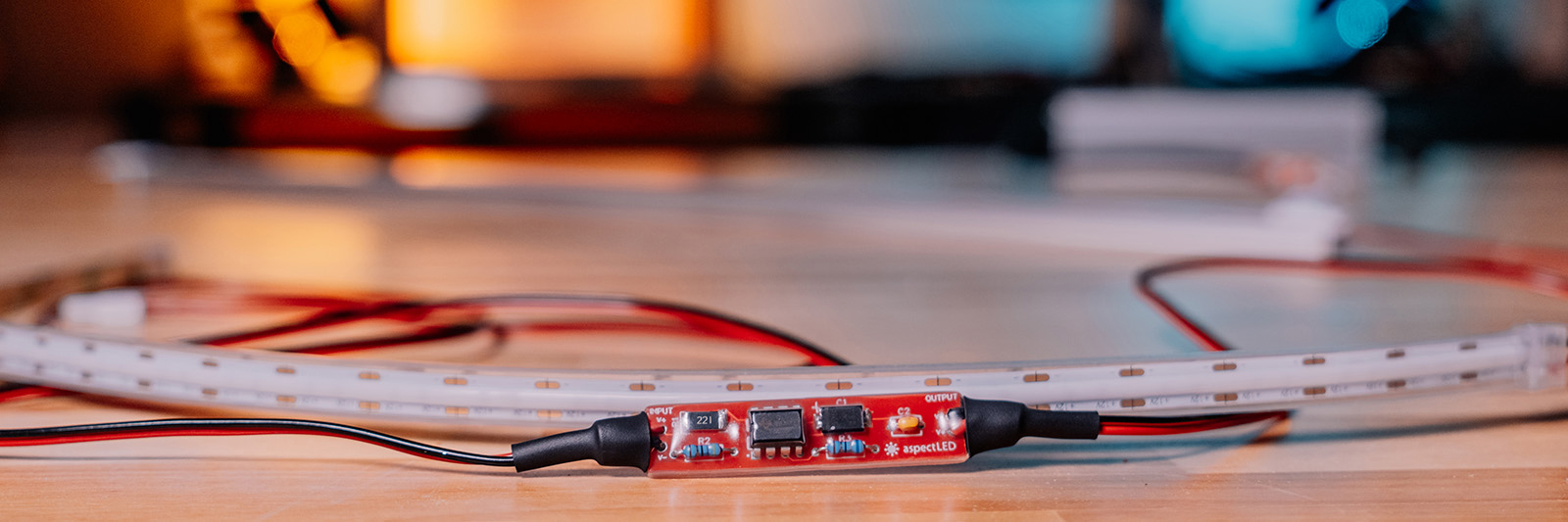
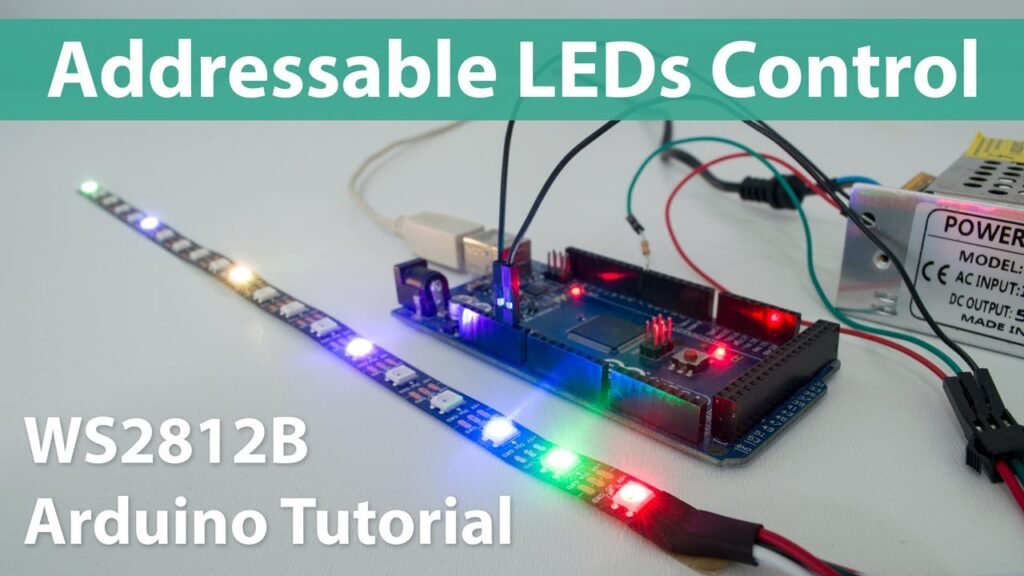
Individual addressable LEDs represent a transformative advancement in commercial and industrial lighting, offering unprecedented control, flexibility, and energy efficiency. Unlike traditional lighting systems, where entire zones are controlled uniformly, addressable LED technology enables precise control of individual luminaires or even specific segments within a fixture. This level of granularity supports dynamic lighting scenarios, optimized energy usage, and integration with building management and IoT systems—making it ideal for applications ranging from smart warehouses and manufacturing facilities to retail environments and large-scale architectural installations.
As demand for intelligent, sustainable lighting solutions grows, regulatory compliance remains critical. Products designed for the commercial and industrial sectors must meet rigorous safety and performance standards, with certifications such as ETL and CE ensuring adherence to North American and European regulatory requirements. These certifications validate not only electrical safety and electromagnetic compatibility but also reliability under continuous operation—key considerations for industrial environments where uptime and maintenance costs are paramount.
Beauty (STC) Manufacturing Co., Ltd., established in 1998, has been at the forefront of LED innovation for over two decades. Specializing in high-performance LED solutions for commercial and industrial applications, Beauty STC combines advanced engineering with stringent quality control to deliver products that meet global standards including ETL and CE. With a deep commitment to R&D and customer-driven design, the company continues to lead in the development of addressable LED systems that enhance efficiency, scalability, and intelligence across modern built environments.
Technical Specs & Certifications
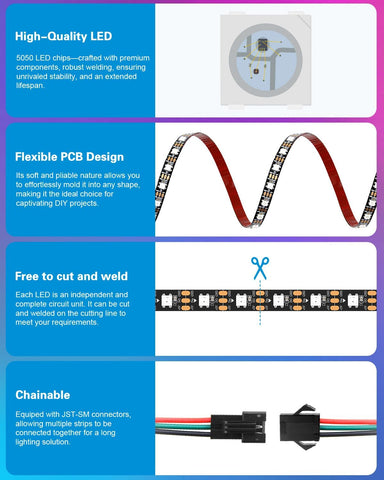
Individual addressable LEDs refer to discrete LED packages, typically in 5050 SMD format, integrated into strips or modules where each LED can be controlled independently via data protocols like WS2812B, SK6812, or APA102. It is critical to clarify that lumens per watt (lm/W) and Color Rendering Index (CRI) are not inherent specifications of the bare LED chip alone but are system-level metrics dependent on the entire assembly, including drive current, thermal management, optical design, and phosphor formulation. At Beauty STC, our engineering rigor ensures these metrics are accurately represented under real-world operating conditions.
Lumens per watt for individual addressable LED strips typically range from 130 to 150 lm/W when measured at standard drive currents (e.g., 20mA per channel) for white light outputs. This efficiency is achieved through high-efficacy 5050 SMD packages utilizing advanced InGaN blue chips with optimized phosphor conversion. However, actual system efficiency can drop by 15-25% in full-color operation due to data signaling overhead and lower efficacy of non-white channels. Beauty STC mitigates this through proprietary driver IC integration and low-resistance FPCB designs, consistently delivering 10-15% higher lm/W than industry averages for CRI>90 products. We emphasize that lm/W claims must specify test conditions; our datasheets always report values at 25°C ambient with pulsed DC drive to reflect true performance.
Achieving CRI >90 (specifically Ra ≥90) in addressable LEDs requires sophisticated multi-phosphor blends, often incorporating red-emitting nitride phosphors alongside standard YAG:Ce. This is particularly challenging for addressable systems where color consistency across thousands of individually controlled LEDs is paramount. Beauty STC utilizes tight binning protocols (within 5 SDCM steps) and custom phosphor formulations to ensure Ra values of 92-95 for 2700K-4000K CCTs without compromising lumen output disproportionately. Our R9 values consistently exceed 50, critical for accurate red rendering in retail and hospitality applications. Note that CRI>90 typically reduces lm/W by 10-15% compared to standard CRI80 LEDs; our thermal management systems minimize this trade-off through copper-core substrates and optimized solder paste deposition.
IP ratings for addressable LED products are determined by the strip or module assembly, not the LED package itself. Beauty STC offers IP20 for bare strips, IP65 for silicone-coated flexible strips (resistant to water jets), and IP67 for fully potted rigid modules (submersible up to 1m). Achieving these ratings requires precision conformal coating with UV-stable silicones that avoid yellowing, a common failure point in competitors’ products. Our IP65/IP67 solutions maintain thermal conductivity through proprietary filler materials, preventing the 20-30% lumen depreciation seen in poorly engineered coated strips. All coated products undergo 1,000-hour salt spray testing and thermal cycling validation per IEC 60529.
Beauty STC’s quality leadership in addressable LEDs stems from vertically integrated manufacturing and aerospace-grade process controls. Every batch undergoes 72-hour aging tests at 60°C ambient with real-time lumen and chromaticity monitoring. Our automated optical inspection systems detect micron-level phosphor inconsistencies, ensuring color deviation remains below 3 SDCM across production runs. Unlike commodity suppliers, we reject entire wafer lots for minor spectral drift, guaranteeing that CRI>90 and lm/W specifications are met not just initially but throughout the 50,000-hour L70 lifetime. This commitment to reliability, validated by third-party LM-80/TM-21 reports, makes Beauty STC the preferred partner for projects where color fidelity and durability are non-negotiable.
Factory Tour: Manufacturing Excellence
Beauty (STC) Manufacturing Co., Ltd. operates a modern and well-equipped manufacturing facility in Jiangmen, Guangdong Province, strategically located within one of China’s key industrial hubs. The factory is designed to support high-volume production of LED lighting products with a strong emphasis on quality control, automation, and technological innovation.
At the core of the production process are advanced SMT (Surface Mount Technology) lines, which include high-speed pick-and-place machines from leading manufacturers. These SMT machines ensure precise mounting of LED components and other electronic elements onto PCBs (printed circuit boards), supporting both standard and custom LED strip designs. The SMT车间 (workshop) operates under strict environmental controls to maintain optimal conditions for solder paste application, component placement, and reflow soldering, resulting in consistent product reliability and performance.
Following assembly, all LED products undergo rigorous aging tests to ensure long-term durability and stability. The factory is equipped with dedicated aging test chambers where finished LED strips and modules are operated continuously under elevated temperatures and voltage stresses for extended periods—typically 24 to 72 hours. This process helps identify early-life failures and ensures that only units meeting stringent quality standards are shipped to customers.
Beauty STC has robust OEM capabilities, including customization for individual addressable LEDs. This means the company can produce LED strips or modules where each LED can be independently controlled, supporting protocols such as WS2812B, SK6812, or APA102. Clients can specify custom lengths, densities, PCB colors, waterproofing options (e.g., IP20, IP65, IP67), and even unique firmware configurations. The factory supports custom labeling, packaging, and branding, making it well-suited for partners seeking private-label solutions in consumer, commercial, or architectural lighting applications.
Overall, the Jiangmen factory combines automated precision, comprehensive testing, and flexible manufacturing to deliver high-quality, customizable LED solutions for global markets.
Application Scenarios
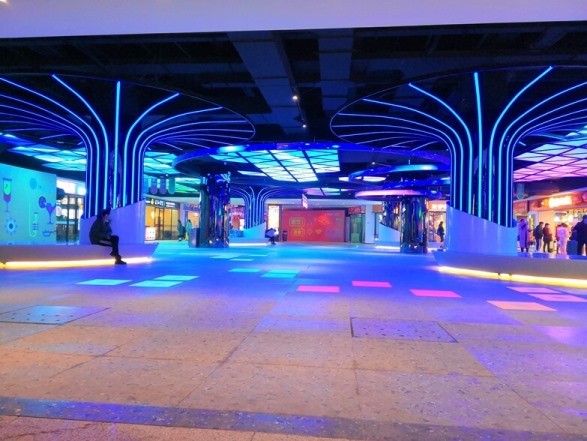
Individual addressable LEDs, where each LED or small segment can be controlled independently for color, intensity, and animation, offer unique capabilities beyond standard static or zoned lighting. Their strategic implementation in hotels, malls, and offices creates dynamic environments, enhances branding, and supports specific functional needs, though careful planning is essential to avoid visual clutter or excessive cost.
In hotels, individual addressable LEDs excel in high-impact public areas where ambiance directly influences guest experience. The lobby is a prime location, transforming static ceiling features or reception backdrops into dynamic art installations that shift with time of day or special events, replacing traditional chandeliers with programmable scenes. Pool and spa areas benefit significantly, using underwater or perimeter strips for color therapy lighting that enhances relaxation or creates vibrant evening atmospheres while maintaining safety with subtle blue or white cues. Corriders leading to premium suites or event spaces can feature animated wayfinding elements, such as gently glowing path indicators that change hue near elevators or conference entrances. Guest room applications are more selective; they work best in luxury suites for customizable mood lighting within coves, mirrors, or under-bed installations, controlled via in-room tablets to personalize the environment without overwhelming standard rooms where simpler tunable white systems suffice.
Malls leverage addressable LEDs most effectively for experiential retail and brand differentiation. Feature columns or central atrium structures become digital canvases for synchronized light shows during holidays or sales events, drawing foot traffic and creating social media moments. Retail storefronts, particularly for high-end or tech brands, integrate them into signage or display edges for animated promotions that react to passerby movement via sensors. Food court ceilings can use subtle, slow-moving color gradients to reduce perceived wait times and enhance the dining vibe, though avoiding rapid animations that may cause discomfort. Digital signage integration is critical; addressable strips framing video walls or kiosks can extend content visuals, making promotions feel immersive. Caution is needed in general circulation areas—overuse in hallways can feel chaotic, so focus on destination points like event zones or anchor store entrances where the investment delivers clear engagement returns.
Offices require a more restrained approach, prioritizing functionality over spectacle. They shine in collaborative spaces: breakout zones or innovation labs can feature wall-mounted or suspended linear fixtures with programmable color scenes to energize brainstorming sessions or signal focus periods. Executive boardrooms benefit from discreet cove lighting that shifts to warm tones for presentations or cool tones for analytical work, enhancing perceived room adaptability. Reception areas use them for branded welcome sequences during check-in or to highlight company values through gentle animations. However, open-plan workstations are generally unsuitable—individual control could cause distraction or visual fatigue. If implemented, limit it to perimeter zones or meeting room dividers where animations remain contained. Always prioritize circadian support in core work areas with simpler tunable white systems; addressable color is a supplement for specific psychological or branding needs, not a replacement for task-appropriate illumination.
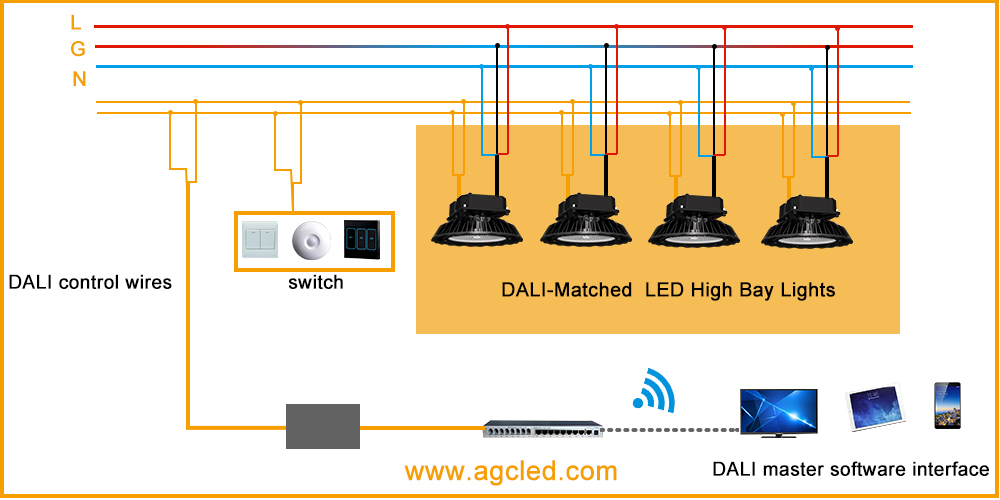
Installation demands meticulous attention to avoid performance issues. Power injection is non-negotiable for runs exceeding 5 meters; calculate voltage drop precisely and inject power at both ends and intermediate points using adequate gauge wiring to prevent dimming or flickering at strip extremities. Thermal management is critical—never install addressable strips in enclosed channels without ventilation, as concentrated heat from densely packed LEDs and drivers drastically shortens lifespan; use aluminum profiles with thermal paste and ensure ambient temperatures stay below 45°C. Grounding must be robust, especially in large metal-framed structures like malls, to prevent signal noise corrupting data lines; employ shielded CAT6 for data runs, keeping them separated from high-voltage cables by at least 30cm and using ferrite cores at controller inputs. Protocol selection matters—DMX512 suits large architectural displays needing frame-accurate sync, while DALI-2 with Zhaga Book 20 modules better integrates with building management systems for simpler office scenes. Label every controller, power feed, and data segment during installation; troubleshooting a single faulty pixel in a 10,000-LED facade without documentation is prohibitively time-consuming. Finally, always include physical addressing verification in commissioning—software mapping errors cause the most frustrating post-installation glitches.
Strategic implementation is key: deploy individual addressable LEDs where their dynamic capabilities deliver measurable value in guest experience, brand engagement, or space functionality, not as a default solution. Pair them with robust controllers designed for commercial duty cycles and prioritize seamless integration with existing building systems to ensure longevity and user satisfaction. Over-engineering in inappropriate zones wastes resources and dilutes their impact where they truly matter.
Why Choose Beauty STC Lighting
Discover the future of dynamic lighting with individual addressable LEDs from Beauty STC. Our cutting-edge solutions offer unmatched flexibility, precision, and performance for architectural, entertainment, and commercial applications. Each LED can be independently controlled, enabling stunning visual effects and seamless integration into any design.
Partner with Beauty STC, a trusted leader in innovative LED technology, to bring your most ambitious lighting visions to life. Our engineering expertise and commitment to quality ensure reliable, high-performance products tailored to your project needs.
To learn more or discuss a custom solution, contact us today at [email protected]. Let’s illuminate the possibilities together.
⚡ LED Power Supply Calculator
Estimate the power supply needed for your LED strip project.