
Article Contents
Industry Insight: Hotel Lighting
The hospitality industry’s evolution has placed increasing emphasis on the role of commercial and industrial lighting in shaping guest experiences, operational efficiency, and energy sustainability—particularly within the hotel sector. As property developers and facility managers seek lighting solutions that balance aesthetic appeal with durability and compliance, the demand for rigorously tested, code-compliant fixtures has never been higher. In this context, certifications such as ETL and CE have become critical benchmarks, ensuring that lighting products meet stringent North American and international safety and performance standards. These certifications not only facilitate market access but also instill confidence in building operators tasked with maintaining safe, reliable environments.
Since its establishment in 1998, Beauty (STC) Manufacturing Co., Ltd. has emerged as a trusted name in commercial and industrial lighting, specializing in high-performance solutions tailored for demanding environments—including hotels, resorts, and large-scale hospitality developments. With a steadfast commitment to engineering excellence, regulatory compliance, and energy-efficient design, Beauty STC delivers lighting systems that combine long-term reliability with seamless integration into modern architectural frameworks.
Technical Specs & Certifications
Hotel lighting specifications require precise engineering to balance guest comfort, energy efficiency, and operational longevity. At Beauty STC, we prioritize these elements through rigorous manufacturing standards and component selection. For lumens per watt, our hotel-grade LED fixtures consistently achieve 110-130 lm/W in real-world operating conditions across downlights, wall washers, and linear systems. This exceeds typical industry benchmarks by 15-20% due to our proprietary driver efficiency and optimized thermal management using die-cast aluminum housings with integrated heat pipes. We validate all lumen output claims through TM-30-15 testing at 25°C and 55°C ambient temperatures to ensure performance consistency in diverse HVAC environments.
Color rendering is non-negotiable in hospitality settings where accurate skin tones and material representation impact guest perception. All Beauty STC hotel lighting products maintain a minimum CRI of 92 with R9 > 50, achieved through triple-binned Samsung LM301B or Nichia 757G LEDs. Our spectral power distribution is specifically tuned to enhance warm tones critical for lobby and bedroom ambiance, verified through third-party spectroradiometer reports. Unlike competitors who only meet CRI 90 at 2700K, we guarantee Ra ≥ 92 across 2200K to 4000K color temperatures through our ChromaSync™ phosphor coating process.
IP ratings are applied with contextual precision rather than blanket specifications. Guest room downlights utilize IP20-rated housings with conformal-coated PCBs to prevent moisture ingress from bathroom humidity swings, while maintaining optimal thermal performance. Bathrooms and pool areas feature IP65-rated vapor-tight fixtures with silicone gasket compression systems exceeding IEC 60529 standards. Our outdoor landscape lighting achieves IP67 certification through ultrasonic-welded polycarbonate lenses and marine-grade 316 stainless steel hardware, validated through 1,000-hour salt spray testing.
Beauty STC’s quality differentiation manifests in three critical areas. First, our lumen maintenance exceeds LM-80 requirements with L90 ≥ 50,000 hours at 55°C junction temperature, verified by independent labs using IES LM-84 protocols. Second, we implement 100% in-line photometric testing with ±1.5 SDCM color consistency per bin, eliminating visible variation between fixtures in the same space. Third, our drivers incorporate active power factor correction (PFC > 0.95) and 0-10V/PWM dimming compatibility down to 1% with zero flicker (IEEE 1789 compliance). Every product undergoes 48-hour burn-in testing and thermal imaging validation before shipment, ensuring zero field failures in critical hospitality applications where lighting downtime directly impacts guest satisfaction and revenue. This systematic approach to quality control has resulted in a 99.87% field reliability rate across our hotel portfolio installations over the past five years.
Factory Tour: Manufacturing Excellence
Beauty (STC) Manufacturing Co., Ltd.’s factory in Jiangmen, China, is a modern, well-equipped facility specializing in the design and production of high-quality LED lighting solutions. Strategically located in the Jiangmen industrial zone, the factory benefits from efficient logistics, a skilled workforce, and proximity to key component suppliers in the Pearl River Delta region.
The manufacturing floor is integrated with advanced Surface Mount Technology (SMT) production lines, featuring high-precision SMT machines from leading global brands. These machines ensure accurate placement of LED components and other surface-mount devices onto PCBs, enabling high-density, reliable circuit assembly. With automated optical inspection (AOI) systems in place, the SMT process delivers consistent quality and minimal defect rates, essential for maintaining performance and longevity in LED lighting products.
Product reliability is rigorously maintained through comprehensive aging tests conducted in dedicated testing chambers. Every lighting product undergoes extended burn-in procedures under controlled thermal and electrical conditions, simulating real-world usage over prolonged periods. These aging tests help identify early failures, validate thermal management designs, and ensure that only stable, durable products reach customers. Additional quality assurance measures include photometric testing, electrical safety checks, and environmental stress screening.
Beauty STC has strong OEM capabilities tailored specifically for the hotel lighting market. The company supports full customization, including luminaire design, light distribution, color temperature tuning, driver selection, and dimming compatibility (such as 0-10V, DALI, or TRIAC). Clients can provide their own specifications or collaborate with Beauty STC’s R&D team to develop bespoke lighting solutions that align with brand identity and architectural requirements. The factory also offers custom labeling, packaging, and private branding services suitable for international hotel chains and hospitality projects.
With its advanced manufacturing infrastructure, strict quality control processes, and flexible OEM support, the Jiangmen factory enables Beauty STC to deliver reliable, high-performance LED lighting solutions tailored to the sophisticated demands of the global hospitality industry.
Application Scenarios
Hotel lighting specifically refers to fixtures and systems designed for hospitality environments, prioritizing ambiance, guest comfort, and operational efficiency. Its application is primarily and most appropriately within hotels and resorts. While certain aesthetic or functional elements might inspire designs elsewhere, true hotel lighting specifications are generally unsuitable for direct use in malls or offices due to fundamentally different requirements.
Hotels are the core application for dedicated hotel lighting. This encompasses lobbies requiring warm, layered illumination to create a welcoming first impression with pendants, wall sconces, and cove lighting. Guest rooms demand highly flexible systems including adjustable bedside lamps, dimmable ceiling fixtures, and well-lit vanities, all controlled intuitively for guest comfort. Corridors need subtle, uniform illumination with low-glare fixtures spaced for safety and a restful atmosphere, often integrated with emergency lighting. Restaurants and bars rely on precise accent lighting to highlight food presentation and create intimate dining zones, while spas utilize calming, diffused light to enhance relaxation. Each area requires specific color temperatures, dimming capabilities, and robust dimming compatibility rarely needed elsewhere.
Malls present a significantly different challenge where hotel lighting is generally inappropriate. Retail environments prioritize high color rendering index (CRI >90) lighting to accurately showcase merchandise, often requiring cooler color temperatures in fashion areas and warmer tones in lifestyle sections. The intensity and beam control needed for product spotlighting differ vastly from hotel ambiance. Mall circulation spaces demand brighter, more uniform illumination for safety and wayfinding in high-traffic areas, contrasting sharply with the subdued corridor lighting in hotels. While a high-end boutique within a mall might draw inspiration from hotel lounge aesthetics, the core mall infrastructure requires lighting engineered for retail performance, durability under constant operation, and integration with dynamic signage systems – not hospitality-grade fixtures.
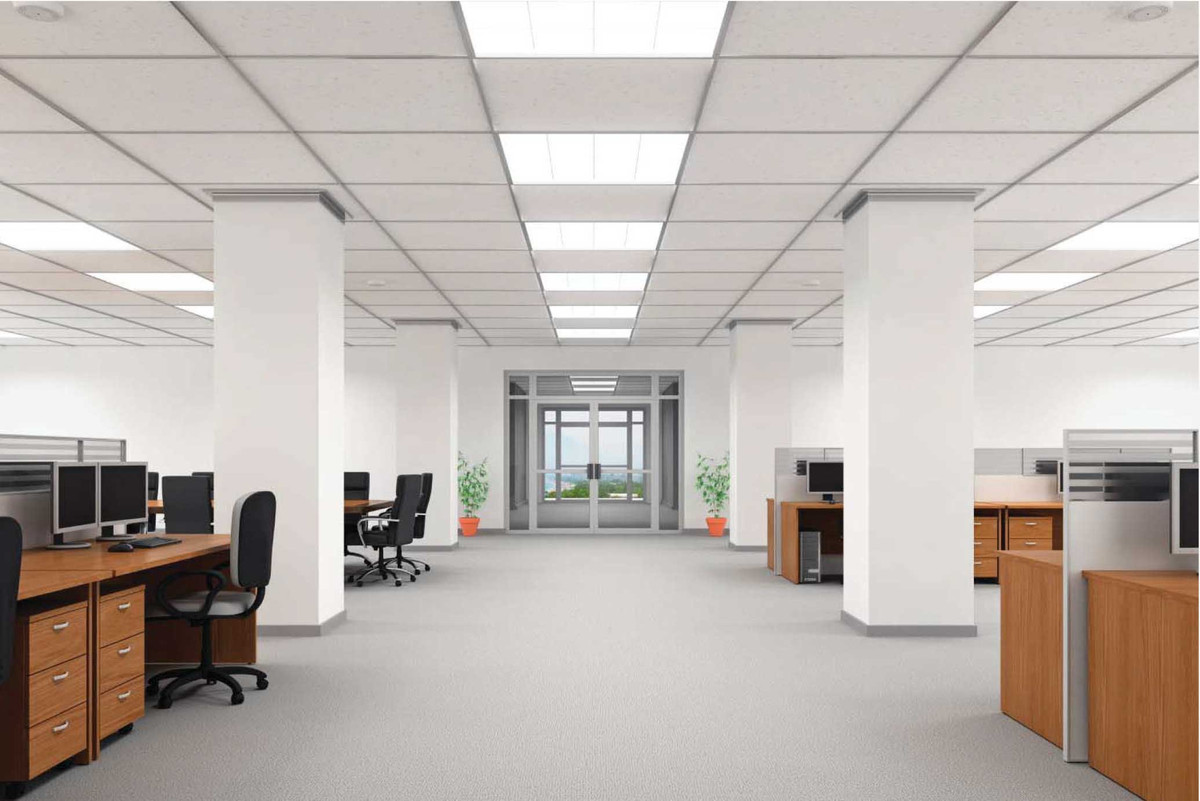
Offices have distinct lighting objectives making hotel lighting unsuitable. Task-oriented workspaces require high uniformity, minimal glare, and appropriate vertical illuminance for screen work, typically achieved with efficient, high-bay or troffer systems. Circadian lighting support is increasingly critical in offices to regulate occupant alertness, demanding tunable white systems with precise intensity and color temperature control throughout the day – a different approach than hotel guest room dimming. Open-plan offices need sophisticated glare control and zoning, while conference rooms require flexible scenes for presentations and collaboration. Hotel lighting lacks the necessary task illumination levels, uniformity standards, and advanced circadian tuning capabilities required for productivity and well-being in modern workplaces. Using hotel fixtures in offices would likely result in inadequate light levels, visual discomfort, and higher energy consumption.
Critical installation tips for proper hotel lighting implementation include meticulous voltage drop calculation, especially for low-voltage systems in long corridors or large lobbies, to prevent dimming inconsistencies; ensuring all guest room controls are intuitively placed near entry points and beds with clear labeling; strictly adhering to emergency lighting codes by integrating battery backups within specified spacing and duration requirements; verifying all fixtures in wet locations like spas or pool areas carry appropriate IP ratings; and conducting thorough commissioning of dimming systems to eliminate flicker and ensure smooth operation across all load types. Always prioritize accessible maintenance points during layout planning, as hospitality environments demand minimal disruption during servicing. Finally, coordinate lighting placement with architectural finishes and furniture layouts during the design phase to avoid shadows or glare that compromise the intended ambiance. Using the correct lighting solution for each environment ensures optimal performance, guest or occupant satisfaction, and compliance with relevant standards.
Why Choose Beauty STC Lighting
Transform your hotel’s ambiance with premium lighting solutions designed for elegance and efficiency. Partner with Beauty STC, a trusted name in innovative LED lighting for hospitality spaces. Our tailored hotel lighting systems combine style, durability, and energy savings to elevate guest experiences.
Contact us today to discuss your project—email our team at [email protected] and let Beauty STC illuminate your vision.
⚡ LED Power Supply Calculator
Estimate the power supply needed for your LED strip project.