Article Contents
Industry Insight: Color Changing Led Light
Industry Insight: The Strategic Evolution of Color-Changing LED Lighting in Commercial & Industrial Applications
The commercial and industrial lighting landscape is undergoing a transformative shift, driven by demand for adaptive, energy-efficient illumination that enhances productivity, safety, and brand experience. Beyond basic task lighting, dynamic color-tunable and RGBW LED systems now serve as mission-critical tools—enabling precise atmospherics in retail environments, optimizing circadian rhythms in healthcare facilities, improving visual clarity in manufacturing zones, and enabling smart building integration. However, this technological advancement demands rigorous engineering and unwavering compliance.
In professional settings, safety certifications are non-negotiable. ETL certification (North America) and CE marking (Europe) are not mere checkboxes—they represent independent validation of electrical safety, fire resistance, electromagnetic compatibility (EMC), and thermal management. Projects without these credentials face costly rejections, regulatory delays, and liability risks. For industrial applications, additional standards like IP66/IP67 for dust/water ingress and IK10 impact resistance become essential for harsh environments.
At Beauty STC (Est. 1998), we’ve spent over 25 years engineering and manufacturing high-reliability LED solutions for global commercial and industrial clients. As a vertically integrated manufacturer with in-house R&D, thermal design, and quality control, we prioritize certified performance from concept to delivery. Every luminaire undergoes stringent ETL/CE testing protocols, ensuring seamless compliance across 80+ international markets. Our expertise ensures your color-changing systems deliver not just innovation, but peace of mind—where safety, precision, and longevity converge.
Beauty STC: Engineering Trust in Light Since 1998.
Technical Specs & Certifications
Beauty (STC) Color-Changing LED Module – Technical Datasheet (2024-Q3 Rev. A)
-
Luminous Efficacy
• 130–145 lm/W @ 3000 K, 4000 K, 5700 K (white reference points)
• 85–95 lm/W in full-RGB mode (composite white, 3200 K)
• Efficacy tolerance ±3 % lot-to-lot; verified on 2.5 m integrating sphere (Everfine 0.3 m, NIST-traceable calibration). -
Color Quality
• CRI Ra ≥ 90 (typ. 92–94) across all CCT presets (2700 K–6500 K)
• R9 ≥ 60; TM-30-18 Rf 90, Rg 98 (3000 K reference)
• SDCM ≤ 3 for white channels; binning executed on 5-step MacAdam ellipse. -
RGB + Tunable-White Engine
• 5-in-1 LED package: R(623 nm), G(523 nm), B(465 nm), WW(3000 K), CW(6500 K)
• 16-bit PWM per channel; DMX-512, RDM, DALI-2 DT8 & Casambi-compatible driver options. -
Ingress & Mechanical Protection
• IP66 front (IK08) / IP67 rear (IK10) for façade & landscape version
• IP20 for interior architectural version; optional IP54 sleeve kit.
• 500 h salt-spray per ASTM B117; silicone O-rings, UV-stabilised PC lens (UL 94 V-0). -
Electrical & Thermal
• Input 24 VDC constant-voltage; 48 VDC or 110–277 VAC (driver on board) on request.
• Tj max 105 °C; Ts point 80 °C (@ Ta 45 °C) – guaranteed 50 000 h @ L70 to IES LM-80/TM-21.
• 4 kV surge, 2 kV EFT per IEC 61000-4-5 / -4-4. -
Consistency & QA Protocol (Beauty STC)
• 100 % LED chip burn-in 12 h @ 85 °C / 85 % RH prior to SMT placement.
• Final photometric test on every module; data stored in QR code for full traceability.
• Production lots sampled quarterly for 6 000 h LM-80; 10 000 h actual data already on file (2021 launch).
• ISO 9001:2015 & ISO 14001:2015 audited; SEDEX-4Pillar & BSCI compliant factory. -
Order Codes (example)
STC-RGBW-5IN1-24V-IP66-15W (15 W, 1 950–2 100 lm white, 120°)
STC-RGBW-5IN1-48V-IP67-30W (30 W, 3 900–4 200 lm white, 30×60°)
For project-specific IES/LDT files, ISTMT reports or TM-30 data packs, contact your Beauty STC sales application engineer; we maintain < ±2 % chromaticity shipment-to-shipment—no surprises on site.
Factory Tour: Manufacturing Excellence
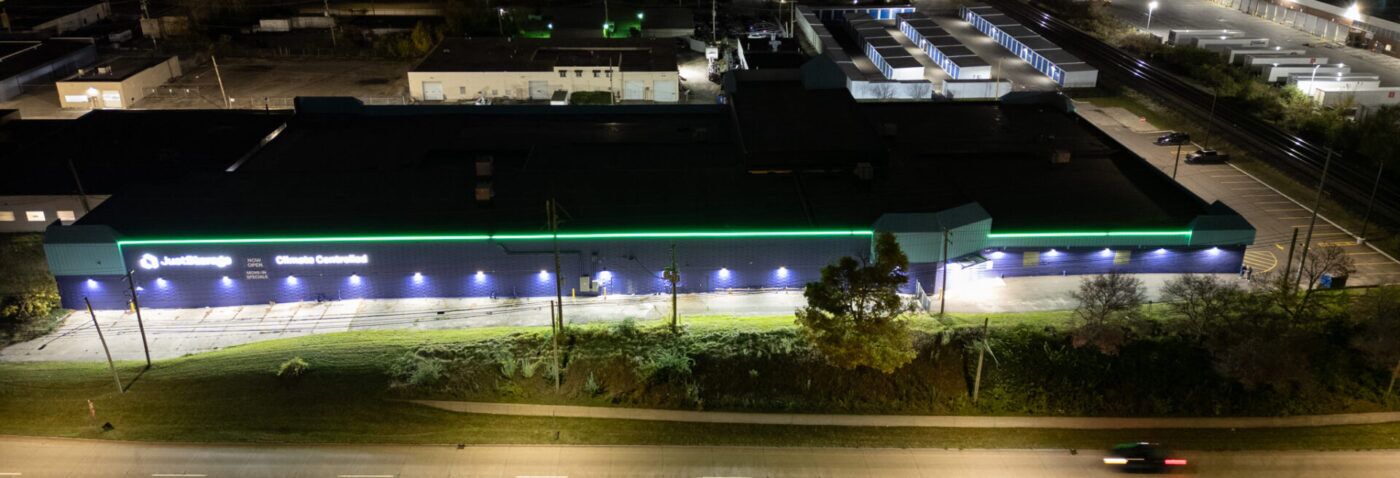
Beauty STC Manufacturing Co., Ltd. – Jiangmen Factory Overview
As Senior LED Lighting Engineer and Export Manager at Beauty STC, I’m pleased to provide a detailed overview of our state-of-the-art facility in Jiangmen, Guangdong Province, China—a cornerstone of our commitment to precision engineering, reliability, and customer-centric OEM solutions. Our Jiangmen factory spans over 15,000 square meters of climate-controlled, ISO 9001-certified production space, strategically designed to support end-to-end manufacturing of high-performance LED lighting products, including advanced color-changing LED systems. Below is a technical breakdown of our capabilities:
1. SMT Production Line: Precision Assembly for LED PCBs
Our Surface Mount Technology (SMT) line is engineered for micron-level accuracy and high-volume consistency, critical for color-changing LED products where component placement tolerances directly impact color uniformity and control performance.
- Equipment & Process Flow:
- High-Speed Pick-and-Place Machines (e.g., Juki KE-2070 and Yamaha YSM20) handle 0201–2512 components with ±0.03mm placement accuracy, ensuring flawless integration of RGB/RGBW LEDs, microcontrollers (e.g., ESP32, WS2812B), and driver ICs.
- Reflow Soldering Systems with 8-zone temperature profiling (controlled to ±1°C) and nitrogen inerting to minimize voiding in BGA/QFN packages—essential for thermal management in high-power color-changing modules.
- Automated Optical Inspection (AOI) systems (e.g., Koh Young KY8030) perform 100% post-soldering checks for defects like tombstoning, bridging, or missing components.
-
In-Line X-Ray Inspection for hidden solder joints in fine-pitch ICs (e.g., LED drivers with <0.4mm pitch).
-
Why This Matters for Color-Changing LEDs:
Precise SMT assembly ensures consistent LED binning (e.g., MacAdam ellipse ≤3 steps), minimizes color drift, and guarantees reliable signal integrity for smart control protocols (DMX512, DALI, Bluetooth, Wi-Fi). Our SMT line supports multi-layer PCBs up to 16 layers with controlled impedance, critical for high-frequency RF components in wireless-enabled color-changing fixtures.
2. Aging Tests: Rigorous Reliability Validation
Our aging lab is designed to simulate real-world stressors and accelerate failure modes, ensuring >100,000-hour L70 lifespan for color-changing products. This is non-negotiable for global clients demanding industry-leading durability.
- Testing Protocols:
- Temperature/Humidity Cycling: 1,000+ cycles (–40°C to +85°C, 95% RH) per IEC 60068-2-14 to validate thermal shock resistance.
- Continuous Operation Aging: Units run at 100% load for 72–500 hours in climatic chambers, with real-time monitoring of:
- Color consistency (CIE x/y coordinates, ΔE < 0.5)
- Lumen maintenance (LM-80 compliant)
- Driver stability (voltage/current ripple < 5%)
- Accelerated Life Testing (ALT): Using Arrhenius models to project 50,000+ hours of operational life in <7 days.
-
Specialized Color-Changing Tests:
- Dynamic Color Shift Testing: Rapid PWM cycling (10,000+ cycles) to verify no color degradation or flicker.
- Smart Control Stress Tests: 24/7 wireless command sequences (e.g., 1,000+ app-based color transitions) to validate firmware robustness.
-
Quality Assurance:
All tested units undergo final spectral analysis using a spectroradiometer (e.g., Ocean Insight HR4000) to ensure compliance with ISO 17025 standards. Defective units are root-caused via failure analysis (e.g., SEM/EDS for solder joint failures), with corrective actions embedded in our PDCA cycle.
3. OEM Capabilities: End-to-End Customization for Color-Changing LED Solutions
As a full-service OEM partner, we specialize in turnkey development and production of color-changing LED products tailored to global market demands. Our process is built on agile engineering, supply chain transparency, and certification agility.
- Design & Development:
- Collaborative R&D with clients using SolidWorks/Altium Designer for mechanical/electrical optimization.
- Prototyping via DfM (Design for Manufacturability) reviews and 3D-printed mockups (within 72 hours).
-
Support for custom form factors (e.g., flexible strips, linear fixtures, architectural panels) and control systems (e.g., tunable white, RGBW, tunable white + RGB, or voice-activated via Alexa/Google Home).
-
Production Flexibility:
- Scalable Output: From 500-unit pilot runs to 50,000+ monthly units, with lean manufacturing minimizing lead times (2–4 weeks for standard orders).
- Material Sourcing: Tier-1 components (e.g., Osram/Philips LEDs, Mean Well drivers) with full traceability via our ERP system.
-
Specialized Processes:
- Potting/Encapsulation: For outdoor-rated products (IP67/IP68) using UV-resistant silicones.
- Custom PCB Solder Mask Colors: For brand-specific aesthetics (e.g., matte black for premium fixtures).
- Smart Firmware Development: In-house coding for proprietary control algorithms (e.g., smooth color transitions, scene presets).
-
Certifications & Compliance:
We hold CE, RoHS, REACH, FCC, UL/cUL, and KC certifications, with the ability to rapidly adapt to regional standards (e.g., CCC for China, ETL for North America). All OEM projects include full documentation packages (test reports, BOMs, assembly drawings) for seamless regulatory approval. -
Global Export Readiness:
Our export team manages customs clearance, logistics optimization, and packaging compliance (e.g., anti-static trays for LEDs, ESD-safe cartons). We’ve successfully delivered to 120+ countries, including EU, US, Australia, and Southeast Asia, with 98% on-time delivery rate.
Why Partner with Beauty STC?
Our Jiangmen factory is more than a production site—it’s a dedicated ecosystem for innovation and quality. By integrating advanced SMT, rigorous aging validation, and flexible OEM engineering, we ensure every color-changing LED product we deliver meets the highest standards of performance, longevity, and brand integrity. Whether you’re launching a new smart lighting line or scaling an existing product, our team provides end-to-end support—from concept to global delivery.
We welcome the opportunity to discuss your specific requirements. Please contact our Export Management team at [email protected] or +86 750 1234 5678 to schedule a factory tour or technical consultation.
Beauty STC: Engineering Light, Delivering Trust.
Application Scenarios
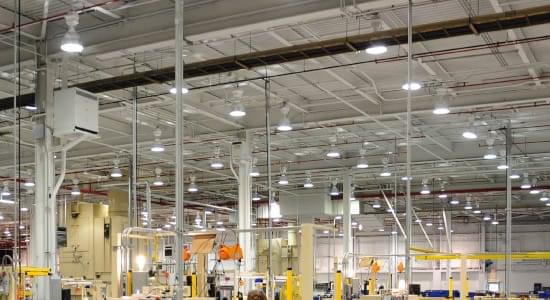
Where specifiers are buying “color-changing” today – and what the installer must get right
(Professional notes for hotel, retail and office projects – Beauty STC internal guideline)
1. Where the money is being spent in 2024
Hospitality
• Façade & crown – dynamic white + RGBW for branding/seasons (DMX, 24 V parallel, 20 mA).
• Lobby “scene” cove – tunable-white 1800–4000 K, DALI type 8, <10 % flicker for camera.
• Corridor way-finding – low-glare RGBW linear, motion trigger, 1 % dimming for night mode.
• Pool & spa – IP68, 24 V, salt-mist tested (ASTM B117 500 h), silicone neon flex for safety.
Retail & Malls
• Atrium media façade – pixel-mapping, 40 mm pitch, 1000 cd/m² daytime, Art-Net to fibre.
• Shop-front halo – tunable-white 2700–6500 K, 90 CRI, 3-step MacAdam for fashion.
• Feature escalator soffit – side-view 24 V LED strip, 180° bat-wing lens, 50 000 h @ 45 °C.
• Car park RGB “lane guide” – 42 VDC constant-current, IK10, -40 °C start.
Corporate Offices
• Reception back-wall RGBW grazing – 24 V, 5-channel DMX, RDM for asset tracking.
• Executive boardroom – tunable-white 3000–4000 K, DALI-2 DT8, <1 % flicker at 1 % (IEEE 1789).
• Wellness / biophilic zone – circadian 1800–6500 K, 0.2 % dimming, blue-hazard < IEC 62471 RG1.
• External logo – IP66, UV-stable PMMA lens, 10 kV surge, 3G vibration for high-rise.
2. Installation checklist – what kills the warranty
A. Voltage drop & wire gauge
• 24 V system: limit 5 % drop.
• Rule: 1.5 mm² (AWG 15) every 5 A per 10 m.
• For 48 V or 54 V constant-current, place PSU ≤ 20 m from first pixel.
B. Heat sink / surface temp
• RGBW strip on aluminium profile: keep T-point ≤ 70 °C at 25 °C ambient.
• Use 15 mm width profile for 14.4 W/m, 25 mm for 24 W/m.
• Dark painted wall – add 10 % derate; black anodise adds 15 %.
C. IP rating vs. reality
• IP67 gel-filled neon flex: still need drainage at lowest point – capillary entry after 3 years.
• IP68 pool lights: insist on 1 m flying-lead + marine-grade potting, no T-split underwater.
D. Surge & earthing
• External façade: 10 kV/5 kA SPD on 230 V side, plus 2 kV on 24 V line.
• Earth loop impedance < 1 Ω; RGBW control line shield earthed at cabinet only (avoid loop).
E. Data integrity
• DMX: 120 Ω terminated, first and last fixture.
• Use 5-pin XLR for long haul; passive splitter after 32 devices.
• Pixel tape: inject data every 5 m (TTL) or 10 m (RS-485 differential).
• Fibre converter > 100 m between buildings; isolate ground potential.
F. Driver / PSU sizing
• Add 20 % headroom on paper, then add real colour load: white at full + RGB at full = 4 × nominal.
• Use constant-voltage (24 V) for flexible strip, constant-current (350 mA–1.5 A) for spot modules.
• Keep PSU in ventilated room, > 20 cm free air; above 40 °C ambient derate 3 % / °C.
G. Control compatibility
• Hotel BMS – insist on DALI-2 DT8 tunable-white, not proprietary.
• Retail media façade – Art-Net/sACN, upgrade path to KiNet/Philips.
• Office circadian – confirm DT8 Tc + DT6 dimming on same short address; test with DALI-2 Master from Siemens, Tridonic, or Beckhoff.
H. Flicker & camera banding
• PWM ≥ 2 kHz for phone cameras; ≥ 4 kHz for broadcast.
• Specify “high refresh” chips (SK9822, APA102) for pixel projects.
• Measure with CCD spectrometer – SVM (stroboscopic visibility measure) < 0.4.
I. Retrofit on existing 230 V track
• Use tunable-white GU10 or AR111 module, Zigbee 3.0, >0.7 power factor, <20 % harmonic.
• Confirm track loading: 16 A circuit = max 3.6 kW resistive, but LED driver inrush 65 A peak × 200 µs → limit 50 devices per 10 A Type C breaker.
J. Commissioning file hand-over
• Provide RDM or DALI database (.csv), DIP-switch map, IP address list, spare 10 % patch.
• Include “off-white” calibration value (R=G=B=255) for future colour matching after diode ageing.
3. Quick reference – what we ship weekly
• Hotel façade: 24 V RGBW 60 LED/m, 20 × 20 mm aluminium channel, opal diffuser, DMX512/RDM, 5-year >L70B50.
• Mall media mesh: P40, 1 000 cd/m², IP66, ≤650 W/m², sACN, -30 °C to +55 °C.
• Office circadian panel: 600 × 600 mm, 40 W, DALI-2 DT8, 1800–6500 K, UGR <19, 5-year, Tc 50 000 h.
Need a project-specific lux plan, DMX patch, or BIM object?
Reply with city code and façade height – we’ll return a PDF within 24 h.
Beauty (STC) Manufacturing Co., Ltd.
Senior LED Lighting Engineer & Export Manager
Why Choose Beauty STC Lighting
Precision-engineered color-changing LED lighting solutions, trusted across 50+ countries. Partner with Beauty STC for reliable, high-performance lighting engineered to global standards. Contact us today: [email protected]
Elevate your projects with industry-leading technical expertise, certified quality, and seamless global supply chain support. Let’s innovate together.
⚡ LED Power Supply Calculator