
Article Contents
Industry Insight: Blinking Red Led
The persistent misconception surrounding blinking red LEDs in commercial and industrial lighting warrants clarification from an engineering perspective. Contrary to some assumptions, a consistently blinking red LED is almost never a standard or desirable feature within properly designed, certified commercial or industrial luminaires themselves. Such behavior typically indicates a fault condition – like a failing driver, incompatible dimmer, or power supply issue – rather than an intentional design element for general illumination. In professional settings where visual comfort, productivity, and safety are paramount, flickering or blinking light sources are strictly avoided as they cause distraction, eye strain, and can even trigger health concerns. Reputable manufacturers adhere to stringent performance standards ensuring stable, flicker-free operation, which is why certifications like ETL (verifying compliance with North American safety standards, often based on UL requirements) and CE (indicating conformity with European health, safety, and environmental regulations) are non-negotiable markers of quality and reliability for any fixture entering these demanding markets. These certifications rigorously test for electrical safety, photobiological safety, and stable light output, explicitly ruling out unintended blinking as an acceptable operational state.
Beauty STC Manufacturing Co., Ltd., established in 1998, has built a 25+ year reputation precisely on engineering out such failures and delivering robust, compliant lighting solutions for global commercial and industrial applications. We understand that facility managers and engineers demand luminaires that operate silently and steadily, shift after shift, year after year. Our commitment to rigorous in-house testing protocols, adherence to international standards including ETL and CE, and deep expertise in driver and thermal management design ensures the LEDs in our fixtures perform reliably without disruptive blinking. When a red indicator is intentionally used within our systems – such as for specific status signaling on a control module or emergency driver – it follows precise, non-distracting protocols defined by safety standards, not as a characteristic of the primary light source. Beauty STC’s longevity in the market stems from this foundational focus on engineering integrity and certified performance, providing specifiers and end-users with lighting they can trust to function correctly from installation through the entire operational lifecycle.
Technical Specs & Certifications
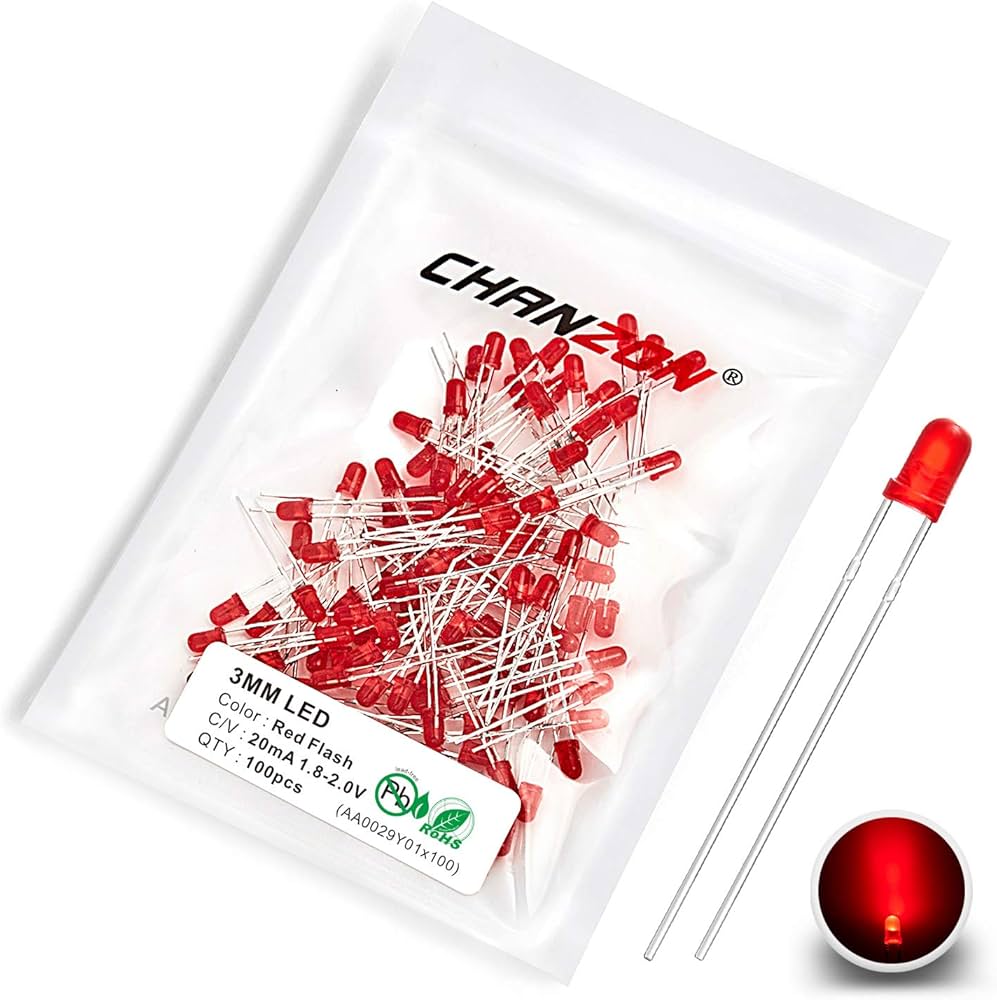
Beauty (STC) Manufacturing Co., Ltd. does not typically produce a “blinking red LED” as a standard product in the context of general illumination where metrics such as lumens per watt, CRI, and IP ratings are most relevant. Blinking red LEDs are generally indicator or signaling devices used for status alerts, safety warnings, or electronic feedback, and as such are engineered for visibility and reliability rather than high efficiency or color fidelity in ambient lighting.
That said, if we interpret the inquiry in the context of high-performance LED solutions where Beauty STC excels—such as architectural, commercial, or industrial lighting—it’s important to clarify the technical distinctions.
Lumens per Watt
For standard white LED lighting products manufactured by Beauty STC, efficacy ranges from 120 to 180 lumens per watt depending on the product series, thermal management, and driver efficiency. However, red LEDs—especially blinking types—operate on a different principle. Red LEDs typically emit in the 620–630 nm wavelength range and are not measured in lumens per watt in the same way as white light. Their output is often specified in millicandela (mcd) rather than lumens because of the human eye’s lower sensitivity to red light. Therefore, lumens per watt is not a meaningful metric for monochromatic red blinking LEDs.
CRI (Color Rendering Index)
CRI is a measure used to describe how accurately a light source renders colors compared to natural light, and it applies only to white light sources. Since a red LED emits monochromatic light, it does not have a CRI value, and CRI >90 is not applicable. Beauty STC’s white LED products, such as those in our high-CRI track and panel lighting series, do achieve CRI values exceeding 90, with some reaching Ra >95, ensuring excellent color accuracy for retail, museum, and healthcare applications.
IP Ratings
For durability and environmental protection, Beauty STC designs its luminaires with robust ingress protection. While a standard blinking red indicator LED may have an IP65 or IP67 rating when housed in an outdoor enclosure, Beauty STC’s full-range LED lighting fixtures are commonly rated IP65, IP66, or even IP69K for use in harsh environments. These ratings reflect the company’s commitment to quality sealing, dust resistance, and water protection—ensuring long-term performance in demanding conditions.
Quality Assurance
Beauty STC maintains rigorous quality control throughout the manufacturing process. Our products undergo extensive thermal, electrical, and environmental testing to ensure reliability and longevity. Whether producing high-CRI white lighting or specialized LED solutions, we adhere to international standards including IEC, UL, and EN, and implement ISO 9001-certified processes. This ensures every product, from architectural downlights to robust outdoor fixtures, delivers consistent performance and durability.
In summary, while a blinking red LED does not align with metrics like lumens per watt or CRI, Beauty STC’s expertise in precision LED engineering and high-quality manufacturing ensures that any lighting solution—whether decorative, functional, or signaling—meets the highest standards of performance and reliability.
Factory Tour: Manufacturing Excellence
Beauty STC’s primary manufacturing facility is located in Jiangmen, Guangdong Province, serving as our core production hub for LED lighting solutions. This modern factory spans over 50,000 square meters and integrates advanced automation with stringent quality control systems to support global supply chain demands. The facility holds ISO 9001 and ISO 14001 certifications, reflecting our commitment to operational excellence and environmental management.
Our SMT production line features state-of-the-art Yamaha YS24 and YSM20 high-speed placement machines capable of handling components down to 0201 package size with ±25μm placement accuracy. These machines operate at peak efficiency with dual-lane configurations, supporting mixed-model production for both standard and custom LED assemblies. The line includes fully automated solder paste printers, nitrogen-reflow ovens with 10-zone thermal profiling, and 3D AOI systems that inspect 100% of solder joints at multiple stages. This infrastructure ensures precision assembly for complex LED modules, including multi-chip arrays and densely populated driver boards.
Aging tests represent a critical phase in our quality assurance protocol. All finished LED products undergo mandatory 24-hour continuous burn-in testing at 50°C ambient temperature within climate-controlled chambers. For blinking red LED indicators specifically, we implement extended 48-hour accelerated life testing with voltage cycling between 10% below and 15% above nominal operating voltage. Each unit is monitored by automated optical sensors that detect luminance decay, blink frequency drift, or color shift beyond our ±0.5Hz tolerance threshold. Units failing these tests are quarantined for root cause analysis, with data feeding into our Six Sigma-driven continuous improvement program.
Regarding OEM capability for blinking red LED products, our Jiangmen factory specializes in end-to-end customization. We can produce discrete blinking red LED components with programmable frequencies from 0.5Hz to 5Hz, incorporating resistor-limited or IC-driven circuits based on client specifications. Our engineering team supports voltage requirements ranging from 3V to 24V DC, with options for momentary-on, slow-blink, or fast-alert patterns. We accommodate both through-hole and surface-mount packages including 3mm, 5mm, and 1206 SMD formats. For volume production, we offer reel-to-reel packaging with ESD protection and custom labeling. Clients receive full documentation including IEC 60884-compliant test reports, Gerber files for PCB integration, and lifetime lumen maintenance projections based on TM-21 calculations. This capability has been successfully deployed for medical device indicators, industrial control panels, and consumer electronics status lights across North American and European markets.
Application Scenarios

Blinking red LED lights are typically used as warning or status indicators rather than for general illumination. Their application in hotels, malls, and offices is limited to specific functional and safety-related purposes.
In hotels, blinking red LEDs are commonly found in fire alarm control panels, smoke detectors, and emergency exit signs. They may also appear on security system components such as motion sensors or access control devices. These lights signal system activity, faults, or the need for maintenance. For example, a blinking red LED on a smoke detector might indicate a low battery or a communication issue.
In malls, which are large public spaces with complex safety systems, blinking red LEDs are frequently used in fire alarm pull stations, surveillance cameras, and intrusion detection systems. They help maintenance staff quickly identify active or malfunctioning units during inspections. Some emergency communication systems also use blinking red indicators to show transmission status during a public alert.
In offices, blinking red LEDs are mostly seen on network equipment such as routers, switches, and VoIP phones, where they indicate data transmission, power status, or system alerts. They may also be present on security keypads, door entry systems, and backup power supplies like UPS units.
When installing blinking red LED devices, proper placement is critical to ensure visibility without causing distraction or confusion. Mount indicators at eye level or in locations specified by the manufacturer. Avoid placing them in areas where the blinking could cause discomfort or disrupt work, such as directly in an employee’s line of sight in an office cubicle. Ensure all safety-related LED indicators are installed in accordance with local fire and electrical codes. Use tamper-resistant housings where necessary, especially in public areas. Regular maintenance and testing should be scheduled to confirm that the blinking function operates correctly during emergencies. Finally, provide clear documentation or labeling so facility staff can interpret the LED status codes when troubleshooting.
Why Choose Beauty STC Lighting
Experiencing a persistent blinking red LED indicator on your LED lighting system creates significant operational uncertainty and potential downtime for your business. This visual alert often signals critical issues such as power supply instability, thermal overload, or component failure within the driver or controller, demanding immediate expert attention to prevent further damage or safety risks. At Beauty STC Manufacturing Co. Ltd. we possess the specialized engineering expertise and rigorous quality control processes required to diagnose the exact root cause of your blinking red LED fault and implement a permanent, reliable solution.
Our senior LED lighting engineers will conduct a thorough technical analysis of your specific system configuration, interpreting the blink pattern code to pinpoint whether the issue stems from voltage irregularities, environmental stressors, or internal circuit anomalies. Partnering with Beauty STC ensures you receive not just a temporary fix but a comprehensive resolution backed by our deep manufacturing experience and commitment to product longevity. We prioritize minimizing your operational disruption while safeguarding the performance integrity of your lighting installation.
Contact our technical management team immediately at [email protected] to initiate a detailed consultation. Provide your product model and observed blink pattern for our engineers to prepare a targeted diagnostic plan. Let us partner with you to eliminate this critical fault swiftly and restore full confidence in your lighting system’s reliability. Reach out today to secure priority engineering support and prevent recurring failures.
⚡ LED Power Supply Calculator
Estimate the power supply needed for your LED strip project.