Article Contents
Industry Insight: Uv Light Led
The commercial and industrial lighting sector continues to evolve with growing demand for energy-efficient, durable, and specialized lighting solutions, particularly in applications requiring ultraviolet (UV) light. Among the most innovative advancements in this space is the development of UV LED technology, which offers significant advantages over traditional UV sources such as mercury vapor lamps. UV LED systems deliver instant on/off operation, longer lifespans, reduced maintenance costs, and improved environmental safety by eliminating hazardous materials. These benefits are driving widespread adoption across industries including food processing, water treatment, healthcare sterilization, printing, and manufacturing.
A critical factor in the deployment of UV LED lighting in commercial environments is compliance with international safety and performance standards. Products bearing ETL and CE certifications assure facility managers, engineers, and regulatory bodies that the lighting systems meet rigorous requirements for electrical safety, electromagnetic compatibility, and operational reliability—essential considerations in industrial settings where uptime and safety are paramount.
Beauty (STC) Manufacturing Co., Ltd., established in 1998, has emerged as a trusted leader in advanced LED lighting solutions for commercial and industrial applications. With over two decades of engineering expertise, Beauty STC specializes in high-performance UV LED systems designed to meet the demanding needs of modern industrial environments. Backed by a commitment to quality, innovation, and regulatory compliance, the company delivers ETL- and CE-certified products that combine cutting-edge technology with real-world durability. As industries increasingly turn to UV LED lighting for efficiency and effectiveness, Beauty STC continues to set the standard for reliability and performance in the global market.
Technical Specs & Certifications
Ultraviolet (UV) LED technology operates fundamentally differently from visible light LEDs, necessitating clarification of the requested specifications. Lumens measure perceived brightness by the human eye within the visible spectrum (approximately 380-780 nm), while UV light falls outside this range (typically 100-400 nm, with common LED applications in UVA 315-400 nm and UVB/UVC 280-315 nm / 100-280 nm). Consequently, lumens per watt (lm/W) is not a relevant metric for UV LEDs, as they produce no visible lumens. Instead, efficiency is quantified as radiant flux (watts of UV output) per electrical watt input (W/W), often expressed as Wall-Plug Efficiency (WPE). High-performance UVA LEDs (365-405 nm) typically achieve WPEs of 40-60% in commercial products, while UVB and UVC LEDs remain significantly lower, often 5-15% for UVC, due to material physics challenges.
Similarly, the Color Rendering Index (CRI) is entirely inapplicable to UV LEDs. CRI evaluates how accurately a visible light source renders colors compared to a reference illuminant, requiring visible light output. UV light itself is invisible to humans and does not render color in the conventional sense; it may cause fluorescence in certain materials, but this is not measured by CRI. A CRI >90 specification pertains exclusively to visible white-light LEDs and has no meaning for UV emission.
Regarding IP Ratings, these are critically important for UV LED products, especially in industrial, medical, or outdoor applications where exposure to dust, moisture, or chemicals is likely. Beauty STC rigorously designs UV LED systems with robust ingress protection. For example, UV curing lamps or disinfection fixtures typically feature IP65 or IP67 ratings as standard. IP65 ensures complete dust protection and resistance to low-pressure water jets from any direction, suitable for factory environments. IP67 adds protection against temporary immersion (up to 1 meter for 30 minutes), essential for washdown areas or outdoor flood disinfection units. Higher ratings like IP68 may be engineered for specialized submersion applications. All Beauty STC UV LED housings undergo stringent validation per IEC 60529, including thermal cycling and UV-resistant silicone gaskets to prevent degradation under prolonged UV exposure.
At Beauty STC, quality is non-negotiable in UV LED manufacturing. We prioritize exceptional thermal management using ceramic substrates and active cooling to maintain LED junction temperatures within optimal ranges, directly extending lifespan and stabilizing UV output. Our UVA LEDs undergo rigorous binning for peak wavelength (±2 nm) and radiant flux consistency, while UVC devices leverage proprietary quartz-window packaging to minimize transmission loss. Every unit is subjected to 48-hour burn-in testing and spectral verification using NIST-traceable radiometers. Backed by ISO 9001 and IATF 16949 certifications, our UV systems deliver >50,000 hours of L70 lifetime for UVA and >10,000 hours for UVC, exceeding industry averages through stringent material selection and hermetic sealing against humidity-induced failure. This commitment ensures reliability in demanding applications from PCB curing to pathogen inactivation.
Factory Tour: Manufacturing Excellence
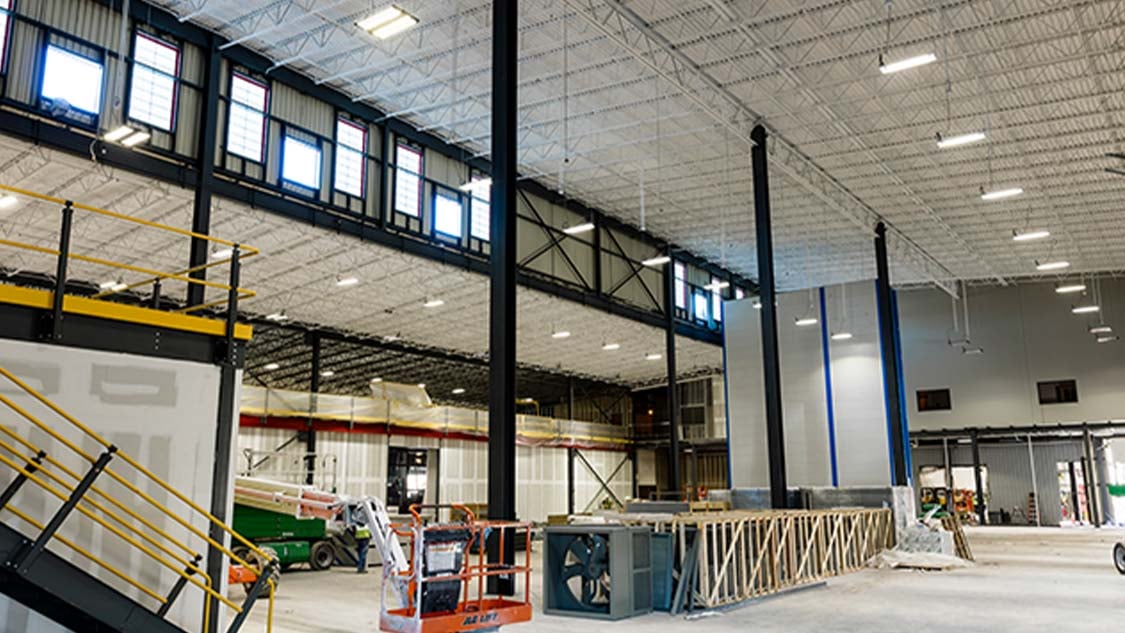
Beauty (STC) Manufacturing Co., Ltd. operates a modern manufacturing facility in Jiangmen, Guangdong Province, a region known for its strong industrial infrastructure and electronics manufacturing ecosystem. The Jiangmen factory is equipped with advanced production lines designed to ensure high efficiency, precision, and reliability in LED lighting manufacturing.
The facility features state-of-the-art SMT (Surface Mount Technology) production lines, which include high-speed pick-and-place machines, reflow soldering systems, and automated optical inspection (AOI) equipment. These SMT machines enable precise placement of LED components and other surface-mount devices onto PCBs, ensuring consistent quality and high-density circuit assembly. The use of automated processes minimizes human error and supports large-scale production with tight tolerances, essential for manufacturing reliable LED lighting products.
To ensure product durability and performance, Beauty STC implements comprehensive aging and reliability testing procedures at the Jiangmen factory. Completed LED light units undergo extended aging tests under controlled thermal and electrical conditions, typically running at full power for 24 to 72 hours. This process helps identify early-life failures, verifies thermal management performance, and confirms long-term stability. Additional tests such as thermal cycling, humidity exposure, and photometric measurements are also conducted to meet international quality standards.
The factory has strong OEM/ODM capabilities, particularly for specialized LED products such as UV light LEDs. Beauty STC can support custom designs, from optical engineering and thermal management to driver configuration and housing integration. Clients can provide specifications for wavelength (UVA, UVB, or UVC), power output, form factor, and application requirements—such as disinfection, curing, or medical use—and the company’s R&D and engineering teams will develop tailored solutions. The OEM process includes prototype development, compliance testing (including CE, RoHS, and where applicable, IEC 62471 for photobiological safety), and full-scale production.
Overall, the Jiangmen factory combines advanced automation, rigorous quality control, and flexible manufacturing to deliver high-performance UV LED and other LED lighting solutions for global clients under OEM arrangements.
Application Scenarios
Ultraviolet (UV) LED technology, specifically UVC (200-280 nm) for germicidal applications, requires careful consideration for use in commercial environments like hotels, malls, and offices due to significant safety risks and specific efficacy requirements. UVA (315-400 nm) has limited disinfection capability and is primarily used for curing or counterfeit detection, not surface or air disinfection in these settings. The primary application for UV-C LED in these facilities is targeted disinfection, never as a direct exposure source for occupied spaces. Misapplication poses severe health risks including skin burns, eye damage, and ozone generation.
In hotels, UVC LED systems are most appropriately deployed within upper-air disinfection units in lobbies, restaurants, or conference rooms, installed high on walls or ceilings to irradiate air above occupant head level with proper shielding and airflow management. HVAC integration within air handling units provides continuous air disinfection as air passes the shielded UVC source, crucial for guest room corridors and large common areas. For terminal disinfection, mobile UVC units or installed systems within unoccupied guest rooms (activated only after checkout and room sealing) can treat high-touch surfaces like remotes, light switches, and bathroom fixtures, but require strict safety interlocks and staff training. Never install UVC LEDs in occupied guest rooms, public restrooms, or near reflective surfaces without professional engineering controls.
Malls present challenges due to constant public occupancy and complex airflows. Upper-room UVC systems are viable in high-ceiling atriums or food court areas, provided fixtures are installed above 2.4 meters with baffles directing light upward, combined with mechanical mixing fans to circulate air through the irradiated zone. HVAC-integrated UVC remains the safest primary application for mall-wide air quality. Avoid portable or open UVC devices in retail spaces; the risk of public exposure is unacceptably high. UVA applications are limited to specific security tasks, such as counterfeit currency or ID verification at concierge desks using enclosed, shielded fixtures, but this is not a primary disinfection use.
Offices primarily benefit from UVC LED within HVAC systems to reduce airborne pathogens in return air ducts or fan coil units, improving indoor air quality across open-plan areas and meeting rooms. Upper-air systems can supplement this in large conference rooms or lobbies following the same height and shielding protocols as malls. Critical installation tips must be emphasized: UVC systems must be installed by qualified professionals adhering to IEC 62471 photobiological safety standards. All fixtures require physical shielding to prevent direct line-of-sight exposure, motion sensors with automatic shutoff, and prominent warning labels. Never install UVC LEDs where they can be viewed directly by occupants or maintenance staff. Ensure the wavelength is verified as true germicidal UVC (typically 265-275 nm peak), not ineffective or hazardous wavelengths. Regular radiometric testing is mandatory to confirm output levels as UVC LEDs degrade faster than mercury lamps. Crucially, UVC disinfection complements but does not replace manual cleaning; surfaces must be pre-cleaned of organic matter for UVC to be effective. Material compatibility must be assessed, as UVC degrades plastics, fabrics, and paints over time—avoid installation near curtains, artwork, or sensitive electronics. Always consult certified industrial hygienists and lighting engineers before deployment; improper use violates OSHA and building safety codes.
Why Choose Beauty STC Lighting
Discover the power of advanced UV light LED technology with Beauty STC — a trusted leader in innovative lighting solutions. Whether you’re integrating UV disinfection, curing, or specialty lighting into your applications, our high-performance UV LED products deliver unmatched reliability and efficiency. Partner with Beauty STC to access cutting-edge technology, scalable manufacturing, and expert engineering support tailored to your needs.
To learn more or discuss a custom solution, contact us today at [email protected]. Let’s illuminate the future together.
⚡ LED Power Supply Calculator
Estimate the power supply needed for your LED strip project.