
Article Contents
Industry Insight: Kitchen Cabinet Interior Lighting
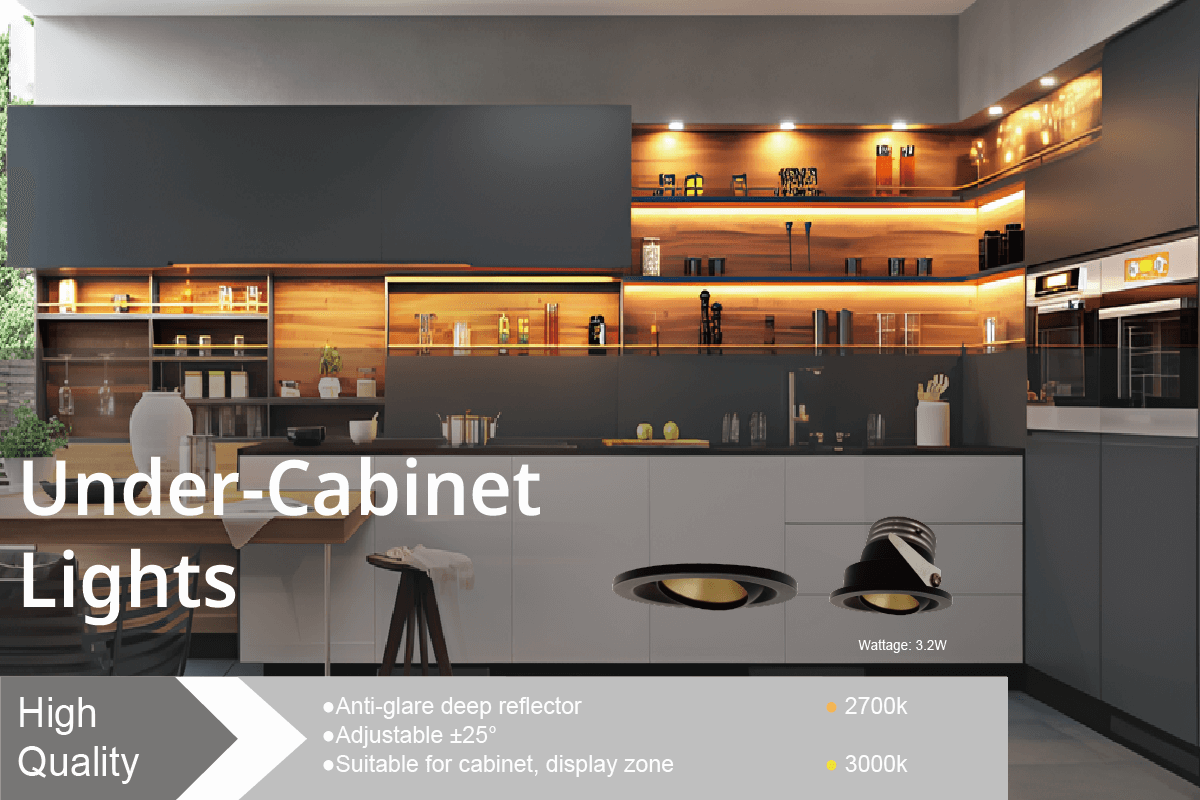
Kitchen cabinet interior lighting has evolved from a simple functional necessity into a critical component of modern commercial and industrial lighting design. As demand grows for energy-efficient, reliable, and code-compliant illumination solutions in retail kitchens, food service facilities, and institutional environments, the focus has shifted toward high-performance LED systems that combine durability with precision lighting. These applications require more than aesthetic appeal—they demand robust engineering, thermal management, and adherence to stringent safety standards such as ETL and CE certifications, ensuring compliance with North American and international electrical and safety regulations. With over two decades of expertise in LED lighting innovation, Beauty (STC) Manufacturing Co., Ltd., established in 1998, has emerged as a trusted partner in commercial and industrial lighting solutions. Specializing in advanced cabinet interior lighting systems, Beauty STC integrates cutting-edge optical design, rigorous quality control, and global compliance to meet the exacting needs of architects, OEMs, and facility managers across demanding environments.
Technical Specs & Certifications
Kitchen cabinet interior lighting requires precise technical specifications to ensure optimal functionality and aesthetic performance in a demanding environment. For lumens per watt, Beauty STC achieves a consistent range of 110 to 125 lumens per watt across our standard cabinet interior LED strip and puck light product lines. This efficiency is realized at color temperatures of 2700K to 3000K under standard operating conditions, using high-efficacy SMD 2835 or 3014 LEDs coupled with optimized constant-current drivers. These values represent fixture-level performance, accounting for optical elements and thermal management, not just bare LED chip metrics. Our engineering focuses on maintaining this efficacy throughout the product lifecycle by minimizing thermal derating through aluminum-backed PCBs and strategic heat dissipation pathways, ensuring sustained brightness without premature lumen depreciation.
Color rendering is critical for food preparation and presentation, which is why all Beauty STC kitchen cabinet lighting solutions exceed CRI >90, with a minimum Ra9 value of 92 for robust red rendering. We achieve this through rigorously binned phosphor-converted LEDs and spectral tuning that avoids the common pitfall of high average CRI with poor saturated color performance. Our quality control mandates spectrophotometer verification of every production batch against ANSI C78.377 standards, ensuring consistency in color fidelity. This attention to spectral quality means produce, meats, and baked goods appear vibrant and true-to-life, a non-negotiable standard for high-end kitchen applications where visual accuracy impacts user experience.
Regarding IP ratings, Beauty STC designs cabinet interior lighting primarily to IP20 for standard dry interior locations, as most cabinet installations are not exposed to direct water ingress. However, recognizing potential moisture exposure near sinks or dishwashers, we offer select linear strip and under-cabinet fixture variants rated IP44. These models feature conformal-coated PCBs and sealed end-caps to resist condensation and splashes without compromising thermal performance. Crucially, we avoid unnecessary over-engineering; IP65 or higher ratings are generally inappropriate for cabinet interiors as they can trap heat and reduce LED lifespan. Our IP44 solutions undergo 48-hour humidity chamber testing per IEC 60529 to validate protection against limited water spray while maintaining optimal thermal management.
Beauty STC’s quality commitment is embedded in every component and process. Our cabinet lighting systems utilize UL-listed, 120-277V constant-current drivers with >90% efficiency and 50,000-hour L70/B50 lumen maintenance ratings, verified through LM-80 and TM-21 testing. Rigorous in-house thermal imaging ensures junction temperatures remain below 75°C during operation, directly supporting long-term lumen stability and color consistency. Each product undergoes 100% photometric and electrical validation, including flicker-free performance below 5% percent flicker at 120Hz. This systematic approach—combining precision optical design, military-grade component selection, and multi-stage reliability testing—ensures our lighting delivers the specified lumens per watt, exceptional CRI, and appropriate environmental resilience expected in premium kitchen installations, backed by a 5-year warranty that underscores our confidence in real-world durability.
Factory Tour: Manufacturing Excellence
Beauty (STC) Manufacturing Co., Ltd.’s factory in Jiangmen, China is a modern, vertically integrated facility specializing in the design and production of LED lighting solutions, particularly tailored for precision applications such as kitchen cabinet interior lighting. Strategically located within the Jiangmen industrial zone, the facility benefits from streamlined logistics and access to a skilled manufacturing workforce, supporting both domestic and international markets.
The factory is equipped with advanced Surface Mount Technology (SMT) production lines featuring high-precision machines from leading global manufacturers. These SMT systems ensure accurate placement of miniature LED components, resistors, and ICs onto flexible and rigid printed circuit boards (PCBs), which are commonly used in compact under-cabinet and interior cabinet lighting. The automated SMT process supports high-volume output while maintaining exceptional consistency and quality, essential for producing reliable, low-profile lighting modules.
A critical part of the manufacturing process at the Jiangmen facility is the comprehensive aging and reliability testing. Every batch of LED lighting products undergoes a rigorous 24 to 72-hour aging test under elevated temperatures and full operational load. This process helps identify early-life failures, ensures lumen output stability, and verifies thermal management performance—especially important for enclosed environments like kitchen cabinets where heat dissipation can be limited. Additional tests include waterproofing checks, voltage fluctuation tolerance, and color consistency verification to meet international quality standards.
Beauty STC has robust OEM (Original Equipment Manufacturer) and ODM (Original Design Manufacturer) capabilities specifically developed for kitchen cabinet interior lighting. The company works closely with clients to customize form factors, light color temperatures (ranging from 2700K to 6500K), control methods (including touch, motion sensor, and wireless RF), and power options (AC/DC, battery-powered, or hardwired). The engineering team supports clients from concept to mass production, offering 3D modeling, prototyping, and compliance testing for certifications such as CE, RoHS, and UL. This flexibility makes Beauty STC a preferred partner for kitchen furniture brands, lighting distributors, and home automation companies seeking private-label lighting solutions.
Overall, the Jiangmen factory combines automation, stringent quality control, and deep customization expertise to deliver high-performance, aesthetically refined LED lighting systems designed specifically for modern kitchen cabinetry applications.
Application Scenarios
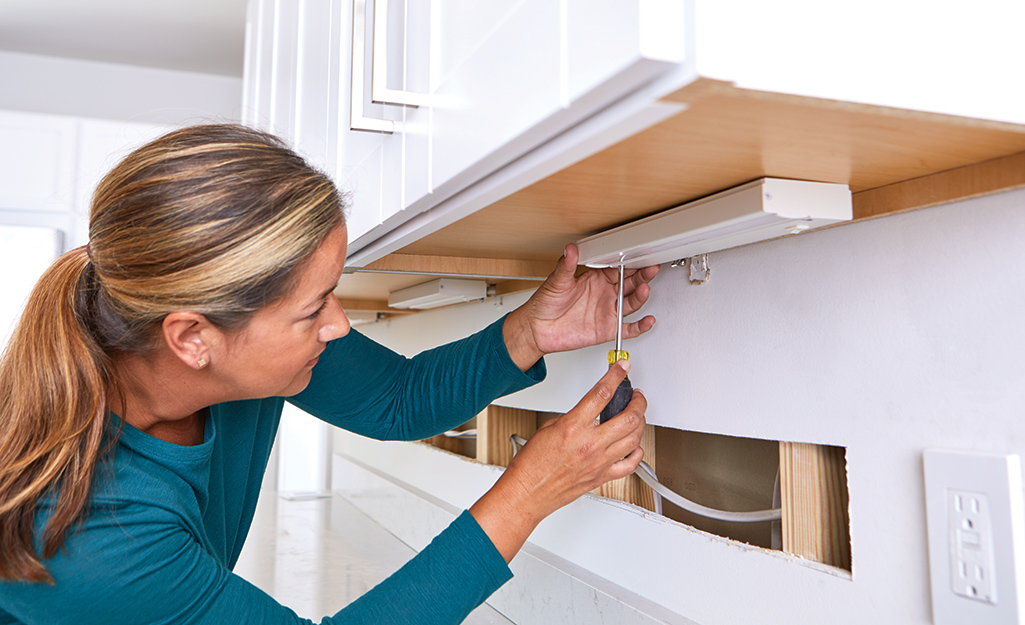
Kitchen cabinet interior lighting is fundamentally a residential feature designed for homeowner convenience in food preparation and storage areas. It is not a standard or typical application in the primary operational spaces of hotels, malls, or standard office environments as described. Commercial lighting design prioritizes functionality, safety, code compliance, and maintenance efficiency for high-traffic or revenue-generating areas, which rarely aligns with illuminating the inside of storage cabinets in the manner common in homes.
Within hotels, the only plausible location for such lighting would be within the fully equipped residential-style kitchens found in premium executive suites or extended-stay accommodations. Even here, it serves the same purpose as in a home – aiding the guest – and is not part of the hotel’s core operational infrastructure like staff kitchens or banquet facilities, where commercial-grade task lighting focuses on work surfaces, not cabinet interiors. Malls lack conventional kitchens entirely; food courts utilize commercial cooking equipment under hoods with intense overhead task lighting, not interior cabinet illumination. Retail stores within malls might use interior display case lighting for merchandise, but this is distinct from kitchen cabinet lighting. Standard office buildings feature break rooms or pantries, which are typically minimal, often lacking full cabinetry. Any lighting here is basic overhead for the room, not dedicated interior cabinet strips. Staff kitchens in large offices might have cabinetry, but commercial practice emphasizes robust, easily serviceable overhead or under-cabinet task lighting for countertops, not lights inside cabinets, which would be impractical for maintenance and unnecessary for workflow.
Regarding installation tips, applicable primarily to the rare cases like high-end hotel suites or office staff kitchenettes, strict adherence to electrical codes is paramount. Utilize only low-voltage LED systems, ideally 12V or 24V DC, powered by a properly rated and installed external driver/transformer located outside the cabinet for safety and heat management. Ensure the LED strip or puck lights are rated for enclosed or semi-enclosed spaces if the cabinet has doors, verifying the manufacturer’s specifications to prevent overheating and premature failure. Integrate a diffuser lens or channel to soften the light output and eliminate harsh glare or visible dots from individual LEDs, crucial for visual comfort in living or break spaces. Position the lighting to effectively illuminate the cabinet contents without creating shadows, typically along the top interior edge or upper shelf, ensuring it does not shine directly into the user’s eyes when the door is open. Wire connections must be secure, protected, and accessible; avoid stapling wires directly to cabinet surfaces and use appropriate cable management. Crucially, all installation must comply with local electrical codes such as the NEC in the US, necessitating connection to a dedicated circuit or properly protected branch circuit, often requiring a GFCI outlet in wet or damp location zones near sinks, and should be performed by a licensed electrician, especially within commercial properties where liability and code enforcement are stringent. Maintenance access for driver replacement or LED module service must be considered during the design phase.
Why Choose Beauty STC Lighting
Transform your kitchen cabinet interiors with premium LED lighting solutions. Partner with Beauty STC, a trusted leader in innovative and energy-efficient lighting design. Our tailored cabinet lighting systems combine sleek aesthetics with superior performance, enhancing both function and ambiance in every kitchen space.
For seamless integration and exceptional quality, collaborate directly with our expert team. Contact us today at [email protected] to discuss your project and discover how Beauty STC can illuminate your vision.
⚡ LED Power Supply Calculator
Estimate the power supply needed for your LED strip project.