
Article Contents
Industry Insight: Controller Dmx Led
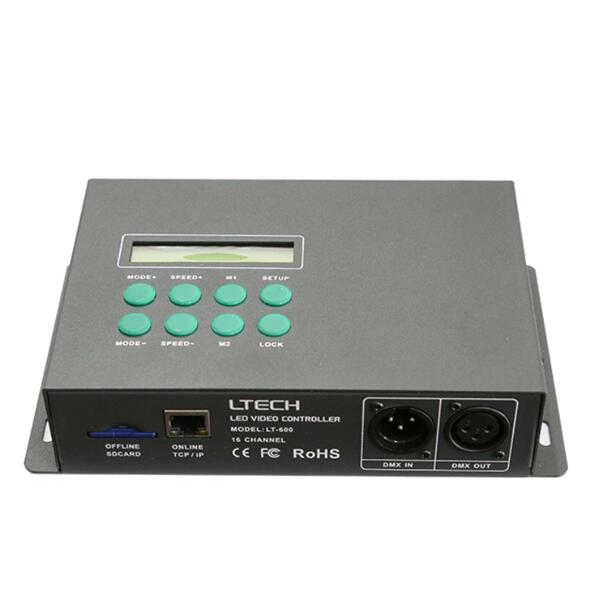
The evolution of DMX-controlled LED lighting has moved decisively beyond entertainment venues, becoming a critical enabler of efficiency and functionality in commercial and industrial environments. Today’s facility managers and lighting specifiers demand precise, scalable control for applications ranging from dynamic retail displays and energy-conscious office lighting to complex warehouse task zoning and architectural facade illumination. DMX technology provides the granular command necessary to optimize light levels, reduce energy consumption through intelligent scheduling and dimming, and create adaptable environments that enhance productivity and user experience. This shift underscores DMX not as a niche protocol, but as a fundamental infrastructure component for modern, responsive commercial and industrial lighting systems where operational cost and performance are paramount.
Reliability and safety are non-negotiable in these demanding settings. Controllers and associated LED drivers must consistently perform under continuous operation while adhering to stringent international safety standards. This is where certifications like ETL and CE become essential differentiators, not mere checkboxes. They provide assurance that the control hardware meets rigorous electrical safety, electromagnetic compatibility, and construction requirements mandated for commercial and industrial installations globally. Specifiers and end-users rightly insist on these certifications to mitigate risk, ensure code compliance, and guarantee long-term system stability in environments where lighting failure can translate directly to operational disruption or safety hazards.
Beauty STC, established in 1998, has been at the forefront of this transition, leveraging over 25 years of specialized engineering expertise to develop robust DMX controller solutions designed specifically for the rigors of commercial and industrial lighting. We understand that success in these sectors hinges on more than just technical capability; it requires controllers built for durability, seamless integration with diverse LED systems, and unwavering adherence to global safety certifications like ETL and CE. Our commitment is to deliver not just products, but reliable, certified control infrastructure that empowers smarter, more efficient, and fully compliant lighting ecosystems for the demanding spaces that shape our built environment.
Technical Specs & Certifications
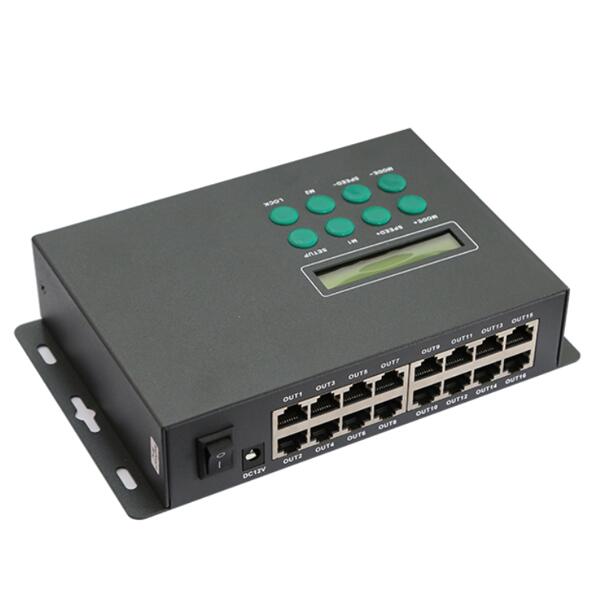
When specifying a DMX LED controller for professional lighting applications, it is essential to consider not only the control capabilities but also the performance characteristics of the connected LED fixtures. While the DMX controller itself does not generate lumens or possess a CRI or IP rating, it manages LED luminaires that must meet high-performance benchmarks. At Beauty (STC) Manufacturing Co., Ltd., our DMX-controlled LED lighting systems are engineered to deliver superior efficiency, color fidelity, and environmental resilience.
Our DMX-enabled LED fixtures typically achieve an efficacy of 110 to 130 lumens per watt, ensuring energy-efficient operation without compromising brightness. This high lumens/watt ratio is achieved through advanced LED chip technology and precision thermal management, both hallmarks of Beauty STC’s engineering standards.
Color Rendering Index (CRI) is critical in applications requiring true-to-life color representation, such as stage lighting, retail, and architectural accenting. Beauty STC’s DMX-controllable LED luminaires are designed with high-CRI LEDs, consistently delivering a CRI greater than 90, and often exceeding 95 when specified. This ensures vibrant, accurate color reproduction under dynamic lighting scenarios.
Environmental protection is addressed through rigorous sealing standards. Our outdoor and damp-location-rated DMX LED fixtures are typically rated IP65 or IP66, providing full protection against dust ingress and powerful water jets. For installations requiring even greater protection, such as in harsh industrial or marine environments, select models are available with IP67 or IP68 ratings, ensuring submersion resistance and long-term durability.
Beauty STC is committed to quality manufacturing, adhering to international standards in design, thermal performance, and electronic driver integration. Our DMX LED systems undergo extensive testing for signal stability, thermal cycling, and photometric consistency, ensuring reliable performance across diverse applications. With robust build quality and precise control compatibility, Beauty STC’s DMX LED solutions stand out for their efficiency, color accuracy, and resilience in demanding environments.
Factory Tour: Manufacturing Excellence
Beauty STC’s Jiangmen factory serves as our primary manufacturing and R&D hub for professional LED lighting solutions, occupying a dedicated 30,000 square meter facility designed to stringent international production standards. The facility operates under a comprehensive ISO 9001 quality management system with climate-controlled production floors to ensure environmental stability critical for precision electronics manufacturing.
Our Surface Mount Technology (SMT) production line features multiple high-speed Yamaha YS24 and KS series placement machines capable of handling components down to 0201 package size with ±25µm placement accuracy. These fully automated lines include pre-production solder paste inspection (SPI) systems and 3D automated optical inspection (AOI) stations after reflow soldering, ensuring first-pass yields exceeding 99.5% for complex LED driver and controller assemblies. The SMT section processes over 5 million components daily with dedicated lanes for specialized DMX controller PCBs requiring fine-pitch QFN and BGA packages common in modern lighting control ICs.
Aging and reliability testing constitutes a critical phase in our production workflow with a dedicated 1,200 square meter testing zone. All DMX LED controllers undergo a mandatory 72-hour continuous burn-in test at 45°C ambient temperature with full functional verification at 24-hour intervals. We utilize programmable electronic loads to simulate real-world operating conditions across voltage ranges from 100-277V AC and verify DMX signal integrity under maximum channel loads. Post-aging, each unit undergoes calibrated photometric and electrical validation including THD measurement, harmonic analysis, and DMX protocol compliance checks per USITT standards.
For OEM production of DMX LED controllers, Beauty STC provides end-to-end capability from initial concept through volume manufacturing. Our engineering team supports custom firmware development for proprietary protocols, mechanical redesign for specialized enclosures, and tailored feature sets including RDM implementation or wireless integration. We maintain UL-certified test labs on-site for safety compliance (UL 8750, CE, ETL) and offer full documentation packages including IEC 60598 reports. Current OEM clients leverage our capacity for low-volume prototyping (minimum 500 units) up to high-volume production exceeding 20,000 units monthly with flexible JIT delivery options. The facility holds specialized certifications for medical-grade and outdoor-rated controller production, supporting IP67-rated designs and DALI-2 compatibility where required by client specifications.
Application Scenarios
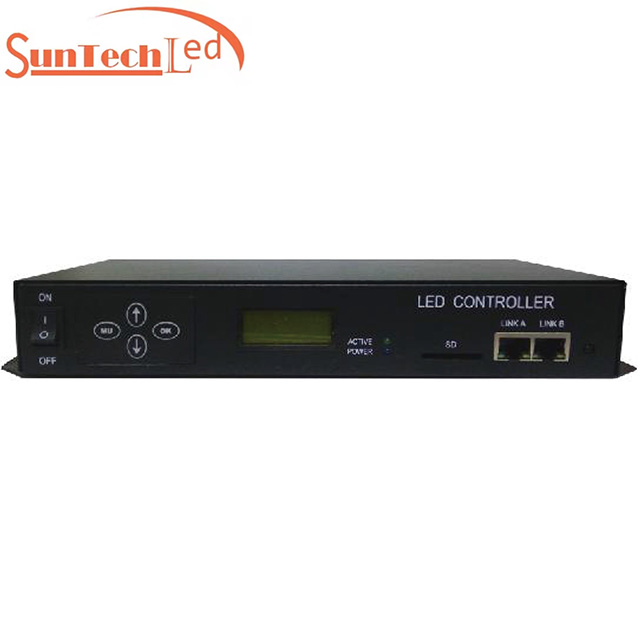
The term “controller DMX LED” refers to a DMX-controlled LED lighting system, where DMX (Digital Multiplex) is a standard protocol used to control lighting in professional and architectural settings. These systems are widely used in environments where dynamic, programmable, and synchronized lighting is desired. Here’s where and how they are typically applied in hotels, malls, and offices, along with key installation tips.
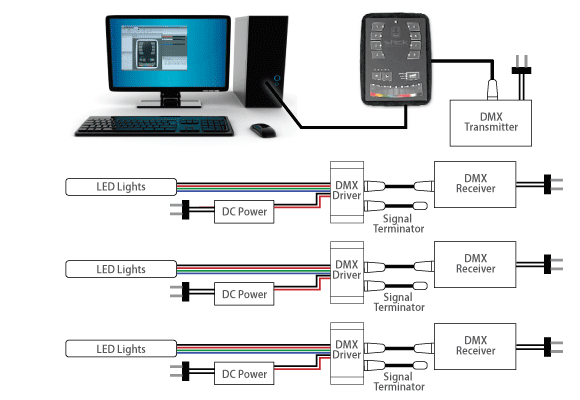
In hotels, DMX LED controllers are commonly used in lobbies, ballrooms, banquet halls, and feature walls to create ambient and mood lighting. They allow for color changing effects, dimming, and scene programming that enhance guest experience. For example, a hotel lobby may use DMX-controlled LED strips to shift colors subtly throughout the day or during events. Installation should consider centralized control placement, with DMX signal distribution planned to minimize cable runs. Use of DMX splitters or opto-isolators helps prevent signal degradation in larger installations. Ensure all fixtures are properly addressed and terminated with a DMX terminator to avoid flickering or erratic behavior.
Malls utilize DMX LED systems extensively in atrium lighting, signage, escalator surrounds, and seasonal displays. The ability to synchronize lighting across large areas makes DMX ideal for creating visually engaging environments. Retail zones within malls may also use DMX for accent lighting on mannequins or product displays. During installation, plan for future maintenance access—place controllers and power supplies in serviceable locations. Use shielded DMX cables to avoid interference from nearby electrical systems, especially in high-traffic areas with complex electrical infrastructure. It’s also advisable to integrate the DMX system with a building management or lighting control system for centralized scheduling and energy efficiency.
In office environments, DMX LED controllers are less common for general lighting but are used in executive lounges, reception areas, or branded zones where aesthetic lighting is a design priority. They can support circadian lighting strategies by adjusting color temperature and intensity throughout the day. When installing in offices, prioritize simplicity and reliability. Avoid overcomplicating the control system—use pre-programmed scenes rather than real-time effects. Ensure compatibility between the DMX controller and any existing building automation systems. Also, consider using wireless DMX where cable routing is impractical, though line-of-sight and signal interference must be evaluated.
General installation tips include ensuring proper grounding of all components, using appropriate power supplies with adequate headroom, and separating low-voltage DMX wiring from high-voltage lines to prevent noise. Always test the system in stages—first verify power delivery, then signal transmission, and finally control functionality. Label all fixtures and controllers clearly for future troubleshooting. Finally, use DMX-compatible software for configuration and scene storage, and keep backup configurations in case of controller failure.
Why Choose Beauty STC Lighting
Elevate your lighting projects with precision control by partnering with Beauty STC for premium DMX LED controllers. Our engineering team designs each controller to deliver exceptional reliability, smooth integration, and advanced features tailored for demanding stage, architectural, and entertainment applications. Trust our expertise to ensure your installations achieve flawless performance and vibrant visual impact.
Partner with Beauty STC to access cutting-edge DMX controller solutions backed by rigorous quality standards and dedicated technical support. We collaborate closely with partners to provide customized options and responsive service that meets your specific project requirements. Strengthen your product portfolio with technology engineered for real-world durability and ease of use.
Contact our partnership manager today at [email protected] to discuss how Beauty STC’s DMX LED controllers can enhance your offerings and drive mutual growth. Let us help you deliver exceptional lighting experiences with confidence.
⚡ LED Power Supply Calculator
Estimate the power supply needed for your LED strip project.