

Article Contents
Industry Insight: Led Soft White Bulbs
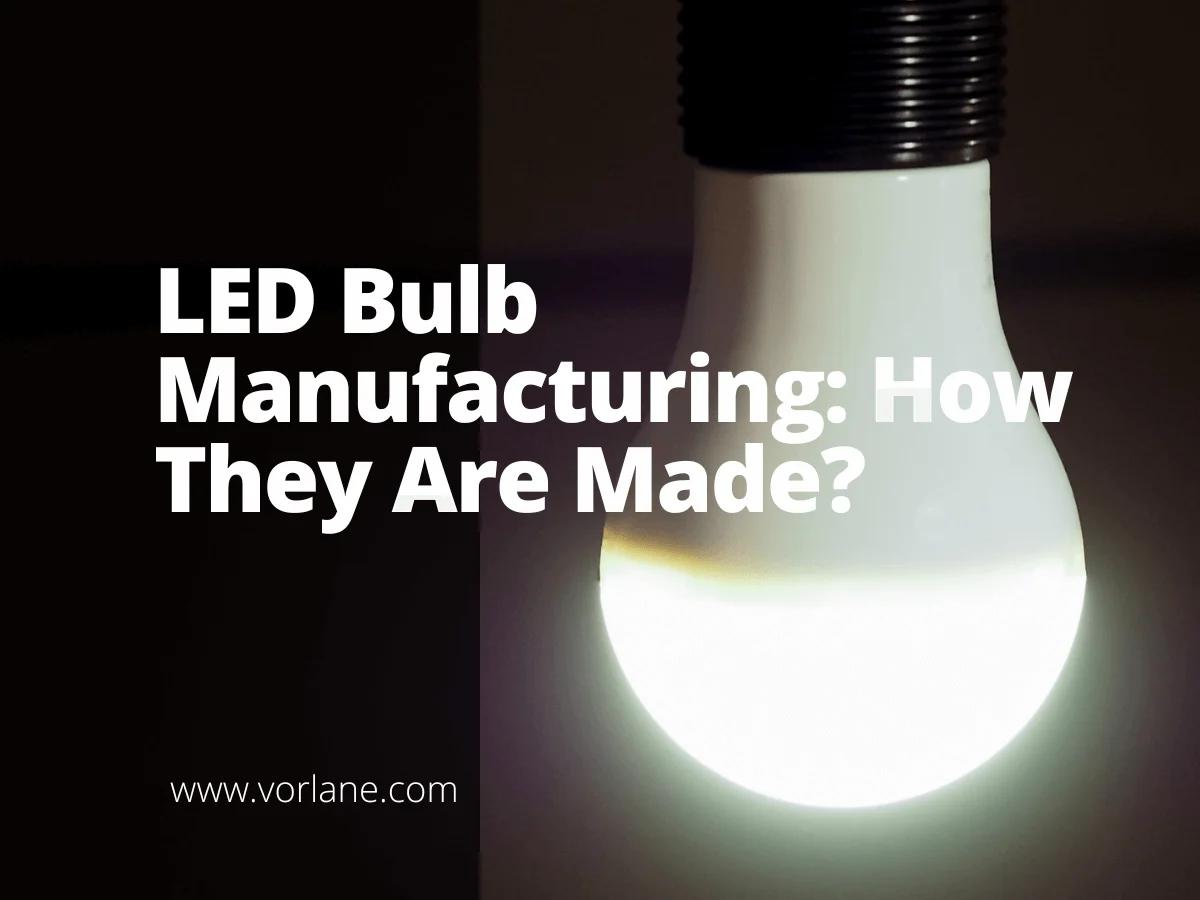
The commercial and industrial lighting landscape continues to evolve with a growing emphasis on energy efficiency, durability, and human-centric illumination. Among the most widely adopted solutions in this space are LED soft white bulbs, which deliver a warm, inviting light quality while maintaining the performance and longevity required in demanding environments. These bulbs are increasingly specified in offices, retail spaces, hospitality venues, and light industrial facilities where visual comfort and operational cost savings are paramount. As regulatory standards tighten globally, compliance with safety and performance certifications such as ETL and CE has become essential, ensuring that LED products meet rigorous North American and international requirements for electrical safety, electromagnetic compatibility, and environmental resilience.
At the forefront of this innovation is Beauty (STC) Manufacturing Co., Ltd., a trusted name in LED lighting since its founding in 1998. With over two decades of engineering expertise, Beauty STC has established itself as a leading manufacturer of high-performance, code-compliant LED lighting solutions tailored for commercial and industrial applications. The company’s LED soft white bulbs exemplify this commitment—combining optimized lumen output, consistent color temperature, and robust thermal management with full ETL and CE certification. As facilities managers and lighting designers seek reliable, sustainable alternatives to traditional lighting, Beauty STC continues to deliver products that meet the exacting demands of modern workplaces and public environments.
Technical Specs & Certifications
LED soft white bulbs from Beauty STC Manufacturing Co., Ltd. are engineered to deliver superior quality light for residential and commercial applications requiring a warm, inviting ambiance. “Soft white” specifically refers to a correlated color temperature (CCT) range of 2700 Kelvin to 3000 Kelvin, closely mimicking the familiar warmth of traditional incandescent lighting. Our commitment to performance and reliability is embedded in the core technical specifications of these bulbs.
Luminous efficacy, measured in lumens per watt (lm/W), is a critical efficiency metric. Beauty STC soft white LED bulbs consistently achieve high efficacy levels ranging from 105 to 115 lm/W for standard A19 household formats. This represents a significant energy saving compared to halogen or incandescent equivalents, translating to approximately 85-90% less energy consumption for the same light output. These figures are validated under standard test conditions (25°C ambient temperature) and reflect real-world performance achievable in typical installations, not just theoretical maximums.
Color Rendering Index (CRI) is paramount for applications where accurate color perception is essential, such as retail displays, hospitality settings, or home environments. Beauty STC mandates a minimum CRI (Ra) of 92 across our soft white LED bulb portfolio, exceeding the user-specified >90 requirement. Crucially, we place strong emphasis on the R9 value (saturated red rendering), which is often poor in lower-quality LEDs. Our proprietary phosphor blends ensure R9 values consistently exceed 50, contributing to vibrant, natural-looking skin tones, food, fabrics, and artwork. This high-fidelity color rendering is a direct result of our stringent raw material selection and advanced spectral engineering processes.
Regarding Ingress Protection (IP) ratings, it is important to clarify the application context. Standard household LED bulbs (e.g., A19, BR30, PAR38) designed for enclosed or protected indoor fixtures are typically rated IP20. This signifies basic protection against solid objects larger than 12.5mm (like fingers) but offers no protection against moisture ingress, as they are intended for dry locations only. Beauty STC does, however, manufacture soft white LED bulbs specifically designed for damp or wet locations. These variants, such as certain PAR38 or specialty enclosed fixtures, carry appropriate IP ratings like IP65 (dust-tight and protected against low-pressure water jets) or IP67 (dust-tight and protected against temporary immersion). The specific IP rating is always clearly marked on the product packaging and technical datasheets, ensuring correct application selection.
Beauty STC’s quality differentiation is evident in every aspect of these soft white LED bulbs. We utilize premium, rigorously binned LED chips and high-CRI phosphors sourced from leading global suppliers. Advanced thermal management, featuring optimized heat sinks often incorporating aluminum cores even in standard bulbs, ensures stable lumen maintenance and extended lifespan. Our products are designed and tested to meet or exceed IEC/EN 62560 safety standards and deliver a minimum rated life of 25,000 hours to L70 (70% of initial lumens), with many products achieving 50,000 hours. Stringent in-house testing protocols cover electrical safety, photometric performance, thermal performance, and long-term reliability under accelerated aging conditions. This unwavering commitment to quality control, from component selection through final assembly, is backed by a comprehensive 5-year limited warranty, providing customers with confidence in the durability and consistent performance of Beauty STC lighting solutions.
Factory Tour: Manufacturing Excellence
Beauty (STC) Manufacturing Co., Ltd.’s factory in Jiangmen, China is a fully integrated LED lighting production facility designed to support high-volume, precision manufacturing with strict quality control. Strategically located in the Jiangmen industrial zone, the factory benefits from modern infrastructure and proximity to key supply chain networks in the Pearl River Delta region.
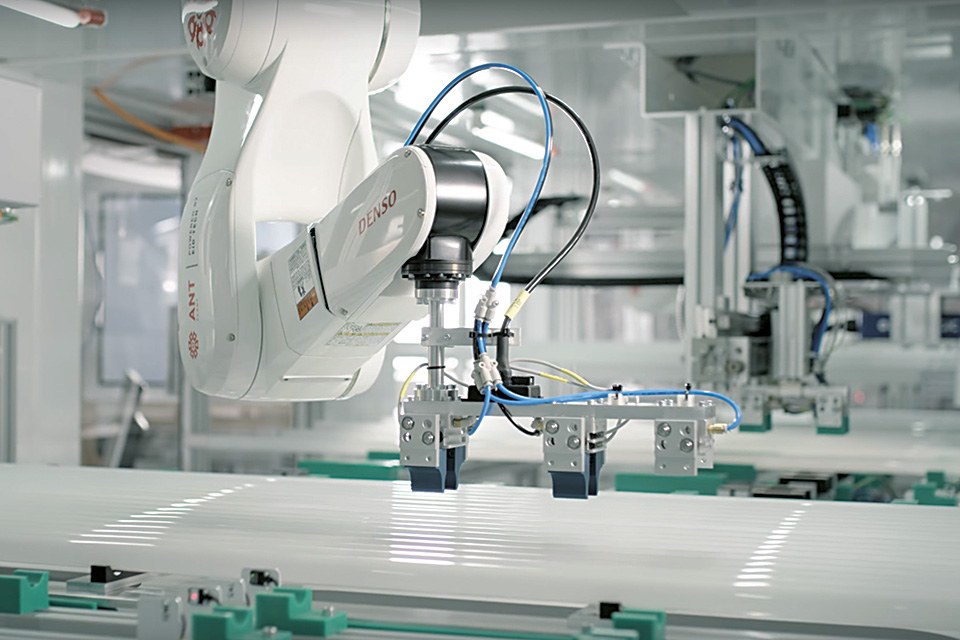
The facility is equipped with advanced Surface Mount Technology (SMT) production lines, featuring high-speed, precision SMT machines from leading global manufacturers. These machines ensure accurate placement of LED components and other surface-mount devices onto printed circuit boards (PCBs), enabling consistent performance and reliability in every lighting product. The SMT lines are supported by automated optical inspection (AOI) systems to detect placement errors and soldering defects in real time, ensuring high yield rates and product consistency.
To guarantee long-term reliability, the Jiangmen factory implements comprehensive aging and performance testing procedures. Completed LED bulb assemblies undergo extended aging tests—typically 4 to 12 hours under elevated temperature and full power conditions—to identify early-life failures and verify thermal and electrical stability. Additional testing includes photometric analysis, power efficiency checks, flicker measurement, and thermal imaging to ensure compliance with international safety and performance standards such as CE, RoHS, and UL.
Beauty STC has strong OEM (Original Equipment Manufacturer) and ODM (Original Design Manufacturer) capabilities, particularly for LED soft white bulbs. The company supports custom design and production based on client specifications, including lumen output, color temperature (typically 2700K–3000K for soft white), beam angle, dimming functionality, and physical form factor (such as A19, A21, or specialty shapes). Clients can also customize branding, packaging, and certification requirements. The engineering team works closely with partners from prototyping through to mass production, ensuring seamless product development and scalability.
Overall, the Jiangmen factory combines automation, rigorous quality assurance, and flexible manufacturing to deliver high-quality, energy-efficient LED soft white bulbs tailored to global market demands.
Application Scenarios
LED soft white bulbs, typically defined as emitting light in the 2700K to 3000K correlated color temperature (CCT) range, produce a warm, inviting glow similar to traditional incandescent lighting. This specific spectrum is crucial for creating comfortable, relaxing, or premium atmospheres in commercial settings. Its application varies significantly across hotels, malls, and offices due to differing functional and psychological requirements.
In hotels, soft white lighting is essential for guest comfort and ambiance. It is ideally deployed in guest room bedside lamps and reading nooks to reduce eye strain and promote relaxation without the harshness of cooler temperatures. Vanity lighting in bathrooms benefits from soft white to provide flattering illumination for grooming while avoiding the clinical feel of higher CCTs. Lobby lounge areas and upscale hotel bars utilize this warmth to foster a welcoming, high-end atmosphere that encourages guests to linger. Executive suites and premium room categories often extend soft white lighting throughout to reinforce a luxurious, residential-like experience. However, it should be avoided in high-activity zones like hotel gyms or business centers where cooler light supports alertness, and in retail corridors within the hotel where merchandise needs accurate, vibrant rendering.
Malls present nuanced applications where soft white serves specific experiential zones. It is highly effective in food court seating areas and casual dining establishments within the mall, as the warm light enhances the appeal of food and creates a comfortable dining environment. Luxury brand boutiques, particularly those selling high-end apparel, jewelry, or home goods targeting a premium experience, may use soft white in fitting rooms or display zones to convey exclusivity and warmth. Relaxation zones, spa areas, or lounge seating scattered throughout the mall benefit from this lighting to offer visual respite from the brighter main concourses. Crucially, soft white should not be used in general mall corridors, high-traffic retail storefronts, or electronics stores where cooler, higher-CCT lighting (3500K-4000K) is necessary for safety, wayfinding, and accurate color rendering of diverse merchandise. Mixing soft white with cooler ambient lighting in adjacent zones can create visual disorientation if not carefully transitioned.
Offices require strategic placement of soft white lighting, as its relaxing properties are often counterproductive in core work areas. It is most appropriate in executive offices to convey warmth and approachability during client meetings, particularly in seating areas separate from the main desk. Break rooms, cafeterias, and dedicated relaxation or meditation rooms significantly benefit from soft white lighting to encourage decompression and social interaction away from task-focused environments. Reception areas might incorporate it selectively in lounge seating zones to soften the initial visitor experience, though the main reception desk typically requires slightly cooler light (3000K-3500K) for clarity and professionalism. Soft white is generally unsuitable for open-plan workspaces, conference rooms used for presentations, or technical labs where cooler light (3500K-4000K) enhances concentration, visual acuity, and reduces perceived fatigue during extended screen work. Overuse in collaborative spaces can inadvertently signal that the area is not for focused activity.
Installation of LED soft white bulbs demands attention to technical details for optimal performance and longevity. Always verify compatibility with existing dimmer switches, as many older dimmers designed for incandescent loads cause flickering or reduced range with LEDs; specify trailing-edge (ELV) or leading-edge (MLV) dimmers rated explicitly for the LED load. Ensure adequate thermal management, especially in enclosed or recessed fixtures; verify the bulb’s packaging indicates “Enclosed Fixture Rated” if installing in such housings to prevent premature lumen depreciation or failure due to heat buildup. Maintain consistent color temperature across a space by purchasing bulbs from the same production batch, as minor CCT variations between batches can be visually noticeable in uniform installations. For critical applications like high-end hotel lobbies or luxury retail, request an MacAdam ellipse step rating (preferably Step 3 or tighter) from the manufacturer to guarantee minimal color variation between individual bulbs. Finally, conduct an on-site mockup with sample fixtures before full-scale installation, as surrounding materials, wall colors, and ambient light can significantly alter the perceived warmth and effectiveness of the soft white output in the actual environment. Proper installation ensures the intended ambiance is achieved while maximizing the energy efficiency and long service life inherent to quality LED technology.
Why Choose Beauty STC Lighting
Discover the perfect blend of warmth and efficiency with our LED soft white bulbs, designed to create inviting and comfortable environments for any space. At Beauty (STC) Manufacturing Co., Ltd., we specialize in high-quality, energy-saving LED lighting solutions trusted by customers worldwide.
Partner with Beauty STC to access reliable, long-lasting soft white LED bulbs that meet rigorous industry standards. Whether you’re a distributor, retailer, or project developer, we offer competitive pricing, custom branding options, and dedicated support to help your business shine.
For inquiries or to start a partnership, contact us today at [email protected]. Let Beauty STC illuminate your next lighting project with excellence and innovation.
⚡ LED Power Supply Calculator
Estimate the power supply needed for your LED strip project.