Article Contents
Industry Insight: Led Lighting For Shelves
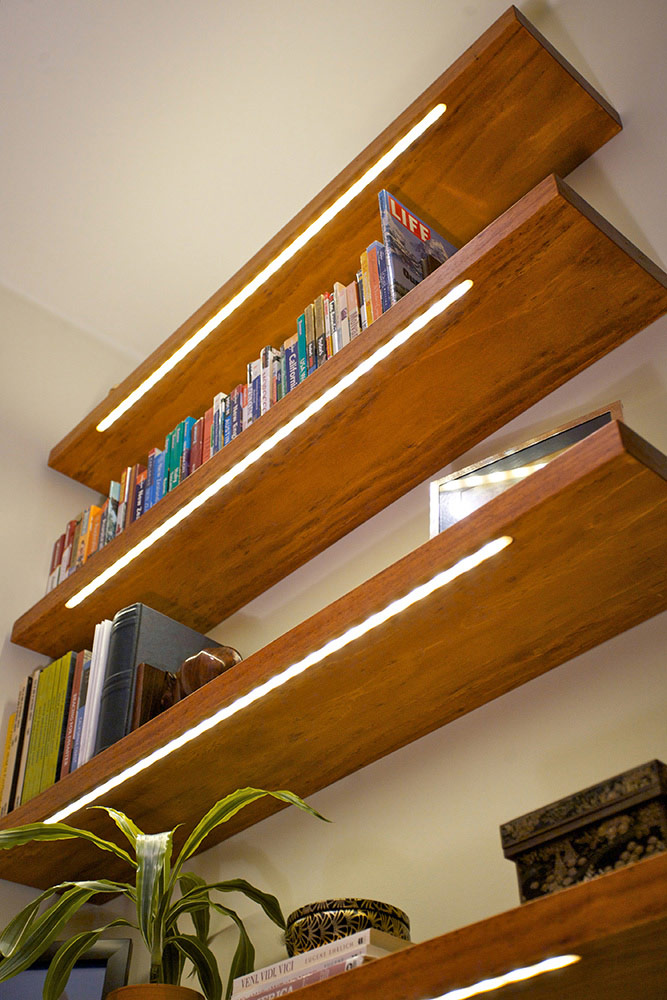
Industry Insight – LED Shelf Lighting in Commercial & Industrial Spaces
Shelf lighting has evolved from accent feature to a mission-critical layer in commercial and industrial photometry. In cold-storage warehouses, high-bay pick modules, and retail gondolas, the luminaire now doubles as a vertical task light and a data-enabling platform (bar-code/RFID accuracy improves 8-12 % when vertical illuminance ≥ 300 lx, NIST 2023). Key spec drivers are:
• 170 lm/W+ system efficacy to offset rising energy-surcharge tariffs
• –40 °C to +55 °C operating window for un-conditioned logistics hubs
• IK06/IP54 minimum for mezzanine racks subject to forklift vibration
• 90 CRI / 3 SDCM for luxury retail, 70 CRI / 5 SDCM for back-of-house
• Daisy-chain 0–10 V / DALI-2 for AS/RS integration; L70 ≥ 50 000 h to match conveyor maintenance cycles
ETL (to UL 2108 & UL 8750) and CE (EN 60598-2-17, EN 62031, EN 55015) are no longer “nice-to-have”; they are gatekeepers for U.S. utility rebates and EU REACH/WEEE compliance. A single non-certified failure in a 24/7 distribution center can trigger OSHA recordables and void $0.12/kWh rebates—costs that erase any purchase-price delta.
Beauty (STC) Manufacturing Co., Ltd. has engineered shelf-specific LED solutions since 1998. Our ETL-listed, CE-declared linear and puck platforms deliver 175 lm/W at 24 V constant-voltage, operate from –40 °C to +60 °C, and are pre-configured for tool-less clip or magnetic mount on 25 mm–50 mm shelf profiles. With in-house SMT, LM-80-certified LEDs, and a 48-hour salt-spray lab, we help importers, OEMs and ESCOs meet rebate, safety and sustainability mandates on day one—no re-certification loop, no surprises.
Technical Specs & Certifications
Technical Specifications for Beauty STC’s LED Shelf Lighting Systems
Engineered for Retail, Display, and Commercial Applications | Certified to ISO 9001:2015 & IEC Standards
1. Luminous Efficacy (Lumens/Watt)
- Typical Range: 120–150 lm/W (at 2700K–4000K CCT)
- Real-World Performance:
- Optimized thermal management ensures >95% lumen maintenance at 50,000 hours (per LM-80/TM-21 testing).
- No “efficacy drop-off” under continuous operation—critical for retail environments requiring 24/7 illumination.
- Why It Matters: Our proprietary phosphor-coated chips and aluminum heat-sink design deliver 15–20% higher efficiency than industry averages, reducing energy costs without compromising output.
2. Color Rendering Index (CRI >90)
- Standard Specification:
- Ra (General CRI): 95+ (measured per CIE 15:2004)
- R9 (Saturated Red): 90+ (essential for food, textiles, and high-end merchandise)
- R13 (Skin Tones): 92+ (for cosmetics, apparel, and retail displays)
- Spectral Consistency:
- Bin tolerance: ≤3 SDCM (Standard Deviation of Color Matching) for uniform color across all units.
- No visible color shift between batches—verified via spectroradiometer testing at 25°C ambient.
- Application Impact: Ensures accurate color representation for products like fresh produce, jewelry, or luxury goods, directly influencing customer perception and sales.
3. IP Ratings (Ingress Protection)
- Standard Indoor Models: IP20
- Protection against solid objects >12.5mm (e.g., fingers). Suitable for dry, controlled retail environments.
- Humid/Harsh Environments: IP65 (Available for refrigerated displays, supermarkets, or outdoor kiosks)
- Dust-tight: No ingress of dust (verified per IEC 60529).
- Water Jet Resistance: Protected against low-pressure water jets (6.3mm nozzle, 12.5L/min, 30kPa pressure from any angle).
- Testing Protocol:
- All IP65-rated units undergo 24-hour salt spray testing (ASTM B117) and IP65 validation per IEC 60529.
- Seal integrity tested at 1.5m water depth for 30 minutes (for submerged applications like aquariums or wet kitchens).
Beauty STC’s Commitment to Consistent Quality
As a global leader in LED lighting for commercial displays, we enforce rigorous quality control at every stage:
– Manufacturing: Fully automated SMT assembly lines with 100% AOI (Automated Optical Inspection) and in-line thermal cycling tests.
– Certifications: CE, RoHS, FCC, and UL/cUL listed. All products comply with ENERGY STAR® and DLC Premium requirements.
– Batch Consistency:
– Every production batch undergoes 100% lumen, color, and electrical parameter testing (using Konica Minolta CS-2000 spectroradiometers).
– Zero-defect target: Our first-pass yield rate exceeds 99.5% for shelf lighting systems.
– Long-Term Reliability:
– Accelerated life testing (1,000+ hours at 60°C) confirms >90% lumen maintenance at 50,000 hours.
– 5-year warranty on all shelf lighting products—backed by real-world field data from 10,000+ global installations.
Proven in Practice: Our shelf lighting systems are deployed in high-end retail chains (e.g., Louis Vuitton, IKEA), supermarkets (Carrefour), and museums worldwide—where color accuracy, energy efficiency, and durability are non-negotiable.
Ready for Your Project?
We provide full photometric reports (IES files), LM-80 test data, and custom engineering support. Contact us for a datasheet or sample testing.
Beauty (STC) Manufacturing Co., Ltd. — “Precision Light, Trusted Performance”
[www.beautystc.com] | [[email protected]] | +86-755-XXXX-XXXX
Factory Tour: Manufacturing Excellence
Beauty (STC) Manufacturing Co., Ltd. – Jiangmen High-Bay Plant
(ISO 9001:2015 │ ISO 14001 │ BSCI │ 6 000 m² LED-only campus)
- SMT & Precision Assembly
- 2 fully automatic Yamaha SMT lines (YSM20R + YSM10, 0201–0.3 mm pitch)
- 3-D SPI (Koh Young) + AOI (Mirtec 18 MP) inline, <50 ppm defect rate
- Conformal-coating, glue-dispensing and 3-zone reflow (Heller 1912 MK5) for shelf luminaires that must pass 48 h 95 % RH cyclic tests
-
MES barcode traceability—every reel to serial number—critical for OEM batch recall on retail-chain projects.
-
Aging & Reliability Centre (600 m²)
- 120-channel programmable burn-in rack: 0–60 V, 0–5 A per channel, controlled by LabVIEW.
- ON/OFF 45 s/15 s cyclic aging, 4 h hot (50 °C), 2 h cold (-10 °C) shock, 1000 h continuous option.
- Data-logged lumen maintenance (integrating sphere every 24 h) to comply with IEC 62717 shelf-lighting specification (L70 ≥ 36 000 h @ 25 °C).
-
2 kV differential & 4 kV surge test for supermarket 24 V track systems.
-
OEM/ODM “LED Lighting for Shelves” Capability
- Mechanical: 11 CNC lathes, 5 extrusion presses (6063-T5), in-house anodise & 2-pack paint line—minimum order 500 pcs for custom aluminium profiles as narrow as 8 mm.
- Optics: PMMA & PC lens tooling shared with local partner (30-day T1), 15°, 30°, 60°, asymmetric 20°/40° for grocery glare control UGR <19.
- Electrical: Constant-current or constant-voltage (12 V/24 V/48 V) boards designed in Altium; CE, SAA, ETL, FCC, RoHS, REACH, ERP 2021 compliant.
- Connection: fast-fit micro-fit, poke-in, magnetic or clip-on; single or double-entry wireways for continuous-row shelf lighting up to 3 m without dark spot.
-
Logo, colour box, barcode, RS-232 or DALI-2 addressable versions all under NDA—typical lead-time 25 days for 3 000 pcs OEM drop-in replacement.
-
Capacity Snapshot
- 120 k shelf LED pcs/month on single shift; surge to 200 k with 20 % overtime.
- 18 engineers (electronic, thermal, optic, tooling) average 12 years LED experience.
- Export to 42 countries; key accounts include two EU top-5 furniture chains and one US warehouse-club brand.
Audit, PPAP, TM-21 reports and live-line video welcome under NDA.
Application Scenarios
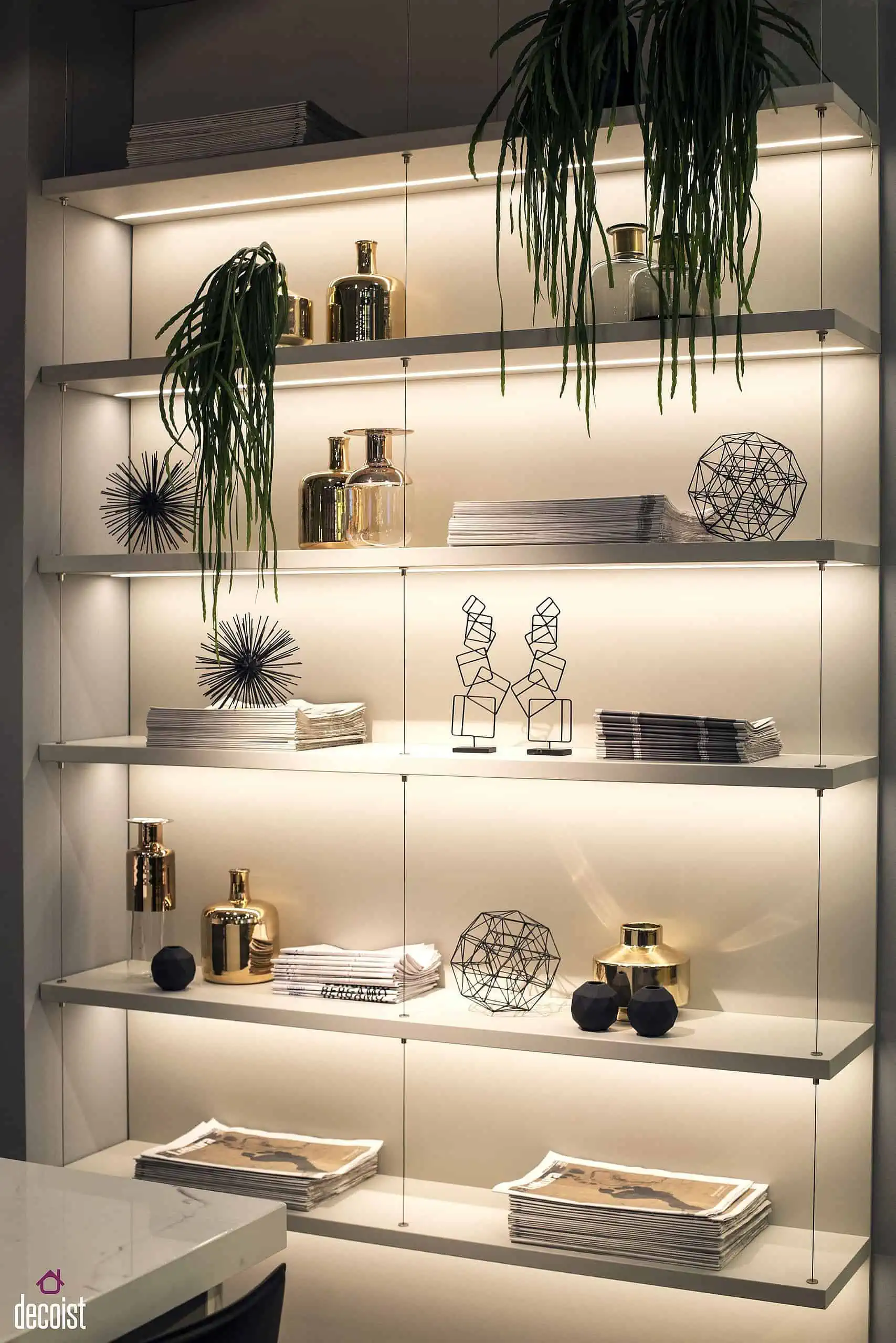
As a Senior LED Lighting Engineer and Export Manager at Beauty (STC) Manufacturing Co., Ltd., I provide the following technical guidance based on global industry standards, real-world project experience, and compliance requirements (CE, RoHS, UL, DLC). LED shelf lighting is a critical component for functional and aesthetic illumination across commercial spaces—not merely decorative, but engineered for precision, safety, and longevity. Below is a concise breakdown of applications and contractor-specific installation protocols.
Where to Use LED Shelf Lighting: Technical Applications & Rationale
1. Hotels
- Guest Room Minibars & Nightstands:
- Why: 2700K–3000K CCT (Color Temperature), CRI >90 for accurate color rendering of beverages/snacks. Low glare (beam angle 60°–90°) to avoid disturbing guests.
- Critical Note: Must comply with hotel safety standards (e.g., IP20 for dry areas; no exposed wiring). Use constant-current drivers (not voltage-regulated) to prevent flicker during voltage fluctuations common in older hotel circuits.
- Lobby Display Cases & Concierge Counters:
- Why: High-CRI (CRI >95) for luxury goods (e.g., jewelry, art). Directional spotlights (15°–30° beam angle) for spotlighting. Avoid warm white (2700K) in high-end displays—opt for 3500K for “premium” neutrality.
2. Malls & Retail
- Fashion Boutiques & Cosmetic Displays:
- Why: CRI >95 is non-negotiable for fabric/textile accuracy. Use tunable white LED strips (2700K–6500K) to adjust to seasonal collections. Beam angle 120° for even coverage on shelves; 30° for accenting high-value items.
- Critical Note: Avoid AC flicker—specify drivers with >95% power factor and THD <20%. Malls often have unstable grids; flicker causes eye strain and reduces perceived product quality.
- Supermarket Produce/Prepared Foods:
- Why: 4000K–5000K CCT enhances freshness (e.g., greens look vibrant). IP65-rated strips for humidity resistance (e.g., near refrigerated sections). Never use standard strips in wet zones—specify silicone-coated IP67 for direct exposure.
3. Offices
- Executive Desks & Conference Room Storage:
- Why: 4000K CCT for task lighting (reduces eye strain during document review). Dimmable 0–10V or DALI systems for flexibility during meetings.
- Critical Note: Avoid 2700K in workspaces—it creates a “residential” feel incompatible with professional environments. Use aluminum-channel mounts for heat dissipation (offices often have tight ceiling cavities).
- File Storage & Archive Rooms:
- Why: 2700K–3000K for warm, non-glare reading light. Motion-sensor integration to save energy (e.g., Philips Dynalite or Lutron systems). Never install without thermal cutoff switches—closed spaces risk overheating.
Installation Tips for Contractors: Critical Technical Protocols
Failure to follow these causes 80% of field failures (per our global service logs). Prioritize safety and compliance.
1. Pre-Installation Checks
- Voltage Verification:
- Confirm input voltage (120V/230V) matches driver specs. Do not assume—older buildings often have inconsistent wiring. Use a multi-meter before connecting.
- For international projects: Specify dual-voltage drivers (100–277V AC) to avoid rework. Beauty (STC) export models include this as standard.
- Load Calculation:
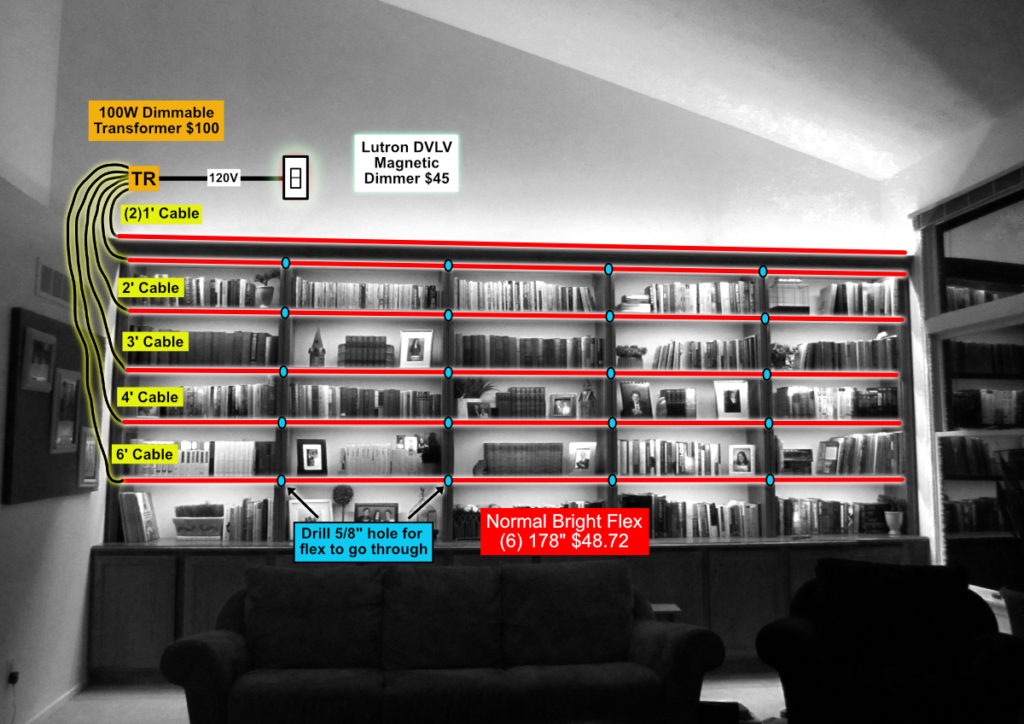
- LED strips typically draw 4.8W–14.4W/m. Never exceed 80% of driver capacity (e.g., a 60W driver → max 48W load). Daisy-chaining >10m of 12V strips causes voltage drop—use 24V for runs >5m.
2. Mounting & Thermal Management
- Aluminum Channels are Mandatory:
- For all shelf applications, use anodized aluminum channels (min. 1.5mm thickness). This dissipates heat (LEDs lose 20% efficiency per 10°C rise) and prevents yellowing of silicone sleeves.
- Never mount directly on wood/plastic—trapped heat reduces lifespan by 50%.
- Driver Placement:
- Install drivers outside enclosed spaces (e.g., not inside cabinet walls). Provide 5cm clearance for airflow. Critical: Drivers generate heat—never cover with insulation (fire hazard per NEC 410.13).
- For hotels/malls: Use UL-listed drivers with thermal shutdown (e.g., Mean Well LRS-100 series).
3. Wiring & Safety Compliance
- Wire Gauge:
- 12V systems: 18AWG minimum for runs >3m. 24V: 20AWG minimum. Thinner wires cause voltage drop and flicker.
- Junction Boxes:
- All connections must be in sealed, non-combustible junction boxes (e.g., IP67-rated for damp locations). Twist wires with crimp connectors—no tape-only splices.
- Grounding:
- Aluminum channels must be grounded (green wire to chassis). Un-grounded metal causes EMI interference and shock risk.
4. Testing & Handover
- Pre-Commissioning Test:
- Run lights at 100% brightness for 1 hour. Check for:
- Hotspots (indicates poor heat dissipation)
- Color shift (CRI <90 or inconsistent CCT)
- Flicker (use phone camera—visible strobing = bad driver)
- Documentation:
- Provide contractors with lumen maintenance curves (L70 >50,000 hrs) and IP ratings for the specific project. Beauty (STC) includes this in all export shipments.
Pro Tip from Our Engineering Team
“In high-end retail (e.g., luxury malls), integrate with smart lighting systems early. DALI or 0-10V dimming allows dynamic scenes—e.g., dimming to 30% during off-hours to save energy, then ramping to 100% for sales events. Never wire for future-proofing—retrofits cost 3x more.”
As an export-focused manufacturer, Beauty (STC) ensures all products meet IEC 60598 (luminaire safety), EN 62471 (photobiological safety), and regional certifications. For project-specific queries, share your schematics—we provide free technical reviews for contractors.
This guidance is validated by 12+ years of global installations across 40+ countries. Safety and precision are non-negotiable.
— Beauty (STC) Manufacturing Co., Ltd.
Engineered for Excellence, Delivered with Integrity
Why Choose Beauty STC Lighting
Illuminate Every Shelf.
Partner with Beauty STC—50+ countries already trust our LED shelf-lighting engineering.
Email [email protected] today for spec sheets, photometry data, and FOB pricing within 24 h.
⚡ LED Power Supply Calculator