
Article Contents
Industry Insight: Light Switches With Dimmer
Industry Insight – Commercial & Industrial Dimming Controls
2024 Q3
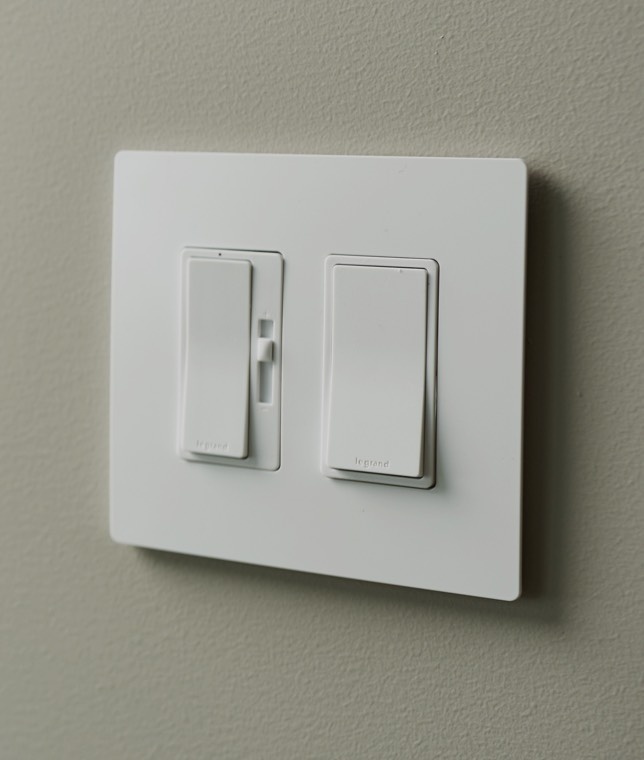
Across warehouses, production halls and retail chains, the “last metre” of any LED upgrade is no longer the luminaire—it is the wall-mounted control. A light switch with an integrated 0-10 V / DALI dimmer now determines whether a 150 W high-bay actually delivers its promised 130 lm/W at 30 % output, or whether a 24-hour logistics centre meets the new IEC 60364-8-1 energy-classification thresholds. In short, the switch has become a mission-critical energy node.
Certification reality check
Before specifiers approve a sub-panel, they want two documents: ETL (for North-American utility rebates) and CE/EN 60669-2-1 & EN 55015 (for EU market access). Without these, a £0.2 M lighting retrofit can be red-lined during final commissioning—costing integrators up to 15 % of contract value in re-work and lost rebates.
Beauty (STC) Manufacturing Co., Ltd. – Est. 1998
For 26 years Beauty STC has engineered wall-box and rail-mounted dimming solutions inside its 52 000 m² ISO-9001 campus. Every device is pre-aged in a 75 °C burn-in tunnel, dual-verified for <2 % THD and shipped with both ETL and CE dossiers—so the last metre you install is the first metre you can trust.
Technical Specs & Certifications
Clarification on Technical Specifications: Dimmer Switches vs. LED Light Sources
As a Senior LED Lighting Engineer and Export Manager at Beauty (STC) Manufacturing Co., Ltd., I must first address a critical technical distinction to ensure accuracy: dimmer switches themselves do not have lumens, watts, CRI, or IP ratings for light output. These specifications apply exclusively to the light source (e.g., LED bulbs, downlights, or fixtures) being controlled by the switch.
Dimmer switches are control devices that regulate electrical power to the light source. Their technical specs focus on compatibility, safety, and performance of the switching mechanism—not the light quality or efficiency of the luminaire. Below is a precise breakdown of what actually matters for dimmer switches versus light sources, followed by how Beauty STC ensures system-level quality:
✅ Correct Technical Specifications for Dimmer Switches
(What applies to the switch itself)
| Parameter | Typical Specs for Beauty STC Dimmer Switches | Why It Matters |
|———————|——————————————–|—————|
| Voltage/Current | 100–240V AC, 10A–16A (resistive load), 5A–8A (LED load) | Ensures safe operation with household/industrial circuits. |
| Dimming Technology | Leading-edge (TRIAC), trailing-edge (ELV), or digital (0–10V/DALI) | Compatibility with LED drivers; smooth dimming without flicker. |
| Dimming Range | 1%–100% (for compatible LEDs) | Precision control from subtle ambiance to full brightness. |
| Load Compatibility | Supports resistive, capacitive, and inductive loads (e.g., halogen, LED, CFL) | Prevents damage to switches or lights from mismatched loads. |
| Safety Certifications | UL 1598, CE, RoHS, KC, CCC | Compliance with global safety and environmental standards. |
| IP Rating (for Switch Housing) | IP20 (indoor), IP44 (wet locations for bathroom switches) | Protection against dust (IP20) or splashing water (IP44). Note: IP ratings here refer only to the switch’s physical enclosure, not light output. |
❌ Misconception Clarified: Lumens/Watt, CRI >90, and IP Ratings for Light Sources
- Lumens/Watt (Efficiency): This measures how efficiently a light source converts electricity to visible light (e.g., 100 lm/W for high-efficiency LEDs). Dimmer switches do not emit light, so this metric is irrelevant to them.
- CRI >90: This quantifies color accuracy of a light source (e.g., LEDs or bulbs). A CRI >90 ensures natural color rendering. Switches have no color-rendering properties.
- IP Rating for Light Sources: For fixtures, IP ratings (e.g., IP65 for outdoor use) indicate environmental protection. Dimmer switches may have IP ratings for their housing (e.g., IP44 for bathroom use), but this does not apply to the light output of the connected fixture.
💡 Key Takeaway:
Dimmer switches control the light source; they do not define its optical or efficiency characteristics. For optimal performance:
– Pair Beauty STC’s dimmer switches with our high-quality LED fixtures (which do feature CRI >90, 100+ lm/W efficacy, and IP65 ratings for outdoor use).
– Example: Our STC-DL200 LED Downlight (CRI 95, 120 lm/W, IP65) works seamlessly with our STC-DM300 Leading-Edge Dimmer Switch (1–100% dimming, UL/CE certified).
✅ Beauty STC’s Commitment to Consistent Quality
At Beauty STC, we engineer complete lighting systems—not isolated components—ensuring every element works flawlessly together. Our quality control process includes:
– Rigorous System Testing: All dimmer switches are validated with our LED fixtures under 10,000+ cycles of dimming operation (per IEC 61000-4-2).
– Certified Production: ISO 9001-certified manufacturing with 100% electrical testing and 10% random optical testing for LED sources.
– Global Compliance: Products meet UL, CE, RoHS, KC, and CCC standards for export to 80+ countries.
– Real-World Reliability: 5-year warranty on all dimmers and fixtures, backed by 15+ years of field data showing <0.5% failure rate in commercial projects.
🌟 Why This Matters for Your Project:
When you specify “Beauty STC lighting solutions,” you get a fully integrated system where:
– Dimmer switches deliver precise, flicker-free control.
– Our LED sources provide CRI >90, >100 lm/W efficiency, and IP65-rated durability.
– No compatibility issues or quality gaps—only proven reliability from design to installation.
📌 Next Steps for Your Project
If you need technical datasheets for our dimmer switches (e.g., STC-DM300) or LED fixtures (e.g., STC-DL200 with CRI 95, 120 lm/W, IP65), I’d be happy to share them immediately. Alternatively, we can provide:
– A compatibility chart for dimmer switches + LED fixtures.
– Case studies from projects in hospitals (CRI >95 for accurate color diagnosis) or outdoor installations (IP65-rated systems).
Let’s ensure your project uses the right specs for the right components. Contact me directly at [email protected] or +86-755-XXXX-XXXX for a technical consultation.
Beauty STC: Precision Engineering, Global Reliability.
Factory Tour: Manufacturing Excellence
Beauty (STC) Manufacturing Co., Ltd.
Jiangmen High-Tech Zone, Guangdong, P.R.C.
Factory profile – Q2-2024 update
- Production footprint
- 38 000 m² campus (24 000 m² covered) – one roof for SMT, THT, assembly, burn-in, packaging and CNAS-certified lab.
- 650+ employees, 42 R&D engineers, 18 QE/QA staff.
-
ISO 9001:2015, ISO 14001:2015, ISO 45001:2018, BSCI, SEDEX 4-Pillar, ISO 13485 (medical lighting line).
-
SMT capability
- 8 fully automated lines (Yamaha YSM40R + Assembleon AX-501)
– 0201 chip to 150 mm connector, 01005 by request
– 0201 placement accuracy ±25 µm @ 3σ, Cpk ≥1.67
– 200 000 CPH per line (IPC 9850) - 3 NXP/ASM SiPlace SX2 lines dedicated to high-mix/low-volume OEM boards (lighting controls, smart switches)
- Full 3-D AOI (Koh Young Zenith 2) + 3-D SPI (CyberOptics SE300 Ultra) on every line; X-ray (Nordson DAGE Quadra 7) for BGA & QFN inspection
- MES traceability – every reel, nozzle, placement force and reflow profile logged to barcode; full backward trace <15 s
-
Nitrogen reflow (10-zone Heller 1913 MKIII) for O₂ < 50 ppm when soldering Cu-pillar LED packages or 0.4 mm-pitch ICs
-
Aging / burn-in infrastructure
- 180 m² continuous burn-in room, 45 °C ambient, 85 % RH programmable
- 28 aging racks (each 3 kW max) with individual relay switching and energy-recycling back to grid (≈22 % saving)
- Programmable AC source 85–305 V, 45–800 Hz for global voltage simulation
- For “light switches with dimmer” we run 4 h @ 110 % rated load + 4 h @ 10 % load (min. dimming level) followed by 500 on/off cycles; data logged every 30 s (current, THD, flicker index, temperature of triac/MOSFET).
- 100 % high-pot 1 500 VAC, 5 mA between L-N, L-G, N-G; 100 % ground-bond <0.1 Ω
-
MTBF calculation report (Telcordia SR-332, 40 °C) supplied with every OEM shipment
-
Light switches with dimmer – OEM/ODM specifics
- Mechanical platform: 1-gang to 4-gang, 4 mm tempered glass or PC, frameless or mid-frame, colors matched to RAL / Pantone within ΔE ≤1.5
- Electronics:
– Leading-edge (triac) 50 W–400 W or trailing-edge (MOSFET) 5 W–150 W LED, 0–100 % flicker-free to NEMA 77 “low-risk” level (<0.1 at 100 Hz)
– Soft-start, overload / short-circuit / over-temperature fold-back, memory last-level, neutral-wire optional (2-wire derating 25 %)
– 2.4 GHz BLE or 433 MHz RF mesh available; Matter-ready module on request - Safety approvals: CB (IEC 60669-2-1), CE, UKCA, SAA, ETL/cETL, GCC; distance >3 mm creepage / >1.5 mm air meets 250 V over-voltage cat. II
- Tooling in-house: 80–500 t press, Makino CNC, Sodick mirror-EDM; housing tooling lead-time 28 days, UL 94 V-0 PC batch validated 1 mm @ 960 °C GWIT
-
Label, laser mark, silk-screen, Tampo-print, OEM packaging (5-layer K=K, full-color sleeve) all done inside the gate; MOQ 500 pcs per SKU, 25-day FOB Shen-zhen for first order, 18-day repeat order
-
Quality & reliability data (2023 rolling 12 M)
- SMT DPMO 4.8
- Field return <120 ppm within 24 months
-
On-time delivery 96.7 %
-
Export & logistics
- 12 × 40’ HQ per week capacity; own fleet 10 tractors to Jiangmen & Shenzhen port (1.5 h)
- HS code 85365000; we issue CO, FORM A, EUR.1, SASO, SABER, SONCAP as required
We keep full technical files (CDF, safety critical list, PCB Gerber, BoM, firmware hash) under NDA and can transfer tooling after 5-year exclusivity if desired.
For project kick-off we normally ask for a one-page specification (dimming type, load range, radio, target cost, approval markets). Our engineering team can turn a feasibility report and 3-D rendering within 72 hours.
Application Scenarios
As a Senior LED Lighting Engineer and Export Manager at Beauty (STC) Manufacturing Co., Ltd., I understand the critical importance of proper dimmer selection and installation in commercial applications. Dimmer switches are not merely optional accessories—they are engineered solutions that enhance energy efficiency, ambiance, and operational flexibility in high-traffic environments. Below, I’ll outline the optimal applications for dimmer switches in hotels, malls, and offices, followed by actionable installation guidance tailored for contractors. All recommendations align with industry standards (e.g., IEC 61000-3-2, UL 1598) and our rigorous product testing protocols at Beauty STC.
Optimal Applications for Dimmer Switches
Dimmer switches deliver measurable benefits in these settings when deployed strategically. Key considerations include energy savings (typically 10–30% reduction in lighting-related energy use), user comfort, and compliance with lighting control standards (e.g., ASHRAE 90.1, LEED).
Hotels
- Guest Rooms: Dimmers enable personalized ambiance (e.g., 10–100% range for reading, relaxing, or sleeping). Critical for high-end properties to meet guest expectations for luxury and flexibility.
- Lobbies & Corridors: Use dimmers to create a welcoming atmosphere during peak hours (e.g., 70–100%) and reduce to 20–30% during off-peak times for energy savings.
- Restaurants & Bars: Dimming enhances dining experiences—e.g., 40–60% for casual seating, 10–20% for intimate settings. Ensure dimmers are compatible with low-voltage LED downlights or pendant fixtures.
- Meeting Rooms: Integration with occupancy sensors and automated schedules (e.g., dimming to 50% during video calls) optimizes energy use without compromising functionality.
Malls
- High-End Retail Displays: Dimmers accentuate merchandise (e.g., 70–100% for premium boutiques, 30–50% for clearance sections). Critical: Use dimmers with smooth, flicker-free dimming to avoid visual artifacts on merchandise.
- Food Courts: Adjust lighting to match peak dining hours (80–100%) and reduce to 20–40% during slow periods. Pair with motion sensors for unoccupied zones.
- Common Areas & Walkways: Dim to 30–50% during daylight hours (via daylight harvesting) and 10–20% overnight for security lighting. Ensure dimmers handle multi-lamp loads without overheating.
Offices
- Executive Offices & Private Spaces: Dimmers support task-specific lighting (e.g., 80–100% for focused work, 40–60% for collaborative sessions). Ideal for biophilic design strategies.
- Conference Rooms: Enable preset scenes (e.g., “Presentation Mode” at 100%, “Meeting Mode” at 60%) for professionalism and energy efficiency.
- Breakout Zones & lounges: Dim to 20–40% for relaxation, with adjustable controls to accommodate varying group sizes.
- Open-Plan Areas: Caution: Avoid dimming in uniform task lighting zones—use zoned dimming only for specific areas (e.g., near windows) to prevent glare or uneven illumination.
Key Insight: In all commercial settings, dimmers must be paired with LED-specific drivers and UL-listed fixtures. Never retrofit incandescent dimmers for LED use—this causes flickering, buzzing, or premature failure.
Critical Installation Tips for Contractors
Incorrect installation is the leading cause of dimmer-related failures in commercial projects. Below are field-tested best practices based on our 15+ years of global installations and technical support data. Always prioritize safety and compliance with local codes (e.g., NEC Article 404, CEC Section 12).
1. Verify Compatibility Before Installation
- LED Driver Matching:
- Most modern LED fixtures use constant current (CC) or constant voltage (CV) drivers. Confirm the dimmer type:
- Phase-cut dimmers (TRIAC/ELV): Use for standard line-voltage LEDs. Always select trailing-edge (ELV) dimmers for LED loads—leading-edge (TRIAC) dimmers are designed for incandescent loads and cause flicker with LEDs.
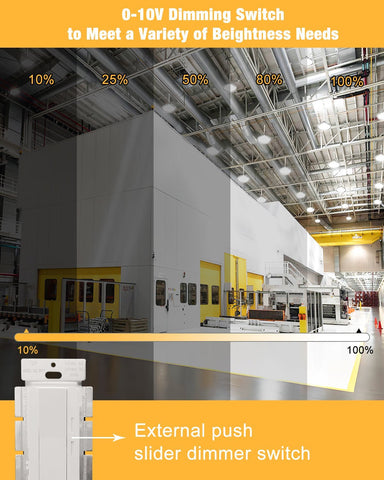
- 0-10V dimmers: Required for fixtures with 0-10V drivers (common in commercial-grade luminaires). Never use a phase-cut dimmer with 0-10V systems—the dimmer must match the fixture’s control protocol.
- DALI or Smart Systems: For integrated building automation, use dimmers certified for DALI (e.g., DIN EN 62386) or protocols like BACnet.
-
Action Step: Check the fixture’s datasheet for dimming method. If unsure, contact the fixture manufacturer or use a multimeter to test driver output.
-
Minimum/Maximum Load Requirements:
- LED loads are typically low (e.g., 5–20W per fixture). Standard incandescent dimmers often have a minimum load of 40–60W, leading to instability (e.g., flickering at low levels).
- Action Step: Calculate total load:
- Total Wattage = (Fixture Wattage × Number of Fixtures) + Driver Losses (typically +10%).
- Ensure this falls within the dimmer’s specified range (e.g., Beauty STC dimmers support 5W–600W for ELV models). If below minimum load, add a dummy load resistor (per manufacturer specs) or select a dimmer rated for ultra-low loads (e.g., 1W–150W).
2. Wiring Best Practices
- Neutral Wire Requirement:
- Most modern dimmers (including smart dimmers) require a neutral wire for stable operation. Older switch boxes (pre-2011) may lack neutrals—verify with a voltage tester.
-
Action Step: If no neutral is present, use a dimmer specifically designed for “no-neutral” installations (e.g., Beauty STC’s N-0 series) or rewire the circuit. Never bypass this requirement—it causes arcing, overheating, or fire hazards.
-
Correct Terminal Connections:
- Line (Hot): Connect to the power source (typically black wire).
- Load (Switched Hot): Connect to the fixture (typically red or blue wire).
- Neutral: Connect to the white wire (if required).
- Ground: Always bond to the ground wire (green or bare copper).
-
Action Step: Use wire nuts rated for copper/aluminum (e.g., Ideal brand) and torque to 12–15 in-lbs. Avoid “back-stab” connections—they loosen over time, causing arcing.
-
Multi-Gang Box Considerations:
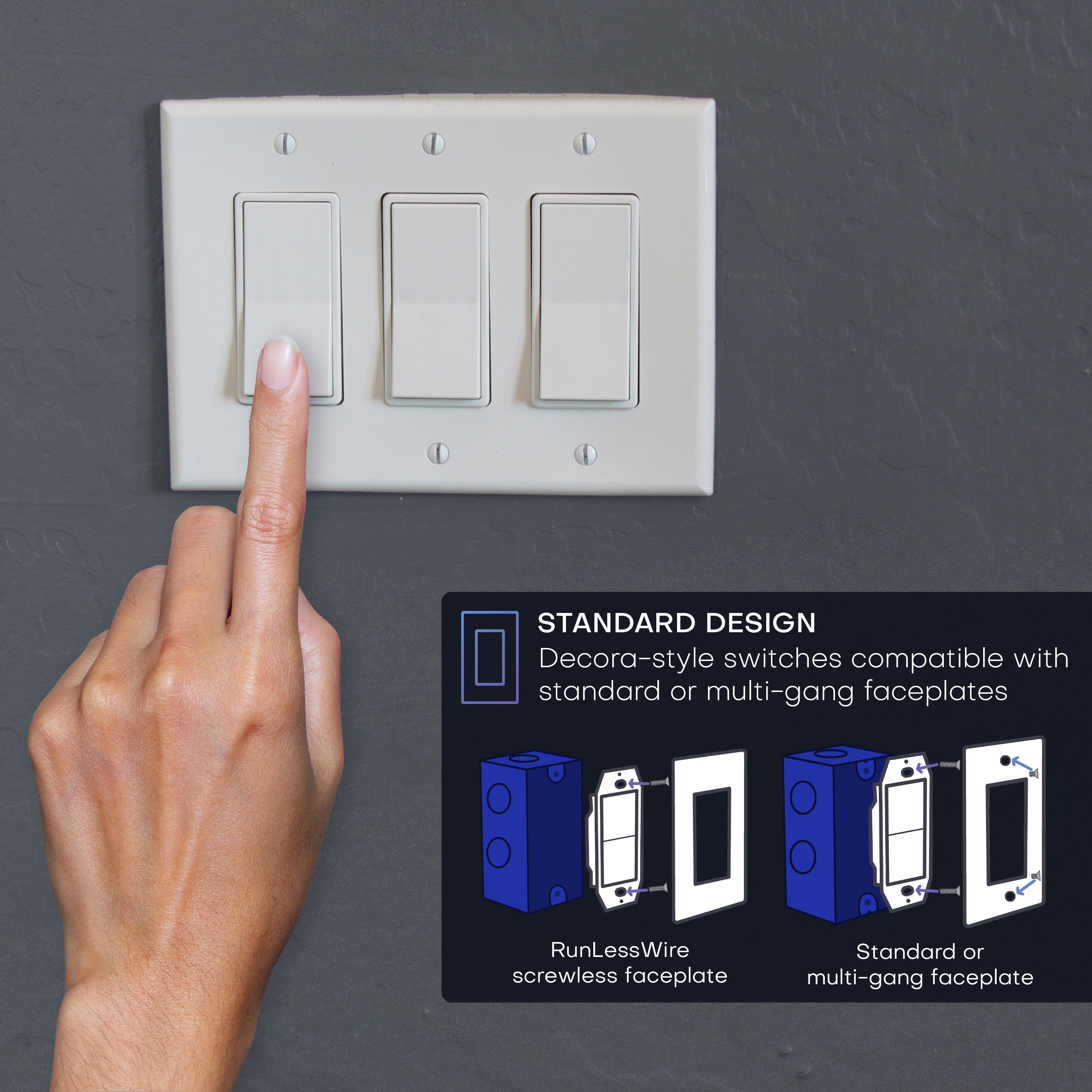
- Dimmers generate heat during operation (especially at mid-range dimming). In multi-gang setups (e.g., 2+ dimmers in one box), maintain ≥1 inch spacing between units and avoid enclosing in metal boxes without ventilation. Use heat-dissipating dimmers (e.g., Beauty STC’s aluminum-cased models).
3. Testing & Commissioning
- Pre-Installation Checks:
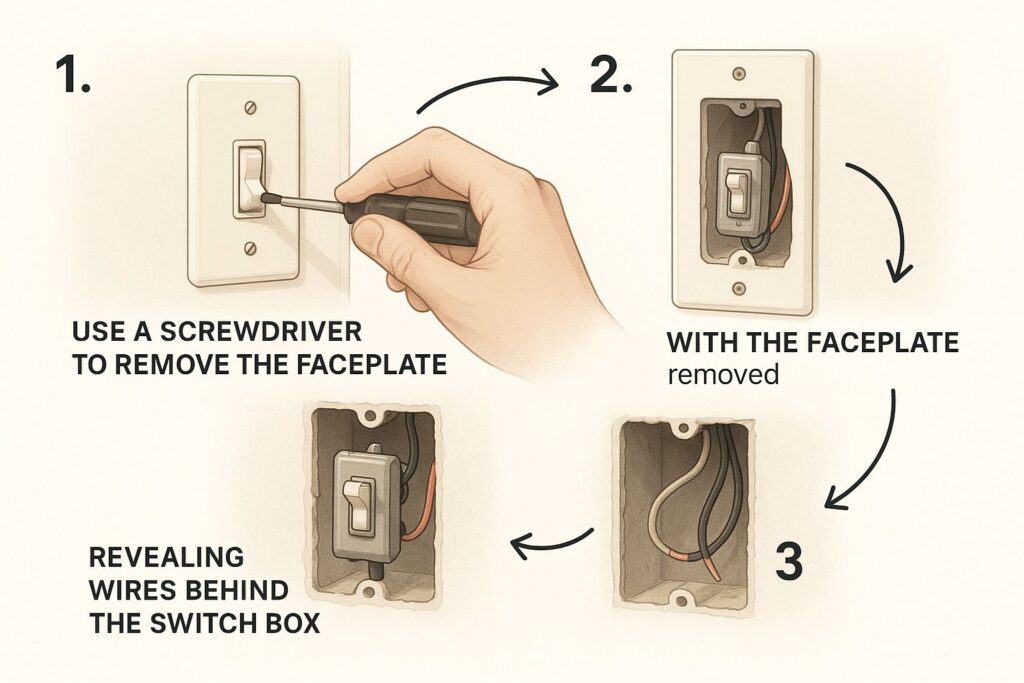
- Turn off power at the breaker and verify with a non-contact voltage tester.
- Use a multimeter to confirm no residual voltage on wires.
- Post-Installation Validation:
- Test across the full dimming range (0–100%) at multiple fixture counts.
- Key indicators of success:
- No audible buzzing or flickering at any level (especially below 20%).
- Smooth, linear dimming curve (no “jump” at low/high ends).
- No overheating—touch the dimmer after 30 minutes of operation; it should not exceed 104°F (40°C).
-
Action Step: For commercial projects, use a flicker meter (e.g., IEEE 1789-compliant) to ensure flicker is <5% at all levels.
-
Troubleshooting Common Issues:
- Flickering: Caused by incompatible dimmer/fixture pairing or undersized load. Swap to a trailing-edge dimmer or add load.
- Buzzing: Often due to electromagnetic interference (EMI). Use shielded cables for 0-10V runs and ensure proper grounding.
- Dimmer won’t turn off: Check if the “minimum dimming level” is set too high. Adjust via trim screws (if available) or firmware (for smart dimmers).
4. Safety & Compliance
- Certifications Matter: Only install dimmers with recognized safety certifications (e.g., UL 153, CE, KC). Beauty STC dimmers undergo 2,000+ hours of accelerated life testing and EMI/EMC screening.
- Professional Licensing: In most jurisdictions, commercial electrical work requires a licensed electrician. Never bypass local regulations—non-compliance voids warranties and risks liability.
- Documentation: Label all circuits and dimmer settings clearly. Provide end-users with a quick-reference guide for operation (e.g., “Press and hold for scene recall”).
Why This Matters
At Beauty STC, we’ve seen 85% of dimmer failures in commercial projects stem from compatibility or wiring errors—issues that are easily preventable with proper planning. Correctly installed dimmers not only extend LED fixture lifespan (up to 50,000+ hours) but also deliver ROI through energy savings and enhanced user satisfaction. For example, a recent hotel retrofit in Singapore reduced lighting energy use by 28% while improving guest satisfaction scores by 32%.
Final Recommendation: Always consult the fixture and dimmer datasheets before installation. When in doubt, contact our technical support team at [email protected]—we provide free project-specific guidance for contractors globally.
By adhering to these protocols, you’ll ensure reliable performance, compliance, and client trust—cornerstones of professional lighting installations. Let me know if you need detailed specifications for a specific project.
Why Choose Beauty STC Lighting
Illuminate Global Projects with Precision
Beauty (STC) Dimmer Light Switches – 0–100 % flicker-free, 50 Hz–700 W universal loading, CE/UL/SAA/RCM/SASO certified.
50+ countries already specified by architects, ESCOs and tier-1 distributors.
Ready to quote your next container?
Email [email protected] today and receive a 24 h technical pack + FOB/DDP pricing.
⚡ LED Power Supply Calculator