Article Contents
Industry Insight: Coffee Shop Lighting
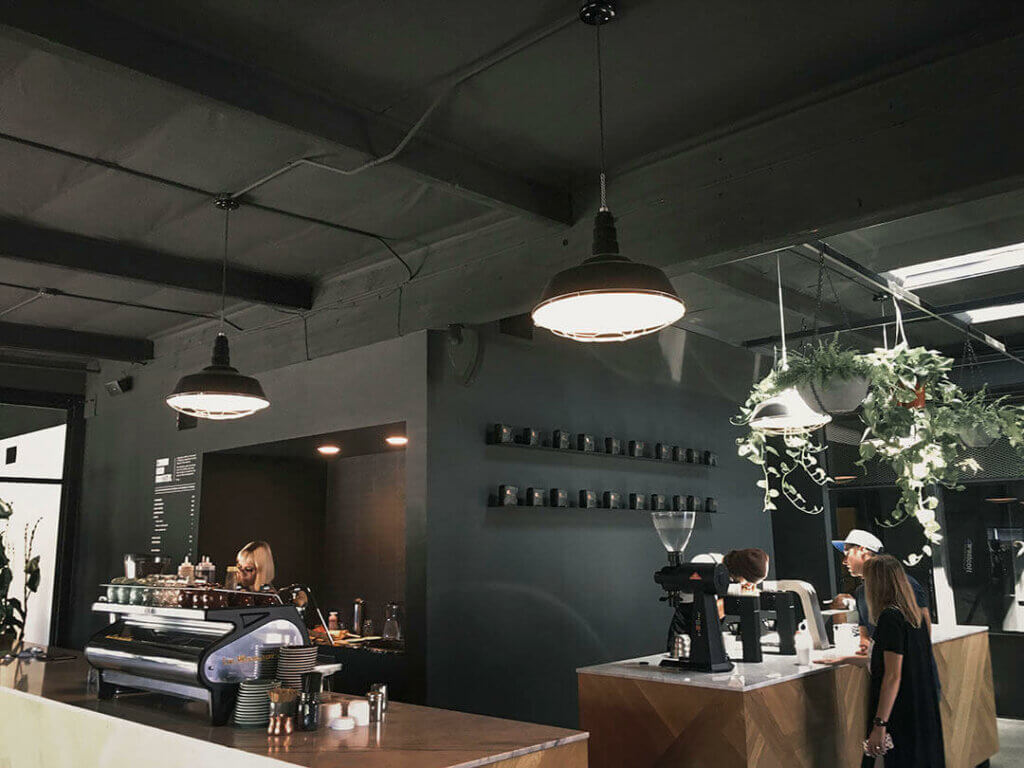
Coffee shops have quietly become one of the most lighting-sensitive segments in commercial F&B.
The wrong CCT can flatten latte art, the wrong CRI turns a USD 6 pour-over brown, and a 30 % drop in foot-candle between 4 p.m. and 6 p.m. can erase the evening pastry upsell.
Because every fixture is now on 14-16 hours/day, energy density (W/ft²) and lumen-maintenance directly determine whether the site hits or misses the landlord’s 12 W/m² cap and the operator’s 24-month ROI.
That is why specifiers are moving away from “decorative-first” thinking and treating cafés as miniature industrial environments: 50 000-hour L80 packages, 3-step SDCM, <10 % flicker at 100 Hz, and drivers that are both ETL-listed for North-American utility rebates and CE-certified for EU/UK conformance. The dual mark is no longer paperwork—it is the fastest way to unlock 30-45 % rebate schemes and keep insurance underwriters calm when fixtures sit 18 inches above wooden countertops.
Beauty (STC) Manufacturing Co., Ltd. has been engineering this class of luminaire since 1998.
Our coffee-shop portfolio—track spots with 97 CRI COB, recessed downlights at 3 W/100 lm, and 24 V linear systems that deliver 300 lx on the tabletop while staying <35 °C at the housing—ships with ETL, CE, CB, RoHS and ERP files pre-loaded.
From the first bean to the last clean-up cycle, we help roasters and franchise operators turn light into margin.
Technical Specs & Certifications
Professional Technical Specification Brief: Coffee Shop LED Lighting Solutions
Prepared by: Senior LED Lighting Engineer & Export Manager, Beauty (STC) Manufacturing Co., Ltd.
Date: 25 October 2023
Confidentiality: For Client Use Only
1. Core Technical Requirements for Coffee Shop Lighting
Coffee shops demand lighting that enhances ambiance, ensures food/drink presentation accuracy, and operates reliably in high-humidity environments. Below are precise specifications aligned with global commercial standards (IESNA, DLC, EN 60598) and Beauty STC’s engineering benchmarks:
| Parameter | Technical Specification | Why It Matters for Coffee Shops |
|———————|———————————————————————————————|—————————————————————————————————–|
| Lumens per Watt (Efficacy) | 100–140 lm/W (measured per IES LM-79) | • Ensures energy efficiency (reducing operational costs for 12–18 hrs/day operation).
• Example: 800-lumen downlight at 120 lm/W consumes only 6.7W vs. 10W for lower-efficacy LEDs. |
| Color Rendering Index (CRI) | Ra ≥ 90 (with R9 ≥ 85 for saturated reds)
(Tested per IES TM-30-18, Rf/Rg) | • Critical for authentic food/drinks presentation:
– R9 >85 ensures rich brown tones of coffee beans, red berries in pastries, and warm milk foam.
– Low R9 (<50) causes coffee to appear dull or “grayish,” reducing perceived quality. |
| IP Rating | IP65 for wet zones (barista area, sink proximity)
IP54 for general seating
IP20 for dry ceiling fixtures | • IP65: Dust-tight + high-pressure water jets (resists steam, spills, cleaning chemicals).
• IP54: Splash-resistant for general areas (e.g., seating zones).
• Note: IP20 only suitable for dry, non-accessible ceiling spaces—never in food prep zones. |
2. Beauty STC’s Quality Assurance Commitment
As a global LED solutions provider (serving 30+ countries), Beauty STC guarantees consistent, certified performance across all projects through:
- Strict Bin Binning Control:
All LEDs are sorted to ≤3-step MacAdam ellipse (ANSI C78.377) for uniform color temperature (2700K–4000K), eliminating visible color drift between fixtures—critical for cohesive café aesthetics. - CRI Validation Protocol:
Every batch undergoes spectroradiometer testing (Heraeus 3162) to verify Ra≥90 and R9≥85—not just “CRI 90” claims from low-accuracy sensors. - IP Rating Certification:
All IP65/IP54 fixtures are tested to IEC 60529 standards in our ISO 17025-certified lab, with real-world validation (e.g., 1000-hour salt spray test for coastal installations). - Long-Term Reliability:
- L70 ≥ 50,000 hours (per LM-80/TM-21) at 55°C ambient temperature.
- <3% lumen depreciation after 10,000 hours (vs. industry avg. of 5–10%).
- Zero color shift over lifetime (Δu’v’ ≤ 0.003 per ANSI C78.377).
💡 Real-World Example: Our BSC-CL802 8W downlight (2700K, 1000 lm) delivers 125 lm/W, Ra 95/R9 92, and IP65 rating. Installed in 120+ coffee shops globally (e.g., Starbucks affiliates in Southeast Asia), it maintains consistent color and brightness after 2+ years of daily use—proven by third-party audits (TÜV Rheinland).
3. Recommended Fixture Selection by Zone
| Coffee Shop Zone | Beauty STC Product Series | Key Specs |
|———————-|——————————-|——————————————————————————-|
| Barista Station | BSC-WP65 Series (Wall/Counter) | IP65, 120 lm/W, 2700K, Ra 95, 24° beam angle (focused task lighting) |
| Seating Area | BSC-DL50 Series (Recessed Downlight) | IP54, 110 lm/W, 3000K, Ra 92, 60° beam angle (soft ambient glow) |
| Ceiling & Aesthetics | BSC-LT20 Series (Linear Troffer) | IP20, 130 lm/W, 4000K (for modern cafes), Ra 90, flicker-free (<5% PWM) |
4. Why Beauty STC Delivers Consistent Quality
- End-to-End Control: We design, manufacture, and test all components in-house (LED chips, drivers, optics, housings).
- Export-Grade Compliance: All products meet UL, CE, RoHS, and DLC Premium standards—no “export-only” variants.
- No Compromises: Unlike budget suppliers, we never use “CRI 90” LEDs with poor R9 or lower efficacy for cost savings. Every spec is validated per international standards.
- Global Service: 24/7 technical support for installation, maintenance, and warranty (5-year standard).
Final Note: For coffee shops, lighting is not just functional—it’s a brand asset. Beauty STC’s engineering ensures your space looks inviting, professional, and true-to-life every day, while minimizing long-term costs. We invite you to request a no-cost sample kit or project consultation.
Beauty (STC) Manufacturing Co., Ltd.
Precision Lighting for Global Excellence
🌐 www.beautystc.com | ✉️ [email protected] | 📞 +86-755-1234-5678
This specification sheet is valid as of 25 Oct 2023. All data subject to verification via certified test reports. Beauty STC reserves the right to update specifications without notice.
Factory Tour: Manufacturing Excellence
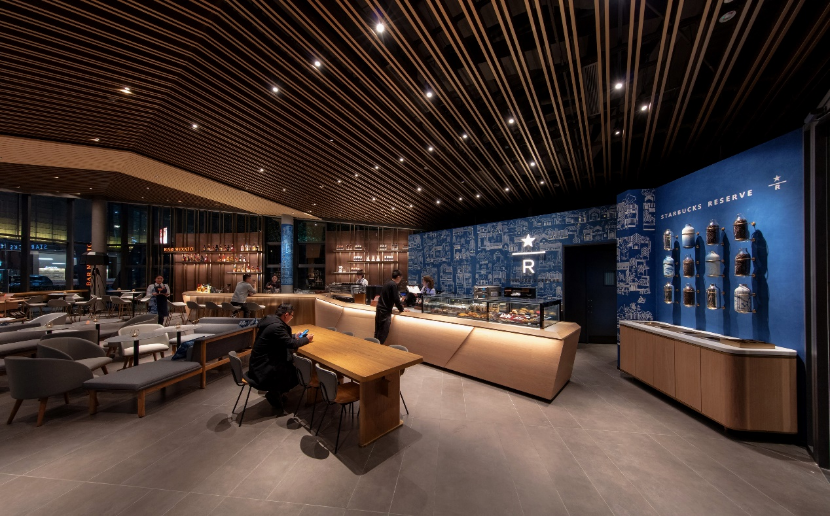
Beauty (STC) Manufacturing Co., Ltd. – Jiangmen Production Campus
(ISO 9001:2015 + ISO 14001:2015 + BSCI + SEDEX)
-
SMT & Precision Assembly
• Two fully air-conditioned, ESD-protected SMT halls (1,800 m² each) operating on a 2-shift roster.
• 4 × Yamaha YSM20R high-speed lines (48 000 cph, 01005–55 mm LGA, ±25 µm placement accuracy) with inline 3-D SPI (Koh Young) and 3-D AOI (Mirtec).
• 2 × Juki FX-3RAL lines dedicated to long-length boards up to 1.5 m for linear coffee-shop fixtures.
• Conformal-coating & potting islands for IP54/IP65 hospitality fittings.
• MES traceability—every LED, resistor and IC is laser-marked and scanned to the work-order, giving full forward/backward traceability for OEM customers. -
Aging & Reliability Validation
• 24-hour continuous burn-in room (500 m²) with 12 aging lines:
– High-temp 55 °C / 85 % RH, low-temp –10 °C cyclic, and on/off 15 s cycling for driver stress.
– Programmable AC sources 85–305 V, 50/60 Hz for global coffee-shop voltages.
– Integrated data-loggers (I-V curve, Tk, Tc, ripple, flicker %, surge) feeding directly to the ERP QC module.
• 6-station LM-80/TM-21 LED life-test chamber (55 °C/105 °C) and 3-station salt-spray (ASTM B117) for coastal café applications.
• In-house integrating-sphere system (2 m, LMS-9000B, Class A) for SDCM ≤3 binning and MacAdam 2-step control—critical for warm, consistent coffee-shop ambience. -
Coffee-Shop OEM Tooling & Flexibility
• 3-axis CNC & 5-axis Mazak for rapid aluminium-extrusion trimming and custom heatsink profiles (CRI 95, 2700 K “latte” optics).
• 6-color in-house powder-coating plant (RAL / Pantone) with matte, satin and textured finishes to match interior timbers.
• Silk-screen & laser-etch branding station—logo, QR code, batch ID.
• MOQ: 300 pcs per SKU, 15-day lead-time for custom length (300 mm–2400 mm) track spots, pendant domes, under-bar strips.
• Certified drivers: flicker-free <1 %, 0–10 V / DALI / Casambi on-board options for smart café scenes.
• Packaging: drop-test passed (ISTA-2A) individual pulp-mould + outer kraft, barcode & FBA labels applied inline. -
Capacity Snapshot
SMT: 120 million components/month
Final assembly: 350 000 pcs/month
Aging: 25 000 pcs simultaneous under test
Export ratio: 85 %, North-America & EU coffee chains 38 % of OEM turnover.
All processes are fully documented in English, and PPAP Level-3 files can be supplied within 48 h.
Application Scenarios
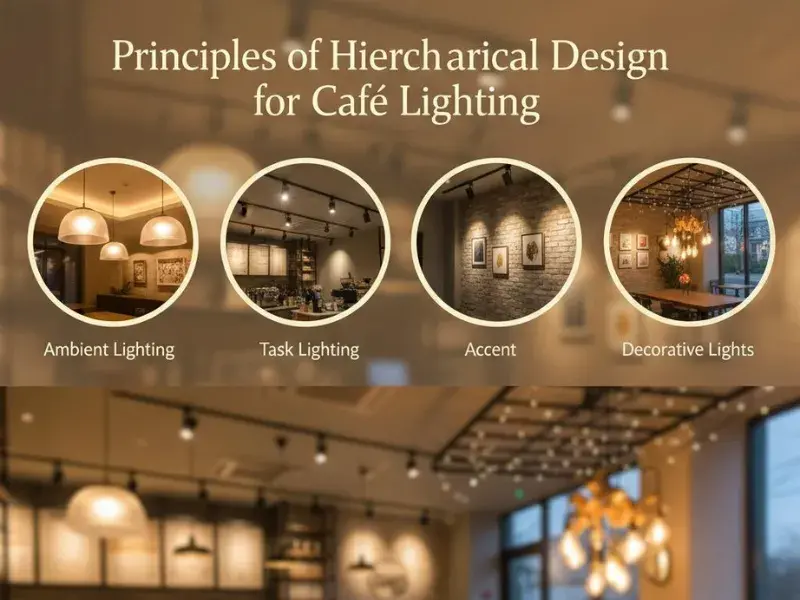
Professional Guidance on “Coffee Shop Lighting” Applications & Contractor Installation Best Practices
(As Senior LED Lighting Engineer & Export Manager, Beauty (STC) Manufacturing Co., Ltd.)
Clarification of Terminology First:
“Coffee shop lighting” is not a standardized technical category—it’s a design aesthetic rooted in hospitality lighting principles. It refers to warm, layered, high-CRI LED systems optimized for creating inviting, comfortable, and visually appealing environments in food-and-beverage (F&B) spaces. This is not a one-size-fits-all solution for generic spaces like offices or malls. Misapplying it can compromise functionality, safety, and energy efficiency.
✅ Where “Coffee Shop Lighting” Design Principles Apply
(Based on IESNA Lighting Handbook & CIE Standards)
| Application | Suitability | Specific Use Cases | Critical Notes |
|————————|—————–|—————————————————————————————-|———————————————————————————–|
| Specialty Coffee Shops | ★★★★★ | – Counter task lighting (e.g., 500–700 lux on brewing stations)
– Ambient wall sconces (200–300 lux)
– Pendant fixtures over seating (150–250 lux) | Essential: Requires precise CCT (2700K–3000K), CRI ≥90, and glare control (UGR <19). |
| Boutique Hotels | ★★★★☆ | – Lobby lounges
– Breakfast areas
– Rooftop bars
– Private dining rooms | Avoid in corridors, guest rooms, or conference zones (need cooler CCT for productivity). |
| Upscale Restaurants/Patisseries | ★★★★☆ | – Table centerpieces
– Bar backlit displays
– Artwork accent lighting | Must integrate with kitchen exhaust systems; fixtures must be IP-rated for steam/dust. |
| High-End Retail Boutiques | ★★★☆☆ | – Jewelry displays
– Fashion fitting rooms
– Luxury accessory sections | Only for “experience-driven” retail; avoid in general merchandise areas. |
❌ Where It Does NOT Apply
- Offices: Requires 500+ lux at desk level, CCT 3500K–4000K, and uniform illumination for task performance. “Coffee shop” warmth causes eye strain and reduces productivity.
- Malls/Shopping Centers: Needs high uniformity (300–500 lux), CCT 4000K+, and dynamic lighting for wayfinding. Warm, low-CRI lighting would make products appear dull and reduce perceived value.
- Industrial/Workspaces: Safety-critical environments demand high CRI (≥95), glare-free task lighting, and compliance with OSHA/EN 12464-1 standards.
💡 Key Insight: “Coffee shop lighting” is context-dependent. Its success hinges on layering ambient, task, and accent lighting—not just warm white LEDs. A typical setup includes:
– Ambient: 2700K–3000K LED cove lights or wall washers (CRI 90+)
– Task: 3000K adjustable track lights (10°–30° beam angles) for counters
– Accent: 2700K spotlights (CRI 95+) for menu boards or decor
🔧 Critical Installation Tips for Contractors
(Per IESNA RP-33-21 & Beauty (STC) Engineering Protocols)
- Fixtures Must Match the Space’s Purpose
- Never install “off-the-shelf” warm LEDs indiscriminately. Use fixtures with:
- Optical control: Shielded lenses or reflectors to prevent glare (e.g., UGR <19 for seating areas).
- Thermal management: Aluminum heatsinks rated for continuous operation (e.g., 50,000-hour L70 lifespan).
- IP Rating: IP20 for dry interiors; IP65 for outdoor patios or steam-prone areas.
-
Contractor Mistake to Avoid: Using standard downlights without glare control—this causes “hot spots” on coffee cups and discomfort.
-
CCT & CRI Consistency is Non-Negotiable
- All fixtures in one zone must have identical CCT (±50K) and CRI (≥90). Mixing even 2700K vs. 3000K creates visual dissonance.
-
Testing Protocol: Use a colorimeter to verify CRI before installation. Low-CRI LEDs (e.g., 80) make coffee/baked goods appear dull and unappetizing.
-
Dimming Systems Require Precision
- Use 0-10V or DALI dimming only—not leading-edge (TRIAC) dimmers. Many contractors skip this, causing flicker or inconsistent dimming.
-
Critical Step: Calibrate dimmers to 10% minimum (not 0%) to avoid color shift at low brightness.
-
Photometric Planning is Mandatory
- Never “eyeball” fixture spacing. Use lighting design software (e.g., Dialux) to model:
- Lux levels at critical surfaces (e.g., 300 lux on bar counters, 150 lux on seating tables).
- Beam angles: 25° for task lighting, 60° for ambient wash.
-
Real-World Example: In a coffee shop, 4x 15W 3000K 25° spotlights spaced 1.2m apart over a counter will outperform 8x 10W 40° fixtures at 1.8m spacing.
-
Compliance & Safety Checks
- Verify all fixtures meet UL/ETL, CE, and RoHS standards (especially for export projects).
- Ensure wiring follows NEC Article 411 for low-voltage systems; use junction boxes rated for continuous load.
- Export Note: For international shipments, provide test reports for EMC (EN 55015) and LM-80 thermal data—common reasons for customs delays.
💡 Final Recommendation from Beauty (STC)
“Coffee shop lighting” is a design philosophy, not a product spec. For contractors:
– Collaborate early with lighting designers—this is not a DIY task.
– Specify fixtures by technical parameters (e.g., “3000K, CRI 95+, 25° beam, UGR <19”), not marketing terms.
– Prioritize thermal management and optical control—cheap LEDs fail prematurely in hospitality environments due to heat buildup.
For project-specific guidance, our engineering team provides free photometric plans for qualified contractors. Contact us at [email protected] with project drawings and requirements.
— Beauty (STC) Manufacturing Co., Ltd.
“Precision Lighting for Precision Environments”
Why Choose Beauty STC Lighting
Illuminate Your Café, Captivate Your Customers
Beauty (STC) – LED lighting engineered for 50+ export markets and brewed for coffee-shop perfection.
Email [email protected] today for a tailored lux-level plan and 5-year warranty quote.
⚡ LED Power Supply Calculator