
Article Contents
Industry Insight: Lighting For Hallways Ideas
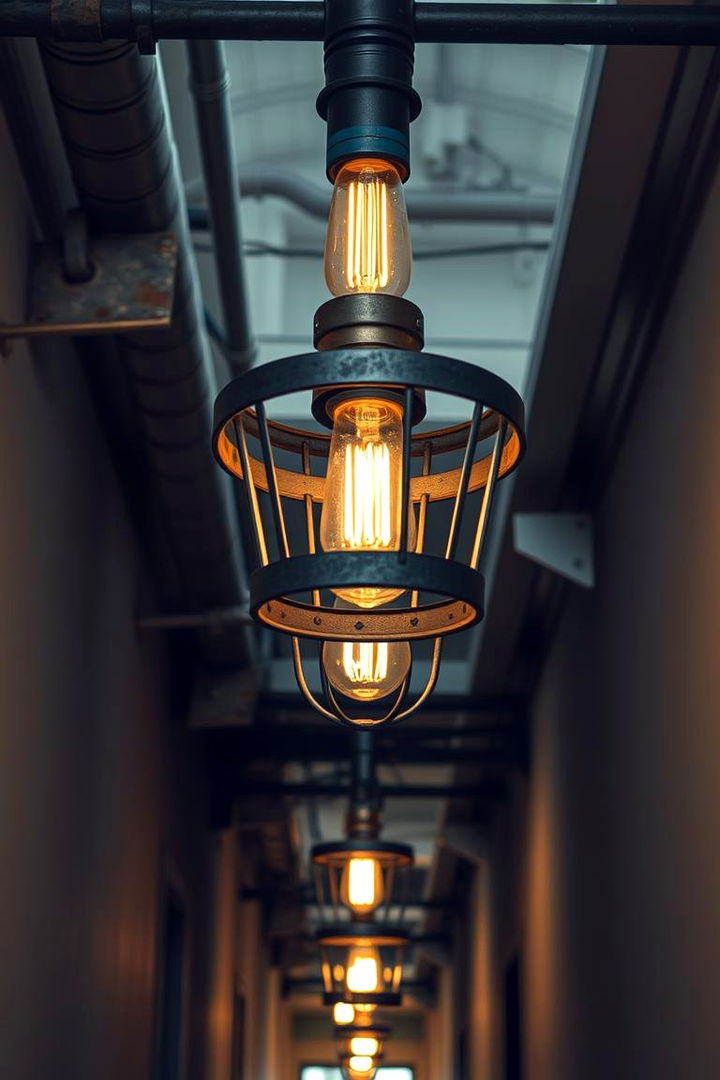
When it comes to commercial and industrial environments, hallway lighting plays a critical role in ensuring safety, functionality, and aesthetic consistency throughout a facility. Unlike residential applications, commercial and industrial hallways demand lighting solutions that offer durability, energy efficiency, and reliable performance under continuous use. These spaces often require fixtures that not only provide uniform illumination but also meet stringent safety and regulatory standards such as ETL and CE certifications—ensuring compliance with North American and European electrical safety requirements, respectively.
For over two decades, Beauty (STC) Manufacturing Co., Ltd., established in 1998, has been at the forefront of designing and manufacturing high-performance LED lighting solutions tailored for demanding commercial and industrial applications. With a strong commitment to innovation, quality, and compliance, Beauty STC delivers lighting systems that combine optimal lumen output, long service life, and robust construction—ideal for corridors in office buildings, warehouses, manufacturing plants, hospitals, and educational institutions. As facilities increasingly prioritize energy efficiency and low maintenance, Beauty STC continues to set industry benchmarks with reliable, code-compliant hallway lighting designed to meet the evolving needs of modern infrastructure.
Technical Specs & Certifications
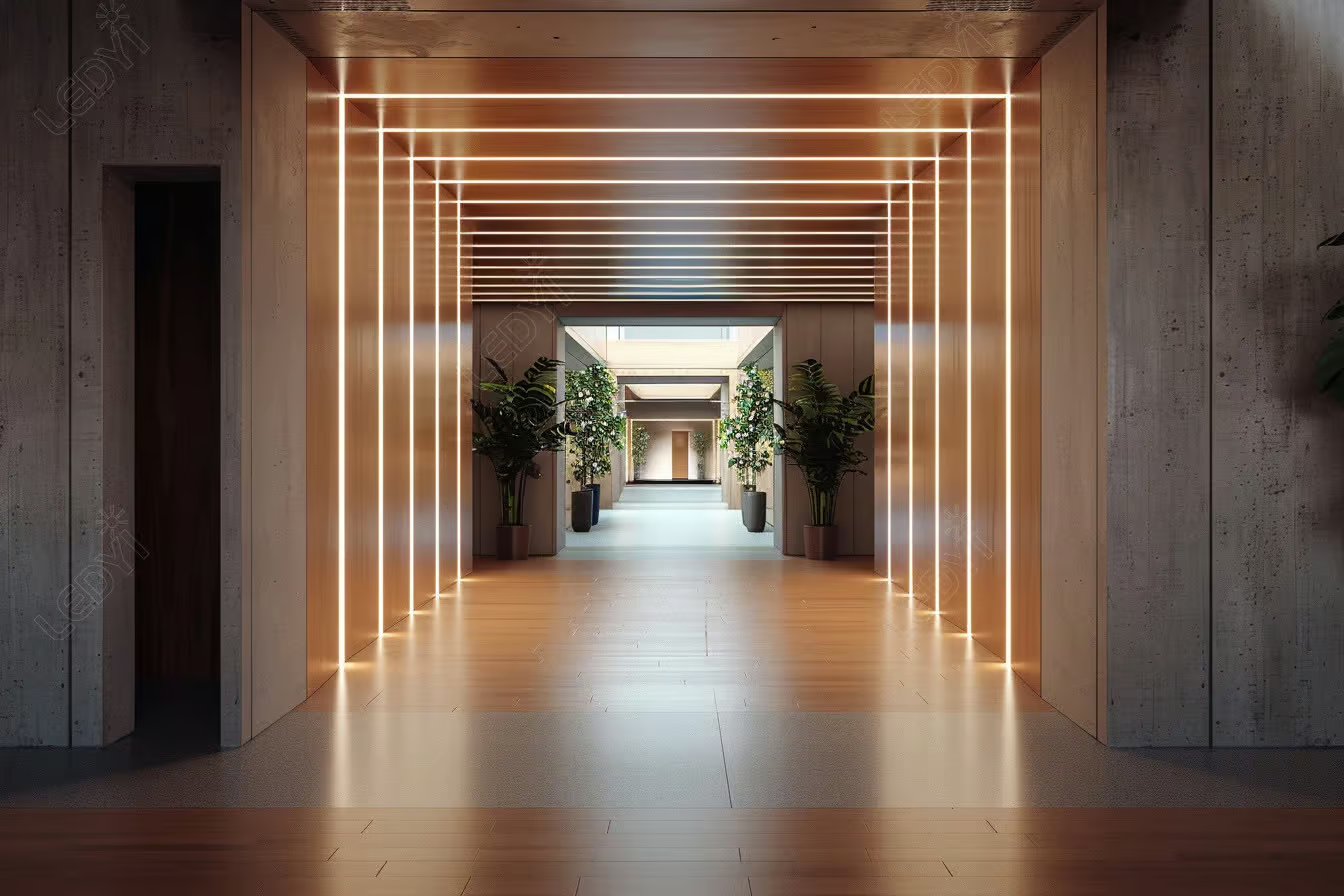
Hallway lighting requires careful technical consideration to balance visibility, energy efficiency, and user comfort in these transitional spaces. For optimal performance, the target luminous efficacy should be 120 lumens per watt or higher in real-world installed conditions. This ensures significant energy savings over the fixture’s lifespan while providing adequate illumination levels typically ranging from 50 to 100 lux depending on the hallway’s primary function and local regulations. Achieving this efficiency necessitates high-quality LED chips, precision-engineered optics, and thermally efficient drivers that maintain output stability without lumen depreciation under continuous operation.
Color Rendering Index (CRI) must exceed 90, with R9 (saturated red) values above 50 strongly recommended. This specification is non-negotiable for hallway environments where accurate skin tone recognition and object differentiation directly impact perceived safety and spatial comfort. Lower CRI values create unnaturally washed-out appearances that can cause visual fatigue or misjudgment in these critical circulation areas. Beauty STC rigorously selects phosphor-converted LEDs with tightly binned chromaticity to ensure consistent, high-fidelity color reproduction across all production batches, verified through third-party spectroradiometric testing.
IP ratings must align with the specific environmental exposure. Standard interior dry locations require IP20-rated fixtures to prevent accidental finger contact with live parts. However, in hospitality corridors, healthcare facilities, or entryway transitions where occasional moisture or cleaning splashes occur, IP44-rated luminaires become essential. Beauty STC’s sealed optical compartments and gasketed driver compartments in our IP44 hallway solutions prevent dust ingress and withstand directed water spray, ensuring long-term reliability where other manufacturers’ fixtures might fail prematurely. Our IP-rated designs undergo 48-hour continuous humidity testing per IEC 60529 standards.
Beauty STC distinguishes itself through uncompromising quality control in hallway lighting solutions. Every fixture undergoes triple-stage burn-in testing: initial 24-hour verification, intermediate thermal stress validation, and final photometric calibration. Our proprietary thermal management systems using extruded aluminum heat sinks maintain junction temperatures below 65°C even in enclosed ceiling plenums, directly contributing to the 50,000-hour L90 lifetime rating. Unlike competitors who prioritize initial cost reduction, we implement multi-point current regulation within our constant-current drivers to eliminate flicker and ensure stable output across 180-277V input ranges, critical for hallway applications requiring seamless integration with building management systems. This commitment to engineering excellence results in hallway luminaires that deliver consistent photometric performance, superior color quality, and exceptional durability throughout their operational life.
Factory Tour: Manufacturing Excellence
Beauty (STC) Manufacturing Co., Ltd.’s factory in Jiangmen, Guangdong Province, is a modern and well-equipped facility specializing in the production of high-quality LED lighting solutions. Strategically located in the Pearl River Delta region, the Jiangmen factory benefits from strong logistical support and access to a skilled manufacturing workforce, enabling efficient operations and timely delivery.
The factory is equipped with advanced Surface Mount Technology (SMT) production lines, utilizing high-precision machines from leading global manufacturers. These SMT lines ensure accurate placement of electronic components on PCBs, supporting the production of compact, reliable, and high-performance LED lighting products. Automated optical inspection (AOI) systems are integrated into the process to maintain strict quality control and minimize defects during the assembly phase.
To ensure long-term reliability and performance, the factory conducts comprehensive aging tests on all lighting products. Completed units undergo extended burn-in periods—typically 24 to 72 hours—under controlled temperature and voltage conditions. This rigorous testing helps identify early failures, verify thermal management performance, and confirm consistent light output, color temperature, and driver stability before products are shipped to customers.
Beauty STC has strong OEM and ODM capabilities, making it well-suited to support customized lighting solutions such as “lighting for hallways ideas.” The company works closely with clients to develop tailored products based on specific design, performance, and aesthetic requirements. This includes custom fixture dimensions, lumen output, color temperature options (e.g., warm white for ambient hallway lighting), dimming functionalities, and sleek, low-profile designs ideal for narrow or low-ceiling spaces. The in-house R&D team supports rapid prototyping, optical design, and compliance testing, ensuring that each OEM project meets international standards such as CE, RoHS, and UL.
Overall, the Jiangmen factory combines advanced automation, rigorous quality assurance, and flexible customization to deliver reliable, innovative LED lighting solutions—particularly suited for residential, commercial, and hospitality hallway applications.
Application Scenarios
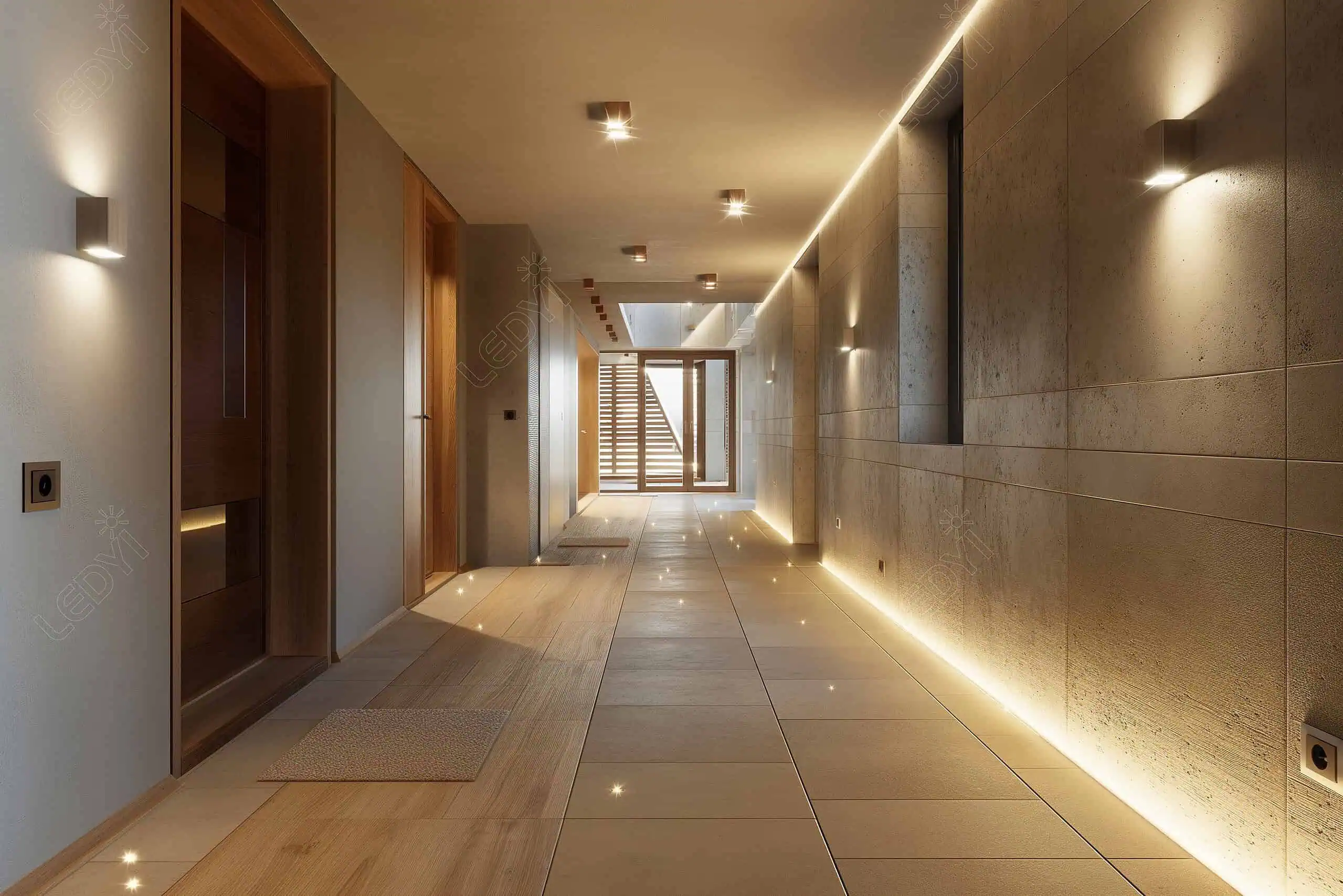
Hallway lighting serves critical functional and aesthetic roles across commercial environments, directly influencing user experience, safety, and brand perception. In hotels, hallways function as transitional spaces that must reinforce the property’s ambiance while ensuring guest safety and intuitive navigation. Implement layered lighting with recessed downlights or linear cove systems for uniform ambient illumination at 150-200 lux, supplemented by low-voltage accent fixtures to highlight artwork or architectural features. Integrate tunable white LED systems to shift color temperature from warm (2700K) in evening hours to neutral (4000K) during daytime, enhancing circadian rhythms. Critical areas like elevator lobbies require higher illuminance (300 lux) with glare-controlled optics, while discreet step lighting at stairwells prevents tripping hazards. Always maintain consistent light levels to avoid disorienting transitions between corridors and guest rooms.
Mall corridors demand lighting solutions that prioritize high foot traffic safety while directing consumer flow toward retail zones. Achieve uniform horizontal illuminance of 200-300 lux using high-bay LED fixtures with batwing photometrics to eliminate dark spots between support columns. Install wall-washer fixtures at 60-70° beam angles to create visual depth and showcase storefronts, selecting LEDs with CRI >90 to ensure accurate merchandise color rendition. Incorporate motion-activated dimming in secondary corridors—reducing output to 30% during low-traffic periods—while maintaining full brightness in main thoroughfares. Pay special attention to emergency lighting integration; exit signs must comply with ISO 30061 standards with 1-hour backup, positioned at consistent heights without visual competition from advertising displays.
Office building hallways require lighting that minimizes visual fatigue during frequent transitions between workspaces. Aim for 250-300 lux with indirect/direct luminaires to reduce glare, using asymmetric distributions that throw 70% of light downward and 30% upward for balanced ambient conditions. Install continuous linear LED strips along ceiling perimeters to eliminate harsh shadows, particularly near conference room entrances where sudden light changes cause eye strain. For executive floors, consider dimmable pendant clusters above seating areas to create destination zones. Always coordinate lighting zones with HVAC diffusers to prevent thermal degradation of LED drivers—maintain minimum 150mm clearance between fixtures and mechanical elements.
Universal installation considerations apply across all settings. Verify voltage drop calculations for long corridor runs; use 12AWG wiring beyond 30m to prevent lumen depreciation. Implement thermal management strategies such as aluminum heat sinks in enclosed troffer fixtures, especially in high-ceiling malls where ambient temperatures exceed 35°C. Position occupancy sensors at 2.5m height with 180° coverage, avoiding placement near HVAC vents that cause false triggers. Conduct mock-up testing with photometric software to validate uniformity ratios—maintain maximum 3:1 brightness contrast between adjacent areas. Ensure all mounting hardware accommodates future maintenance; specify quick-release clips for lens access in ceiling grids. Crucially, align lighting controls with building management systems via DALI protocols for centralized scheduling and energy reporting. Finally, document exact fixture coordinates and aiming angles during installation to simplify replacement and preserve design intent over the system’s lifespan.
Why Choose Beauty STC Lighting
Looking for inspiring lighting solutions for hallways? Transform your space with elegant, functional designs from Beauty STC. As a trusted manufacturer in the LED lighting industry, we specialize in creating stylish and energy-efficient lighting tailored to enhance any hallway environment. Whether you’re working on a residential, commercial, or hospitality project, our team is ready to support your vision. Partner with Beauty STC to access high-quality products, expert guidance, and customized solutions. For inquiries and collaboration opportunities, contact us today at [email protected]. Let’s illuminate your next project together.
⚡ LED Power Supply Calculator
Estimate the power supply needed for your LED strip project.